


Antique Brass Pen Stand
An antique brass pen stand brings practical desk organisation into focus through metalwork spanning the Victorian, Art Nouveau, and Edwardian periods.
Antique Brass Pen Stand
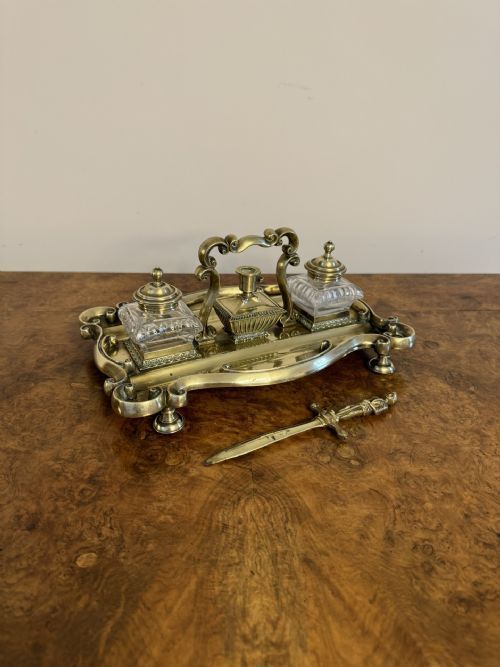
An antique brass pen stand functions as a desktop accessory designed to hold writing instruments alongside inkwells and desk tidies. These pieces emerge primarily from the nineteenth century, including Victorian, Edwardian, and Art Nouveau periods.
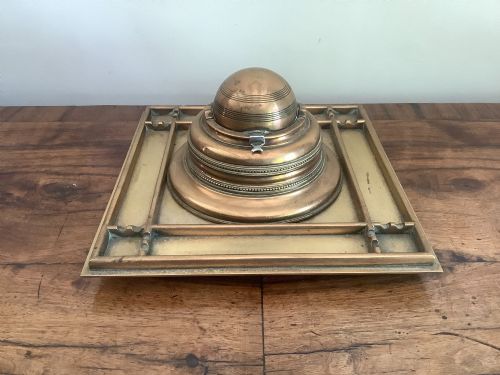
The versions most commonly met combine brass or gilt bronze structures with glass inserts, wood trays, or stone bases. Many incorporate pen rests or dedicated channels carved directly into the metal or wooden chassis.
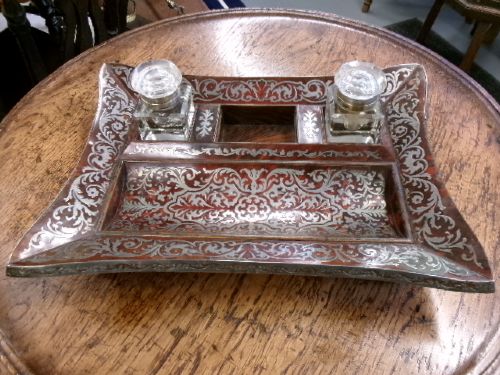
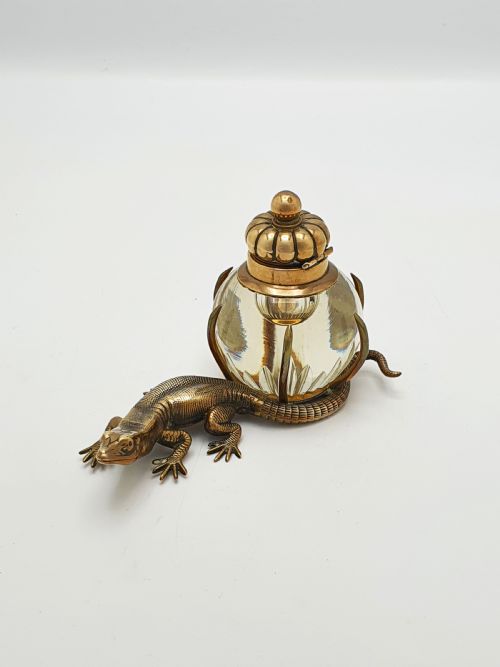
Makers integrated various materials into these desk stands, including coromandel wood, tortoiseshell, marble, and ormolu. Buyers encounter both simple brass trays and ornate figural models featuring motifs like lizards or boars feet.
Materials and construction methods
Foundry cast brass forms the structural foundation for many pieces, sometimes finished with ormolu or gilt bronze layers. Metalwork often pairs with fitted glass inkwell inserts and solid wood bases such as oak, walnut, or coromandel.
Decorative detailing relies on techniques like champleve enamel work, boulle inlay, and figural casting. Artisans combined metal mounting with exotic woods and shell materials to produce substantial desk sets.
Assessing quality in desk stands
Quality rests on the crispness of the brass casting and the integration of secondary materials like mother of pearl, tortoiseshell, or marble. Heavier, thicker metalwork and detailed figural elements separate standard utility pieces from high-end decorative stands.
The presence of original fitted glass liners, matching inkwell lids, and intact pen rests elevates a piece. Superior examples show careful joinery in wooden bases and refined chasing across the brass or bronze surfaces.
James Cartland And Sons
The Antique Brass Pen Stand Glossary
- Ormolu
- Gilded bronze applied to ornamental objects and furniture mounts. This technique gives brass and bronze surfaces a rich golden finish.
- Coromandel wood
- A dense, heavily figured timber from Asia used extensively in Victorian desk accessories. It provides a dark, contrasting background for brass inlay.
- Champleve enamel
- A technique where troughs are dug into metal and filled with vitreous enamel before firing. It appears on decorative nineteenth-century French desk stands.
- Boulle work
- An inlay method using tortoiseshell and brass cut in elaborate patterns. This decorative style adorns French-influenced nineteenth-century desk stands.
- Desk tidy
- A compartmented tray for organising stationery, pens, and small office items. These pieces frequently incorporate inkwells and pen rests.
Antique Brass Pen Stand: Frequently Asked Questions
What is an antique brass pen stand?
An antique brass pen stand is a desk accessory created to hold dip pens and inkwells together on a writing surface.
These items date mainly from the Victorian and Edwardian eras, utilising brass, bronze, and various woods to keep writing equipment organised.
How were these pen stands used?
Writers used them to rest steel nib pens while writing letters and to store ink safely on a desk.
The integrated trays and channels prevented wet pen nibs from staining paper and furniture.
How do I date a desk stand?
Dating relies on stylistic clues such as Art Nouveau curves, Victorian ornamentation, or Regency rosewood inlay.
Materials like coromandel wood and champleve enamel also point to specific nineteenth-century manufacturing decades.
Are glass inserts usually original?
Original glass inkwell inserts fit precisely into the brass collars and match the age of the stand.
Replacements often show minor differences in glass clarity, thickness, or collar dimensions.