

Antique Brass Inlay Chest
An antique brass inlay chest brings rich timber and bright metalwork together, offering both handsome storage and fine period craftsmanship for the home.
Antique Brass Inlay Chest
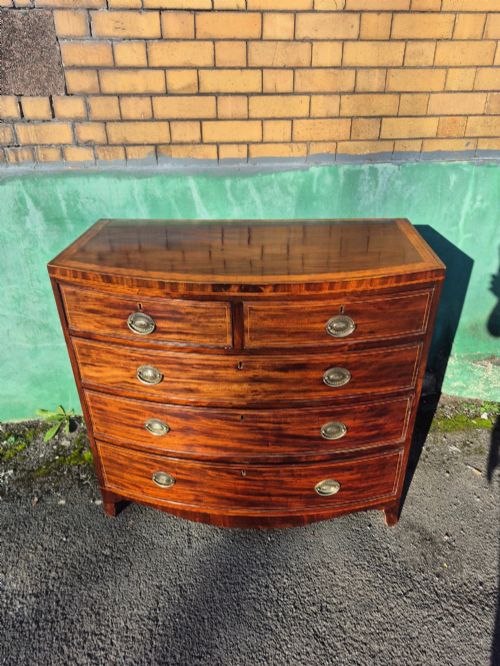
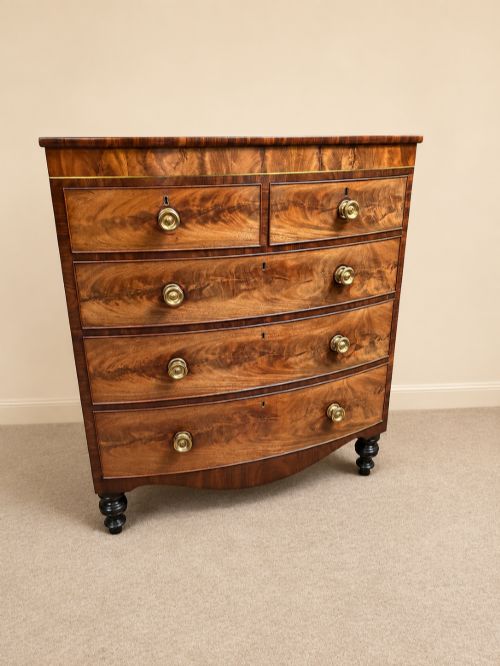
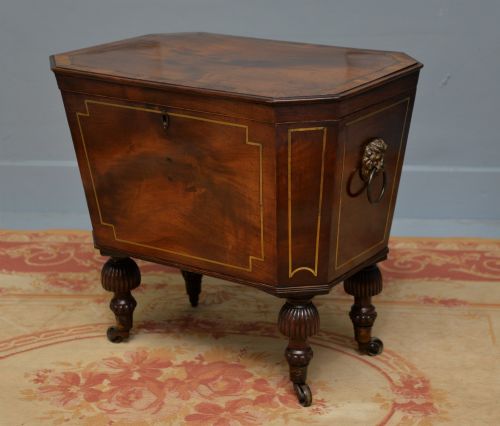
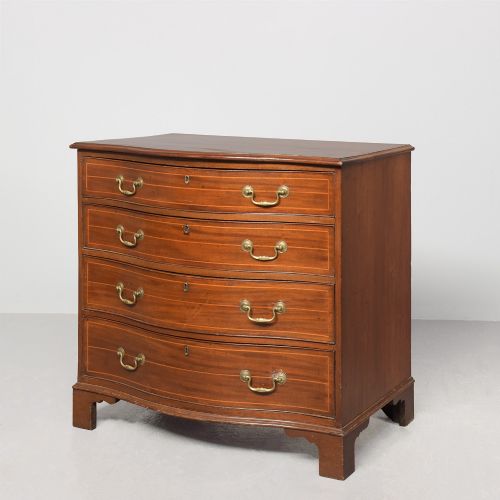
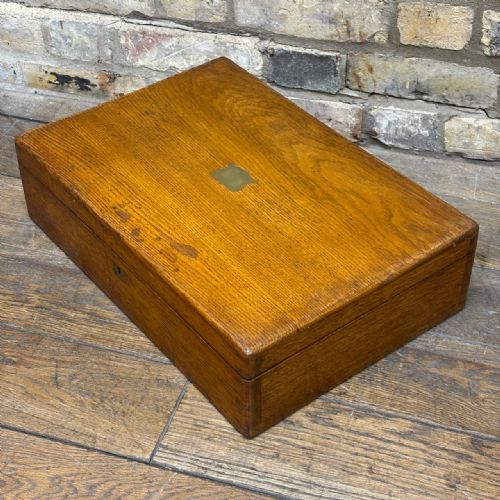
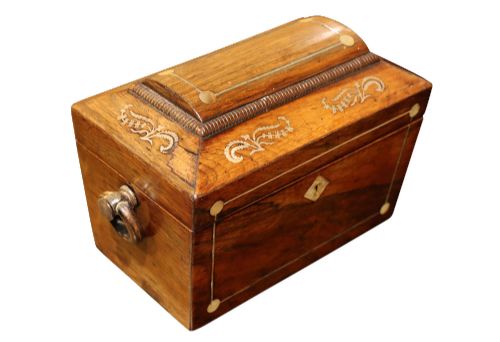
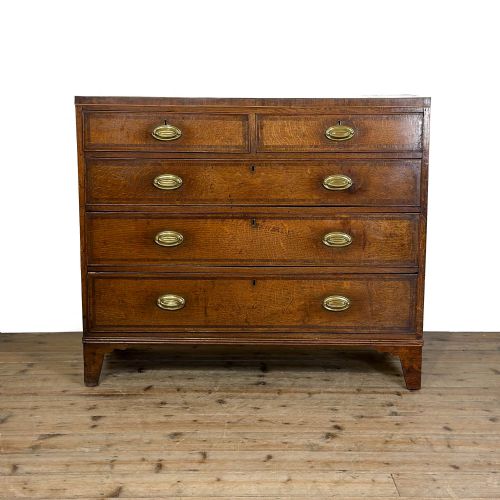
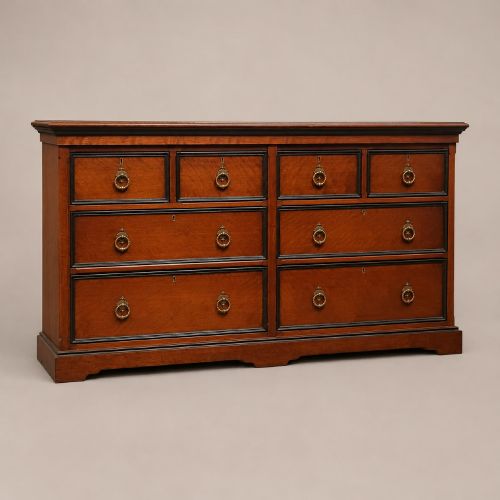
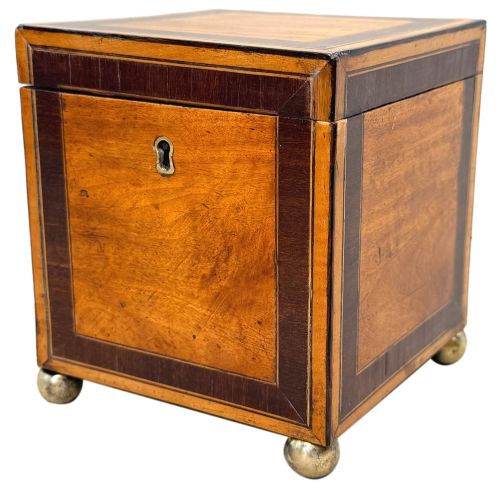
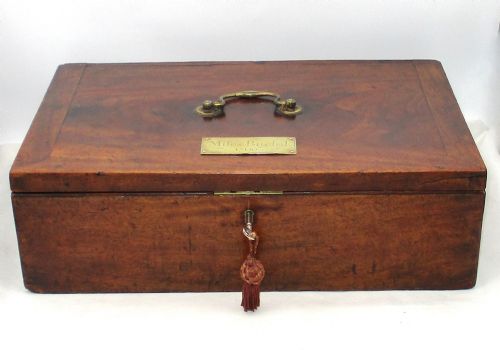
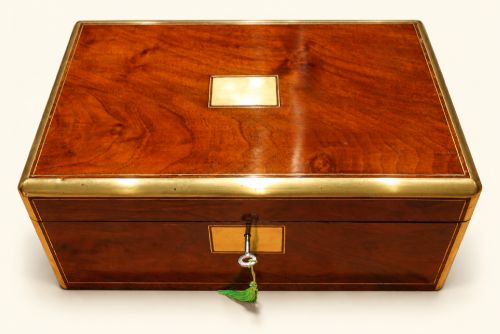
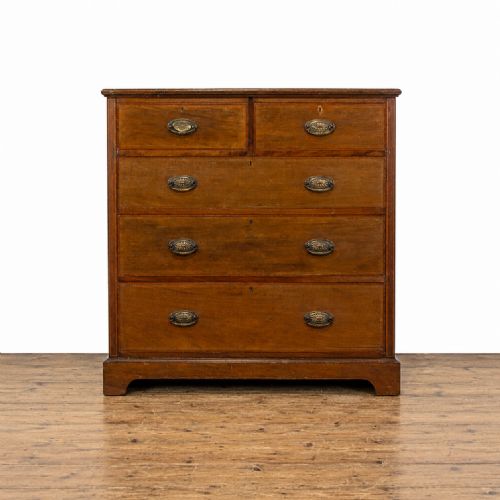
An antique brass inlay chest encompasses various forms from grand Georgian and Regency chests of drawers to smaller rosewood tea caddies and walnut writing slopes. These pieces span the eighteenth, nineteenth, and early twentieth centuries, reflecting changing domestic habits across the Georgian, Victorian, and Edwardian eras.
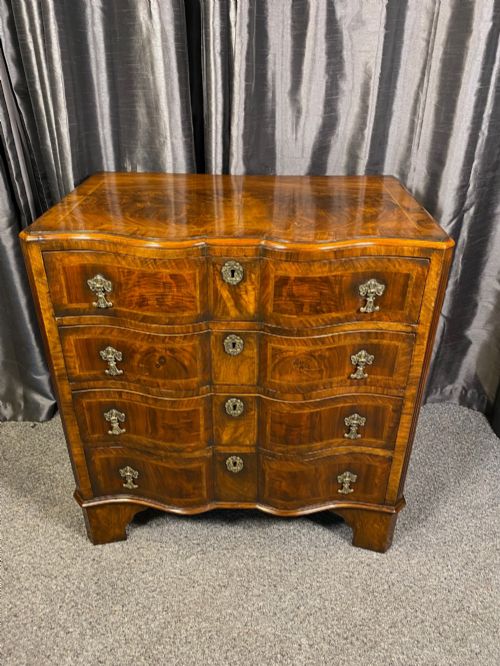
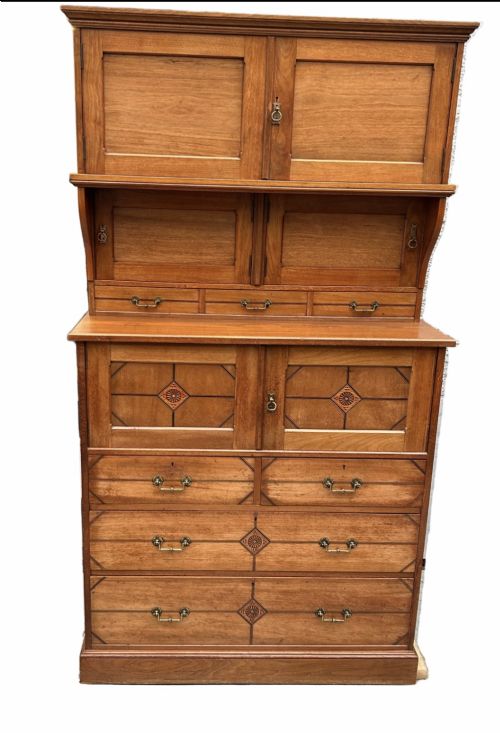
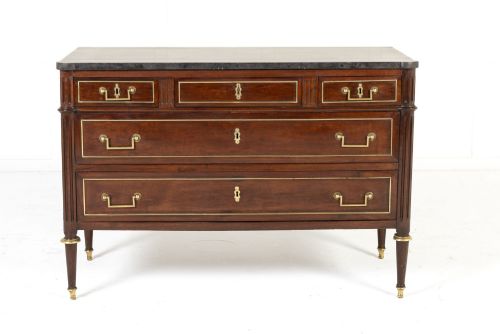
The most frequent examples on this page are mahogany or walnut chests of drawers and smaller decorative caskets featuring precise brass stringing or brass cartouches. Buyers also encounter specialised variants such as campaign collectors' cabinets, bedside cabinets, and parquetry commodes with marble tops.
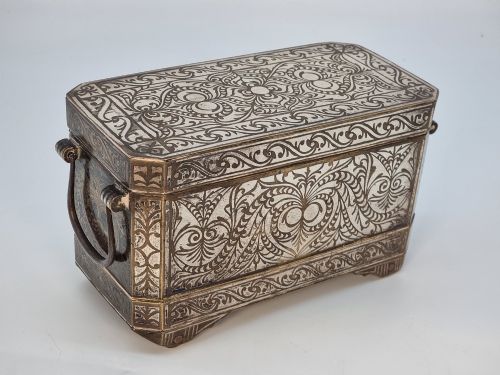
Origins stretch from English workshops to French provincial makers and Damascus, bringing diverse regional styles like Louis XV, Louis XVI, and Mamluk revival into a single category. Each piece reveals the distinct proportions and handle designs of its specific decade, from bow fronts to serpentine profiles.
Materials and construction
Cabinetmakers built these pieces using dense hardwoods such as mahogany, walnut, rosewood, and satinwood, often laid as veneers over sturdy secondary timbers. Boxwood and kingwood frequently appear alongside these primary woods to create contrasting geometric borders and parquetry patterns.
Brass was meticulously cut and embedded directly into the wood surfaces to form delicate stringing, floral motifs, or escutcheons around keyholes. Mother-of-pearl and ebony sometimes joined the brass work to enhance the decorative scheme on tea caddies and game boxes.
Drawer frames utilised traditional dovetail joints, while specialised campaign pieces incorporated flush brass handles and corner brackets designed for durability during travel. French commodes combined the timber carcase with shaped marble tops and Ormolu-style mounts.
Antique Brass Inlay Chest Retail Price Guide 2026
Typical asking prices for brass inlay chest among the pieces listed under this phrase on Sellingantiques today, from the lower quarter to the upper quarter. They describe what is for sale here now, not the wider market.
Listings feature pieces spanning the seventeenth century through to the Edwardian era, utilising mahogany, walnut, rosewood, and kingwood.
Evaluating the standard of workmanship
The standard of an antique brass inlay chest rests on the precision of the metalwork and how seamlessly the brass sits flush within the timber surface. Superior examples display microscopic gaps around the inlay, whereas lesser pieces show wider filler lines where the wood has shrunk or the cutting was rushed.
Timber selection and grain continuity dictate the visual depth of the piece, particularly where crossbanding and marquetry veneer are employed across drawer fronts and lids. The quality of internal secondary woods, original locks, and working key mechanisms also separate standard utility items from top-tier cabinetmaker output.
Edwards and Roberts·Holtzapffel and Co
The Antique Brass Inlay Chest Glossary
- Brass inlay
- The technique of embedding thin strips or shaped pieces of brass into recesses carved into a wooden surface for decorative effect. This creates striking linear patterns or pictorial motifs across the top and drawer fronts of a chest.
- Stringing
- Narrow strips of contrasting wood or metal set into the edges of furniture surfaces to form a fine border. It defines the outlines of drawers and tabletops on Georgian and Regency pieces.
- Campaign style
- Portable furniture designed for military officers, characterised by sturdy timbers, flush-fitting brass handles, and protective brass corners. These items dismantle or feature specialised compartments for travel.
- Parquetry
- Geometric wood mosaic work formed by small veneer blocks arranged in patterns such as cubes or chequers. It frequently covers the entire exterior of French commodes and cabinets.
- Crossbanding
- A border of veneer laid with the grain running perpendicular to the main surface panel. This technique frames the top and drawers of better quality chests.
Antique Brass Inlay Chest: Frequently Asked Questions
What is an antique brass inlay chest?
An antique brass inlay chest is a piece of wooden furniture or smaller decorative box decorated with embedded brass lines, scrolls, or hardware. These items range from large bedroom chests of drawers to compact tea caddies and writing slopes.
Craftsmen utilised timbers like mahogany, walnut, and rosewood as a dark backdrop to make the bright brass ornamentation stand out. Each piece reflects the decorative preferences of the Georgian, Victorian, or Edwardian period in which it was built.
How were these chests used originally?
Larger chests of drawers served to store clothing and household textiles in bedrooms and dressing rooms. Smaller caskets and boxes held valuable tea leaves, writing instruments, playing cards, or jewellery.
Specialised versions like campaign cabinets accommodated the travelling needs of officers and collectors who required portable storage. Their internal compartments and secret drawers kept personal items secure and organised.
Where should I place a brass inlay chest at home?
These chests fit well in living rooms, hallways, or bedrooms where their polished wood and reflective metalwork can catch natural light. Smaller boxes and tea caddies look striking placed atop side tables, desks, or mantelpieces.
Keep them away from direct sunlight and strong heat sources such as radiators to prevent the wood from drying out and the brass inlay from loosening. Maintaining a stable room temperature helps preserve both the timber and the metal.
How do I tell the difference between periods?
Georgian and Regency pieces often feature clean architectural proportions, mahogany or rosewood surfaces, and restrained brass stringing. Victorian and Edwardian examples frequently incorporate richer crossbanding, satinwood highlights, or revival styles inspired by earlier French designs.
Examining the construction methods inside the drawers and the style of the brass handles provides further clues to the exact decade of manufacture. Earlier pieces rely on hand-cut dovetails and solid secondary timbers.