

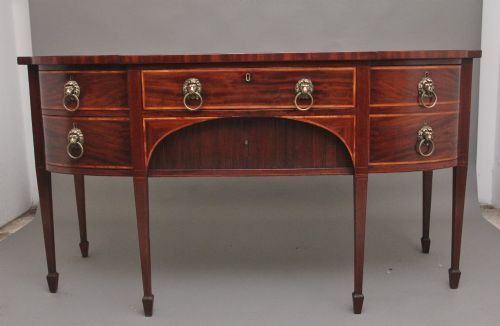


Antique Brass Inlaid Server
An antique brass inlaid server brings disciplined neoclassical lines and warm timber tones straight to a dining room.
Antique Brass Inlaid Server
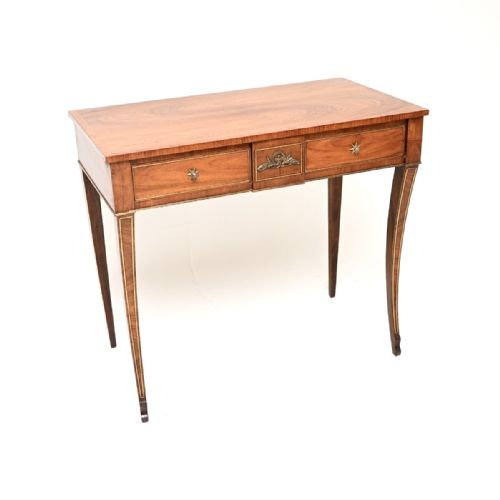
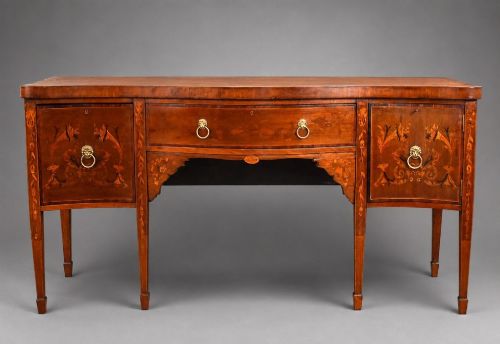
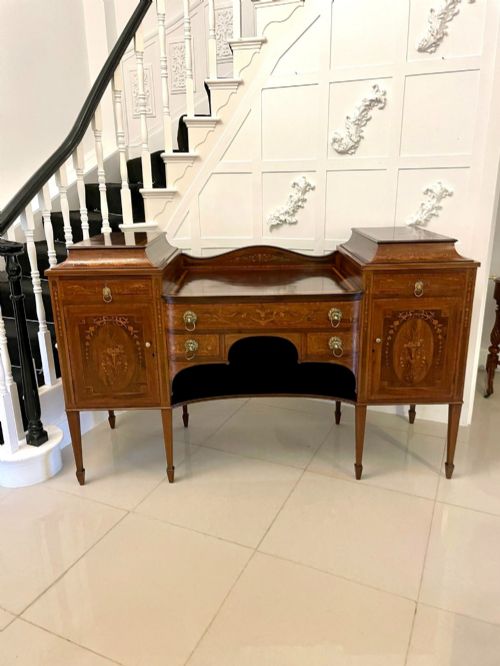
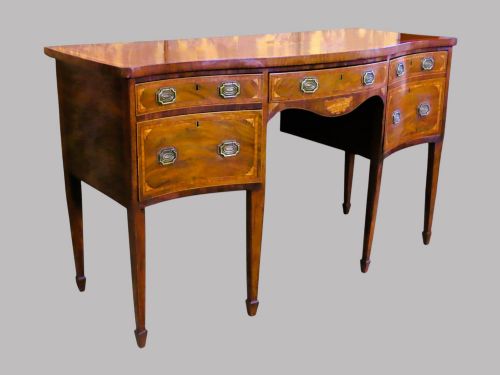
An antique brass inlaid server takes the form of a formal dining room sideboard, serving table, or chiffonier designed for the display and storage of silver and porcelain. These pieces appear most frequently in rich mahogany timbers, spanning the Georgian, Regency, and Edwardian eras.
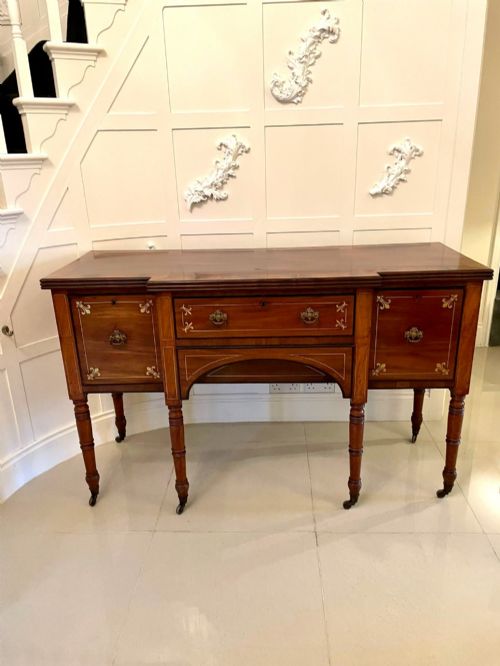
The layout typically incorporates a low rectangular or serpentine carcass fitted with cupboards and drawers, resting on square tapered legs or sturdy pedestals. Makers of the Regency and Sheraton Revival periods favoured these substantial serving forms for formal entertaining.
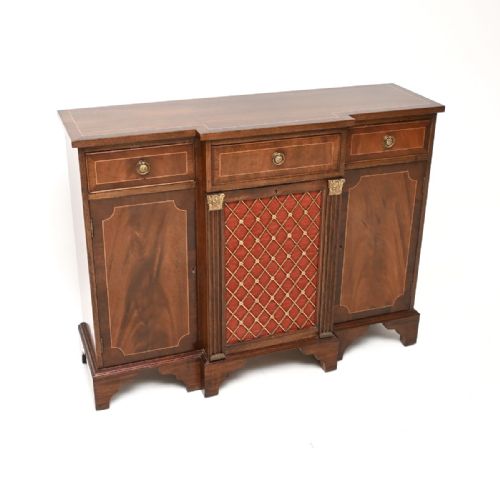
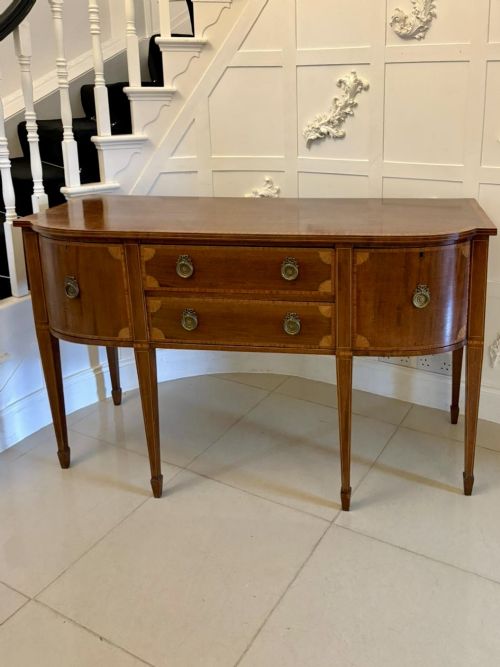
Buyers looking for an antique brass inlaid server will encounter both grand breakfront configurations and smaller bow-fronted examples. The brass detailing ranges from simple stringing to elaborate classical brass inlay motifs set into the dark wood grain.
How they were made
Cabinet makers built these servers using solid and veneered mahogany, frequently accented with satinwood and boxwood stringing alongside contrasting rosewood. Timber panels were selected for dense grain patterns before being carefully shaped to serpentine or bow-front profiles.
Brass inlay work required precise hand-cutting of channels into the timber surface to receive thin brass strips and decorative motifs. Artisans secured the metal inlay flush with the wood using hide glue, finishing the entire exterior with multiple rubbed applications of polish.
Antique Brass Inlaid Server Retail Price Guide 2026
Typical asking prices for brass inlaid server among the pieces listed under this phrase on Sellingantiques today, from the lower quarter to the upper quarter. They describe what is for sale here now, not the wider market.
Some servers hide secret cellaret drawers lined in lead to keep vintage wines cool during grand Georgian dinner parties.
What varies in quality
The distinction between standard utility furniture and high-end cabinet work rests on the crispness of the brass inlay and the choice of timber figurations. Superior servers display tight mahogany flame figuring and perfectly mitered brass joints that remain completely flush with the surrounding wood.
Structural refinement also separates workshop outputs, visible in the hand-dovetailed drawer boxes and the weight of the original brass hardware. Master makers ensured that internal carcases matched the quality of the external show woods, down to secondary oak and pine linings.
Hewetsons London·Robson And Sons·Howard And Sons
The Antique Brass Inlaid Server Glossary
- Serpentine
- A front profile that curves outward at the centre and inward toward the ends. This undulating shape requires exceptional skill from the cabinet maker.
- Breakfront
- A cabinet design where the central section projects forward from the flanking wings. It creates a bold architectural rhythm across the front of a sideboard.
- Chiffonier
- A compact sideboard or low cabinet typically fitted with enclosed shelving below. The form evolved during the Regency period to hold dining silver and linens.
- Stringing
- A narrow strip of contrasting wood or metal inlaid into the surface of a panel. It provides a crisp border around drawer fronts and table edges.
- Bow front
- A convex curved cabinet front that swells outward toward the viewer. This classic shape softens the geometry of formal dining rooms.
Antique Brass Inlaid Server: Frequently Asked Questions
How do I clean brass inlay?
Dust the surface regularly with a soft dry cloth to prevent grit from settling into the grain around the metal strips. Avoid harsh chemical polishes that can discolour the surrounding wood or loosen the historic glue holding the brass in place.
Apply a traditional microcrystalline wax sparingly to protect both the timber and the metal inlay from moisture. Buff gently with a clean cotton cloth to maintain a natural, low-sheen lustre without scrubbing the brass.
Where should I place a server?
Position the piece against a principal dining room wall where its length and proportions can anchor the room. Keep the furniture away from direct heat sources and strong sunlight to prevent the mahogany timber from drying and warping.
Ensure there is sufficient clearance around the drawers and cupboard doors for easy opening during dinner parties. A well-placed server acts as a natural focal point while remaining practical for holding serving dishes.
How do I date an Edwardian server?
Examine the secondary woods inside the drawers, as Edwardian workshops often utilised softer pine linings alongside machine-sawn components. The style frequently reflects a revival of earlier Georgian and Sheraton designs, executed with lighter framing and refined proportions.
Look for interior construction methods such as machine-cut dovetails and modern brass screws which became standard by nineteen hundred. The presence of satinwood inlay alongside softer mahogany tones typically points toward this later Edwardian manufacturing period.