



Antique Brass Gong Striker
These antique brass gong striker pieces are practical sound-makers designed to summon household members, prized for their decorative metalwork and resonant tone.
Antique Brass Gong Striker
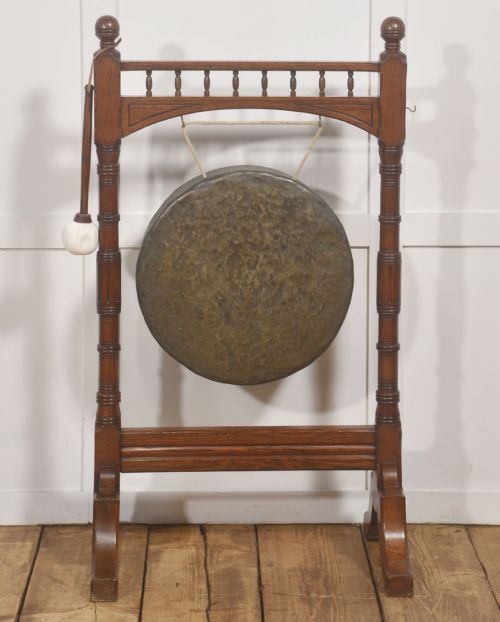
When you search for an antique brass gong striker, you are looking at the handheld hammers and beaters used to sound dinner gongs and table gongs. These striking implements are most frequently encountered mounted alongside or accompanying brass, bronze, and silver plated gongs supported by frames of oak, bamboo, and wrought iron.
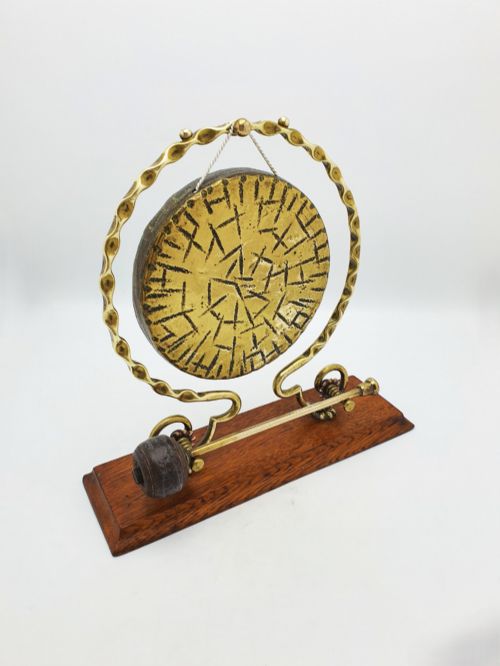
The pieces appearing on this page span from the late nineteenth century into the twentieth century, covering Victorian, Edwardian, Arts and Crafts, and Aesthetic Movement designs. You will find table top models alongside larger wall-mounted chimes and Chinese carved examples, each pairing a resonant metal disc with its dedicated striker.
How they were made
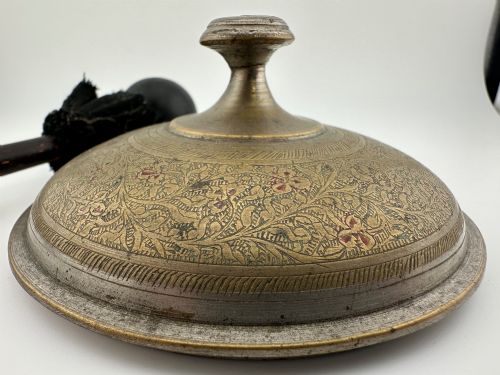
Makers fashioned these strikers and their accompanying gongs from cast and beaten brass, bronze, and silver plate, often combining them with turned oak bases or natural bamboo stems. Cord and textile elements frequently provide the suspension for the hanging gongs while offering a contrasting texture to the hard metal surfaces.
Structural frames incorporate carved woodwork, wrought iron, and cast iron, reflecting the dominant Arts and Crafts, Art Nouveau, and Aesthetic Movement preferences of the nineteenth and early twentieth centuries. Every material is chosen to support the acoustic resonance of the gong while presenting a solid, decorative object for the dining room or hall.
Antique Brass Gong Striker Retail Price Guide 2026
Typical asking prices for brass gong striker among the pieces listed under this phrase on Sellingantiques today, from the lower quarter to the upper quarter. They describe what is for sale here now, not the wider market.
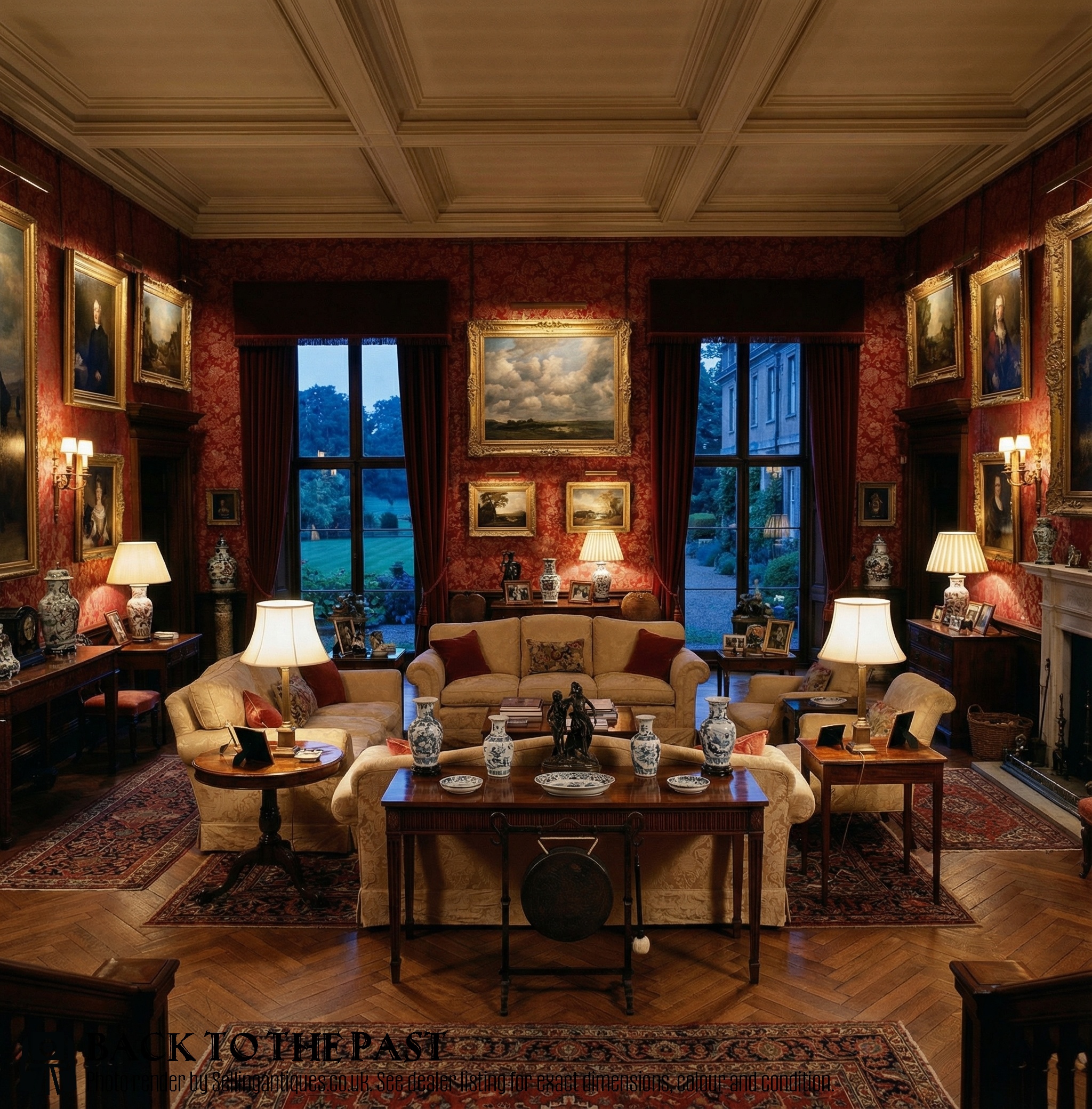
Every proper household needed a loud, resonant brass gong to ensure latecomers had no excuse for missing roast mutton.
What varies in quality
The distinction between standard domestic pieces and superior examples lies in the weight of the metal and the complexity of the frame construction. Heavier brass castings and solid carved oak or bamboo supports provide better acoustic sustain and greater visual presence than lighter, utilitarian versions.
Stylistic ambition also divides the range, with plain late nineteenth-century iterations sitting below detailed Art Nouveau cast iron designs and Chinese carved pieces. The integration of materials, such as coordinated cord suspension and well-balanced strikers, marks out the more considered workshop productions.
The Antique Brass Gong Striker Glossary
- Dinner Gong
- A suspended metal disc struck to announce meals in large Victorian and Edwardian households. These usually incorporate a dedicated striker or beater.
- Aesthetic Movement
- A late nineteenth-century design style emphasising visual beauty over narrative content, often seen in the clean lines and decorative metalwork of these gongs.
- Table Gong
- A compact version of the household gong designed to sit upon a sideboard or table rather than hang from a wall or heavy floor frame.
- Wrought Iron
- Iron beaten and shaped by hand into structural frames and brackets for holding gongs and supporting their striking implements.
Antique Brass Gong Striker: Frequently Asked Questions
How were dinner gongs used?
These gongs were positioned in halls or dining rooms to summon family and guests to meals through a clear, resonant tone.
Household members learned to recognise the specific sound of their home's gong when the striker was applied to the metal disc.
What materials make up these gongs?
The gongs and their strikers combine metals such as brass, bronze, and silver plate with supporting frames of oak, bamboo, and wrought iron.
Cord and textile elements are also utilised to suspend the hanging metal discs from their stands.
How do I date a brass gong?
Dating relies on stylistic markers such as Victorian aesthetic details, Art Nouveau cast iron work, and Edwardian oak bases.
The presence of specific construction techniques and materials helps place pieces within the nineteenth and early twentieth centuries.
Are table gongs different from wall gongs?
Table gongs are smaller models built to rest on flat surfaces like sideboards, using compact bases made of wood or metal.
Wall gongs and larger framed pieces require secure mounting to support the weight of the hanging metal and its striker.
How do I care for antique brass?
Maintain the metal surfaces by dusting regularly with a soft cloth and avoiding harsh chemical cleaning agents that strip age.
Preserving the original finish ensures the brass retains its historic character and acoustic properties.