



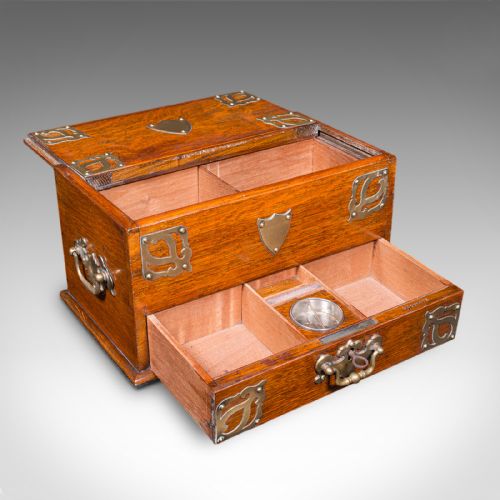


Antique Brass Compendium
An antique brass compendium brings together stationery, games and spirits in fitted housing, offering tactile desk organisation for the home.
Antique Brass Compendium
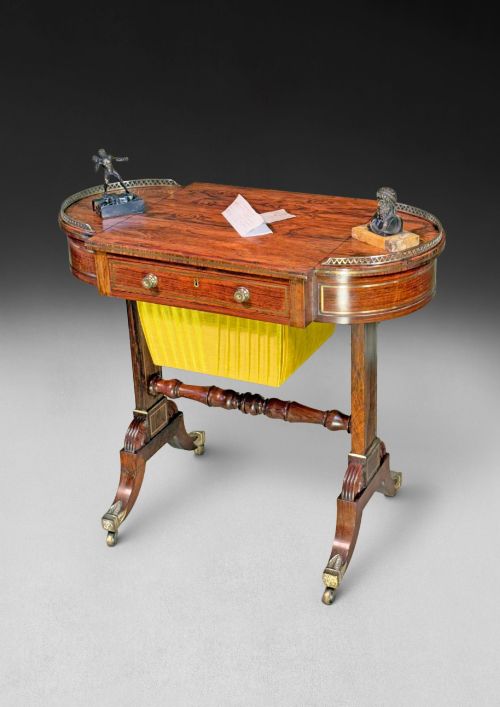
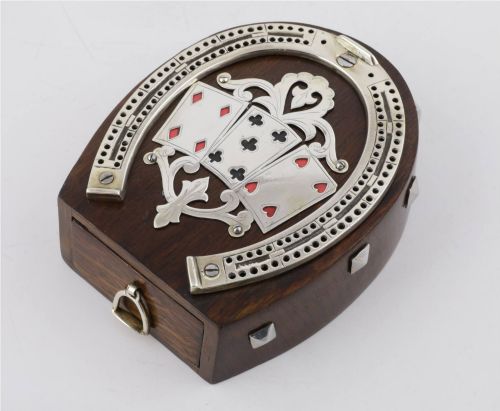
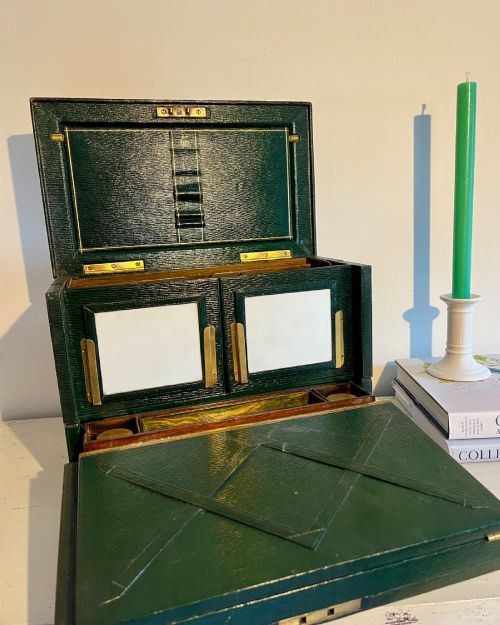
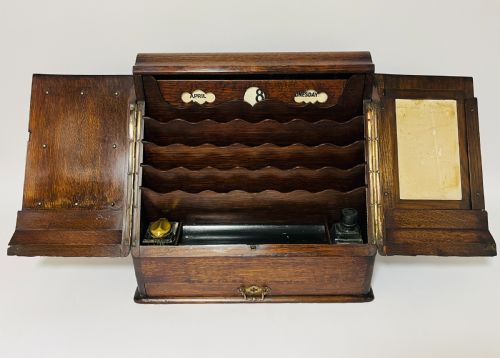
When searching for an antique brass compendium, a buyer encounters multi-functional desktop objects and multi-compartment boxes designed to house writing equipment, games or decanters. These pieces appear primarily across Victorian and Edwardian periods, manifesting as stationery cabinets, games boxes and tantalus sets.
The versions met most frequently on this page combine sturdy timbers like oak, walnut and coromandel with heavy brass mounts, hinges and carrying handles. Interiors often reveal fitted trays, glass inkwells, crystal decanters and dedicated slots for cards or cribbage boards.
Originating as practical desk organisers or entertaining compendiums for country houses and parlours, these pieces range from compact tabletop boxes to oversized architectural cabinets. Each variant serves a distinct domestic role, uniting utility with decorative presence.
Materials and construction
Makers built these pieces using solid and veneered hardwoods such as oak, rosewood, walnut and coromandel, chosen for durability and grain figure. Brass featured extensively for structural reinforcement, corner mounts, locks and decorative inlays that secured edges against daily wear.
Interiors frequently incorporated glass for crystal decanters and inkwells, alongside specialised linings of leather, silk or enamel for card compartments and pen trays. Joinery relied on precise dovetailing and fitted partitions to accommodate varied desk and parlour accessories securely.
Antique Brass Compendium Retail Price Guide 2026
Typical asking prices for brass compendium among the pieces listed under this phrase on Sellingantiques today, from the lower quarter to the upper quarter. They describe what is for sale here now, not the wider market.
The documented forms range from compact novelty desk clocks to multi-tier games boxes and locking stationery cabinets.
Qualities of distinction
The distinction between standard utility boxes and finer examples lies in the selection of timbers, the complexity of the interior mechanism and the weight of the brass hardware. Cabinet-makers who utilised figured burr walnut, coromandel or rosewood often incorporated concealed spring-release drawers and bespoke fittings.
Precision in the brass mounts and the integration of working locks by established makers elevate the execution. Superior pieces maintain crispness in architectural detailing and retain their original matching crystal decanters or complete game sets.
Guilmet·George Betjemann·Houghton and Gunn
The Antique Brass Compendium Glossary
- Tantalus
- A locking wooden frame holding decanters to prevent unauthorized access to spirits while displaying the contents through brass bars.
- Compendium
- A multi-purpose box or cabinet containing a collection of related items, such as stationery, writing instruments or parlour games.
- Coromandel
- A dense, heavily figured timber from South and Southeast Asia utilised for luxury Victorian stationery and games boxes.
- Stationery box
- A desk accessory featuring tiered partitions and sloping compartments designed to organise writing paper, envelopes and inkwells.
Antique Brass Compendium: Frequently Asked Questions
What is an antique brass compendium used for?
These versatile pieces served as central desktop organisers, holding stationery, writing equipment, or tobacco supplies for the household.
Larger versions incorporated games boards, playing cards, and locking decanters to entertain guests in the parlour or smoking room.
How do I date an antique compendium?
Dating relies on observing the combination of timber, brass hardware, and interior fittings characteristic of specific periods like the Victorian or Edwardian eras.
Architectural details, lock signatures, and accompanying materials such as cut crystal or enamel further narrow the manufacturing window.
Where should I place a desk compendium?
These boxes suit placement on study desks, sideboards, or library tables where their fitted interiors remain accessible for daily use.
Placing them away from direct heat sources protects delicate wood veneers, leather linings, and brass patination from environmental damage.
How do I care for brass mounts on wood?
Maintenance requires gentle dusting with a dry microfibre cloth to remove surface particles without abrasive cleaning agents.
Preserving the aged patination on brass and timber involves occasional application of appropriate wax polish to nourish the wood grain.