
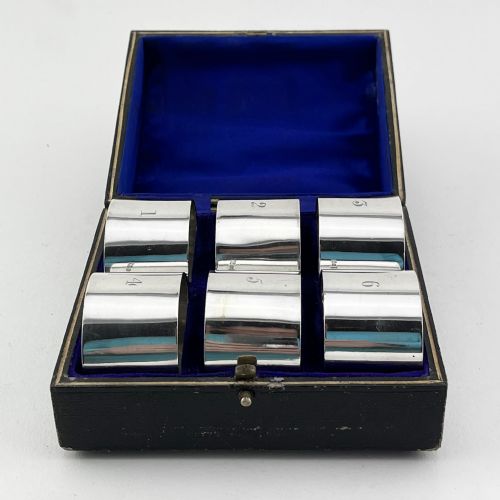


Antique Boxed Napkin Rings
These antique boxed napkin rings combine silver or plate with fitted presentation cases, preserving dining traditions from the Victorian, Edwardian, and Art Deco periods.
Antique Boxed Napkin Rings
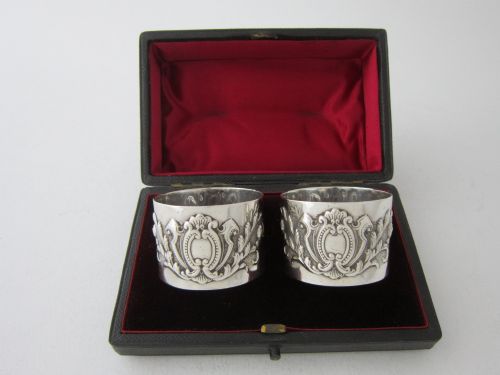
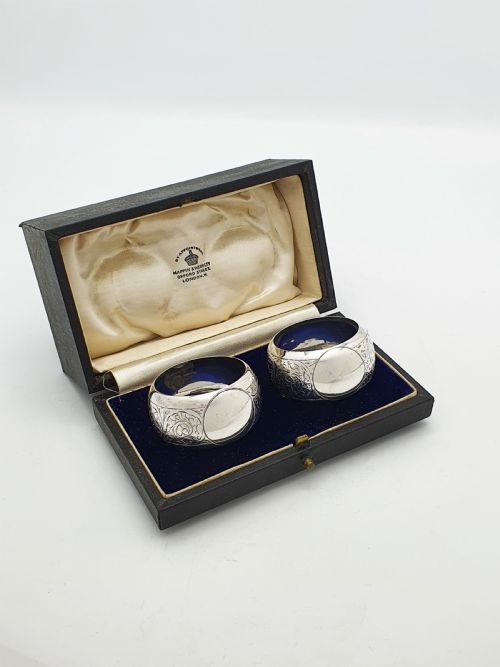
When you search for antique boxed napkin rings, you are looking at matched sets or pairs housed in their original protective containers. These items served dining tables during the Victorian, Edwardian, and George V periods, keeping family members' linen organised.
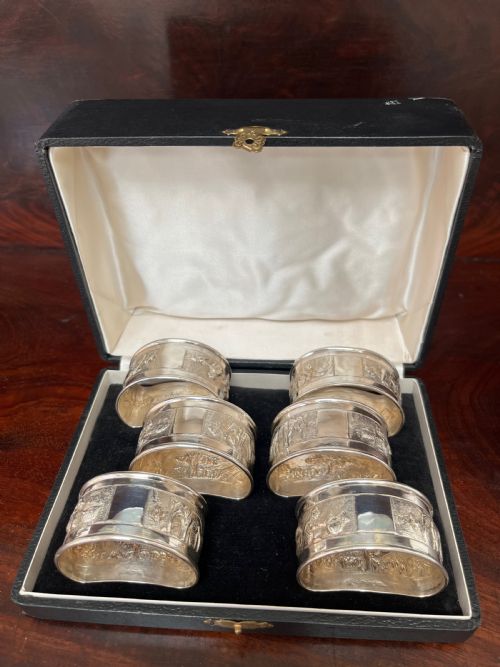
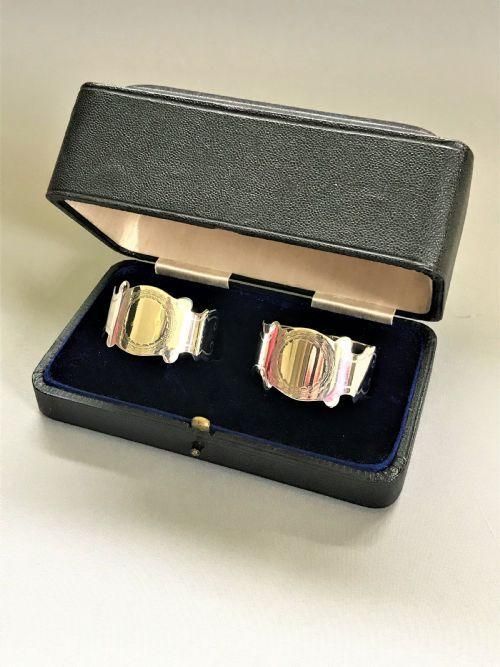
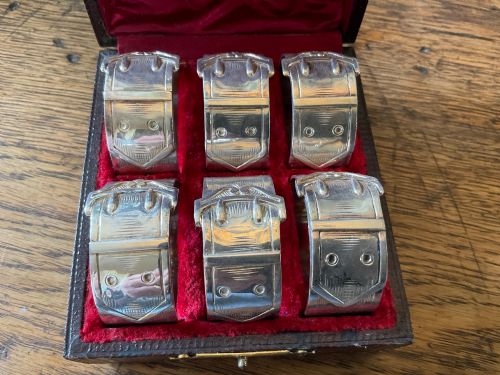
The pieces on this page span from the late nineteenth century into the mid-twentieth century, including Art Deco designs and christening sets. They appear in configurations ranging from single pairs to complete sets of six or twelve items.
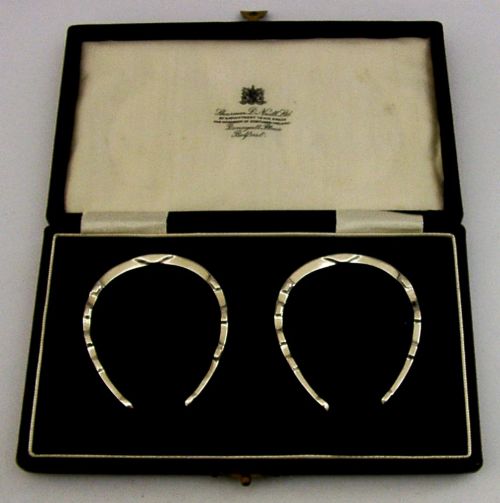
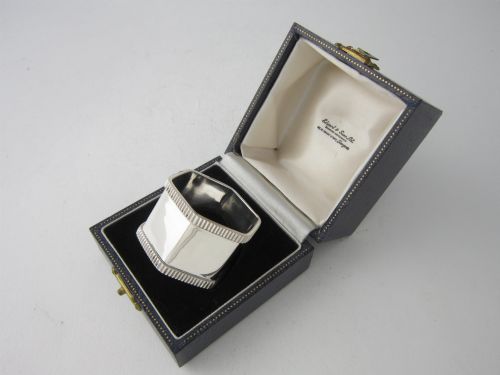
Many examples take simple circular or plain forms, whilst others feature specific motifs such as lucky horseshoes, belt buckles, or hearts. The accompanying cases demonstrate the care taken to store these valuable table accessories securely.
How they were made
Makers utilised solid sterling silver and silver plate as the primary metals for forming the rings, shaping them through stamping, casting, or engraving. Workshops often applied hallmarks to sterling items to record the assay office, year, and maker.
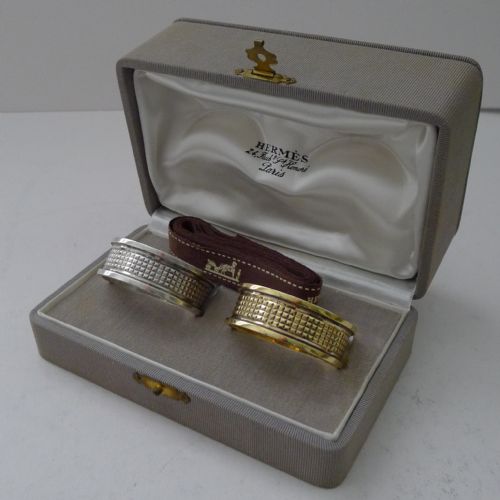
Presentation containers combine sturdy outer coverings of leather, leatherette, or card with soft interior linings. Craftsmen fitted silk, velvet, or satin inside the boxes to cradle each ring individually.
What varies in quality
The standard of an item rests on the choice between solid sterling silver and silver plate, alongside the weight and thickness of the metal. Heavier gauges resist bending and maintain crisp surface detail over decades of use.
The integrity of the original presentation case heavily influences desirability. Fitted boxes with intact silk or velvet linings and working clasps preserve the complete historical package far better than replacement storage.
C.T. Burrows & Sons·Tiffany & Co·Mappin & Webb·Cartier·Walker & Hall
The Antique Boxed Napkin Rings Glossary
- Sterling silver
- A silver alloy containing 92.5 percent pure silver by mass, standard for quality British tableware. Items display official assay office hallmarks.
- Silver plate
- A base metal coated with a thin layer of silver through electroplating or older processes. This technique provided a bright finish at a lower cost than solid metal.
- Leatherette
- A simulated leather material utilising plastic or fabric backing embossed to resemble animal skin. Manufacturers frequently used this durable covering for outer presentation boxes.
- Christening set
- A matched grouping including a napkin ring and matching cutlery intended as a traditional infant gift. These sets often share a fitted presentation case.
- Hallmark
- A series of official marks stamped onto precious metal items to guarantee purity and origin. These stamps identify the maker, assay office, and year of assay.
Antique Boxed Napkin Rings: Frequently Asked Questions
How do I clean antique silver napkin rings?
Use a soft cloth and specialised silver polish to remove tarnish gently from sterling silver or plated surfaces. Avoid harsh abrasives that might wear down engraved decoration or hallmarks.
Keep the metal away from harsh chemicals and store the items in their lined cases when not in use to slow future tarnishing.
Were these rings meant for daily use?
Victorian and Edwardian households utilised these dining accessories regularly to identify individual family members' napkins at meals. Numbered sets and distinct motifs helped prevent mix-ups around the dinner table.
Sturdy construction in sterling silver or plate ensured the pieces survived frequent handling and polishing by domestic staff.
How can I tell the date of a set?
Sterling silver items carry hallmarks that include a date letter corresponding to specific assay office records. Examining the stamped symbols reveals the exact year and location of manufacture.
Stylistic cues such as Art Deco geometric lines or Victorian floral engraving also help narrow down the period when hallmarks are absent on plated items.
Why do some sets include matching cutlery?
Certain boxed groups were assembled as christening sets, combining a napkin ring with items like spoons and forks for a child. These comprehensive gifts marked significant early milestones in a Victorian or Edwardian family.
The fitted presentation boxes kept these special occasion sets together as family heirlooms passed down through generations.