
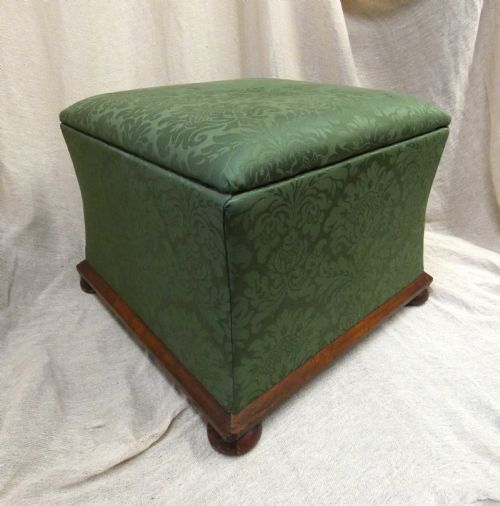


Antique Box Ottoman Stool
An antique box ottoman stool combines hidden storage with a seat, offering a practical piece for the drawing room or bedroom.
Antique Box Ottoman Stool
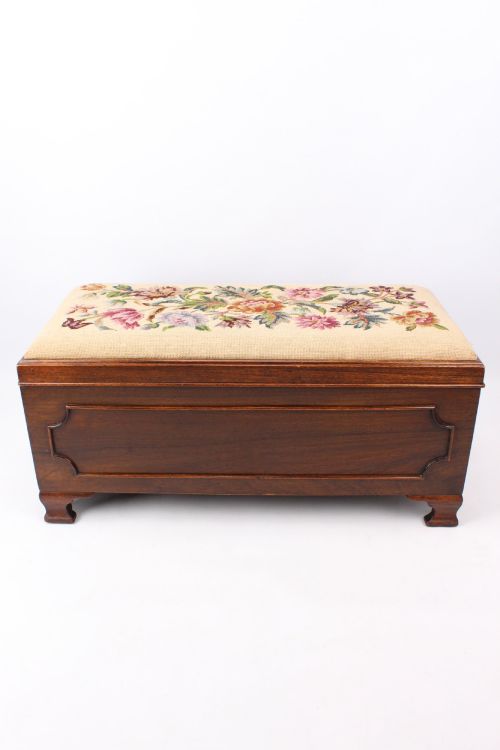
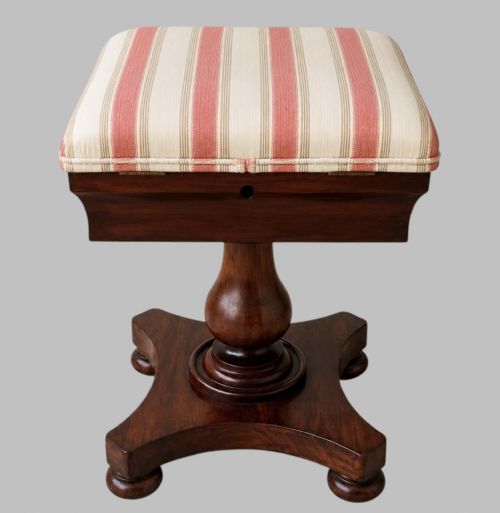
When you search for an antique box ottoman stool, you find seating designed with internal storage beneath a hinged or lift-off lid. These dual-purpose items served various roles in historic interiors, functioning as work tables, sewing boxes, and piano stools alongside standard footstools.
The versions you meet most frequently on this page date from the Regency and Victorian eras, alongside some early twentieth-century examples. Forms range from simple square and rectangular boxes to waisted, concave, and large country house storage ottomans.
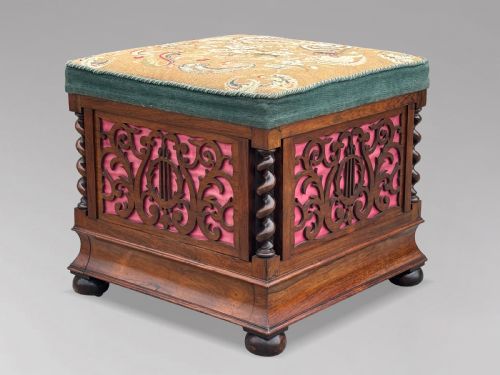
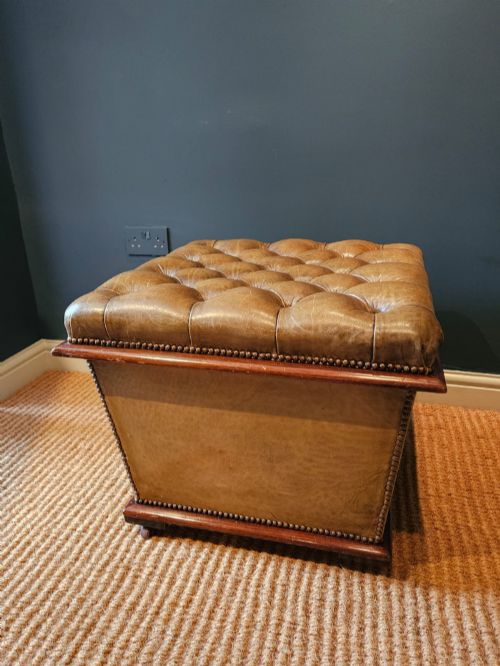
Construction encompasses frames designed to hold textiles, needlework, velvet, wool, and leather upholstery. Many pieces incorporate storage compartments originally intended for sewing materials, dressing items, or blankets.
How they were made
Cabinet makers built the structural frames of these pieces using timber such as mahogany, rosewood, and walnut. These woods provided a sturdy housing for the internal box or trunk whilst displaying rich grain on the exposed rails and feet.
Upholstery techniques involved securing fabric, leather, velvet, or wool over padding, often featuring specialised needlework tops such as gros-point or crewel work. Brass details and carved elements, including lions paw feet, completed the decoration of the more formal Regency and Victorian examples.
The selection spans Regency, William IV, Victorian, Gothic Revival, and early twentieth-century periods.
What varies in quality
The standard of timber selection and the complexity of the cabinet work define the upper tier of these pieces. Fine examples display carefully chosen rosewood or mahogany veneers and robust internal box construction designed to withstand regular opening and seating.
The refinement of the upholstery work also separates the grades. Pieces finished with hand-worked gros-point or crewel work needlework demonstrate a higher level of original craftsmanship than simpler fabric coverings.
Hallett & Sons
The Antique Box Ottoman Stool Glossary
- Ottoman
- A padded seat without a back or arms, featuring a hinged lid that opens to reveal internal storage space. This form serves as a footstool, blanket box, or seat.
- Gros-point
- A type of durable needlepoint embroidery worked on canvas, frequently used for the upholstered tops of Victorian stools. It provides a textured and decorative surface.
- Canterbury
- A low multi-partitioned stand or box used for holding music sheets or books, sometimes combined with a seat or box ottoman form. These pieces date across the nineteenth century.
- Regency
- A style period spanning the early nineteenth century characterised by classical restraint and influences from antiquity. Pieces from this era often feature rosewood or mahogany with brass mounts.
- Concave
- A curved inward shape applied to the sides of certain box ottoman stools. This design feature softens the rectangular bulk of the storage trunk.
Antique Box Ottoman Stool: Frequently Asked Questions
What were antique box ottoman stools used for?
These items served primarily as seating while concealing internal compartments for storage. Period examples often doubled as sewing boxes, work tables, or dressing stools.
In larger rooms, they held blankets or needlework supplies, keeping domestic accessories tidy and close at hand.
How do I date an antique ottoman stool?
Dating relies on observing the timber choice, construction methods, and stylistic cues. Regency pieces often feature rosewood or mahogany with classical details, whilst Victorian examples frequently employ walnut or mahogany.
Upholstery style and needlework types like gros-point or crewel work also help place a piece within the nineteenth century.
Can I use an antique ottoman in a modern room?
These pieces integrate easily into contemporary interiors by providing functional storage alongside traditional seating. Their compact footprint suits bedrooms, living rooms, and hallways.
The variety of woods and fabrics allows them to complement both modern and period decorative schemes.
What is the difference between an ottoman and a footstool?
A standard footstool is designed solely to support the feet when sitting. An ottoman incorporates an internal storage box beneath a hinged or lift-off seat.
This added compartment distinguishes storage ottomans and box stools from simpler open-frame footstools.