
Antique Bow Front Furniture
Antique bow front furniture brings curved fronts and rich timber grains into domestic spaces, uniting storage with architectural grace.
Antique Bow Front Furniture
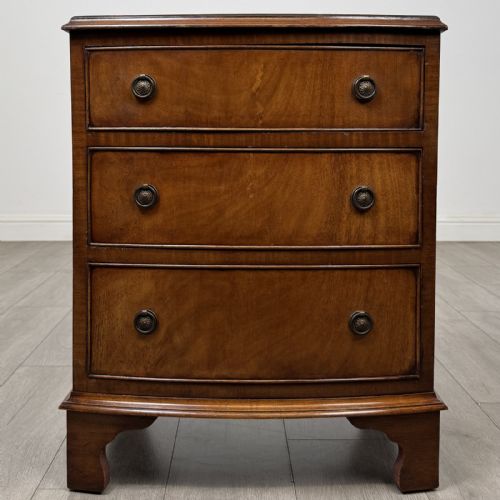
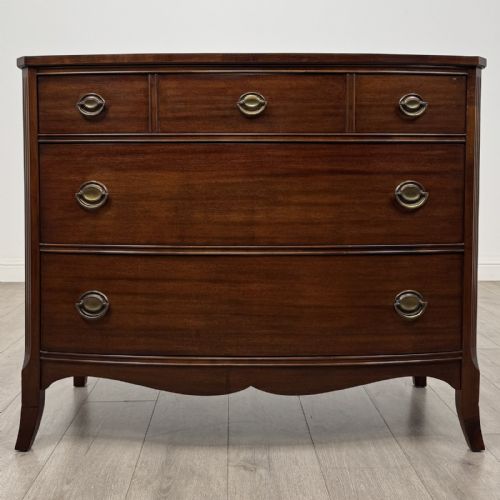
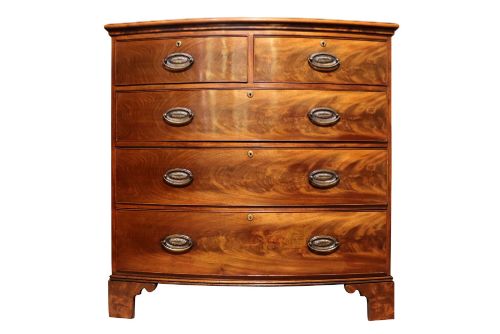
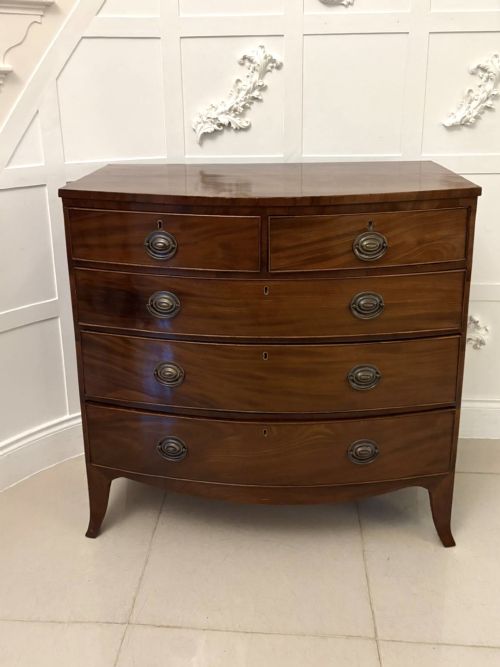
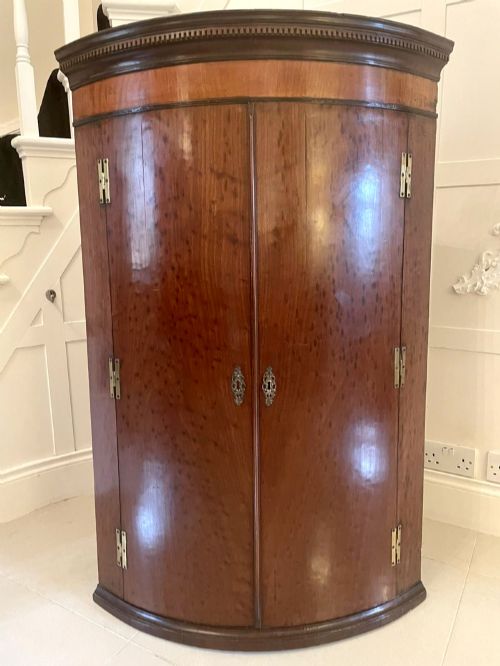
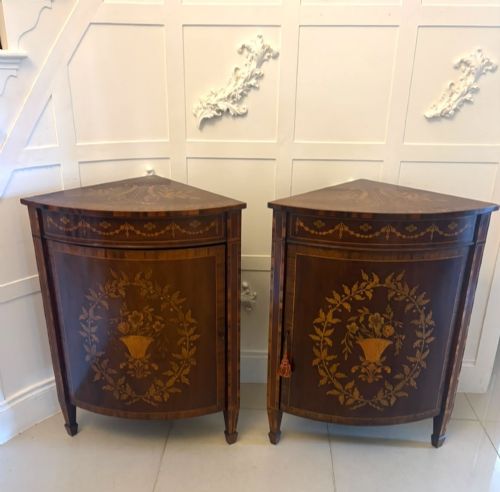
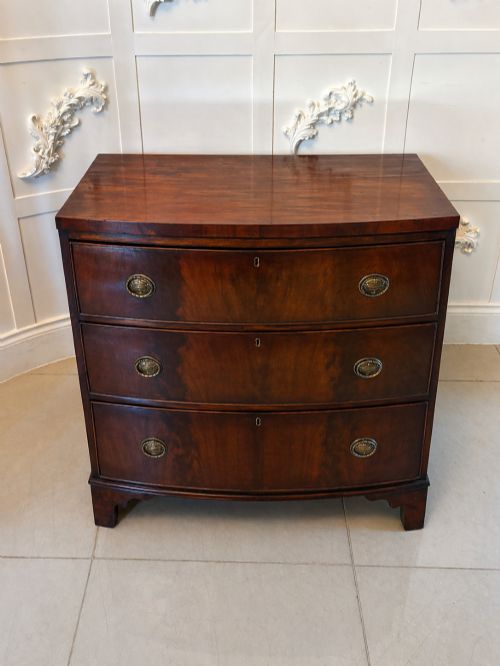
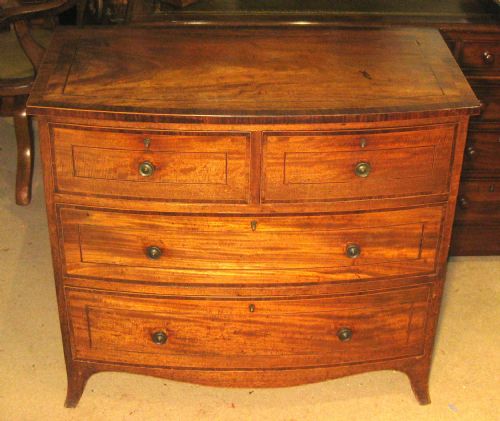
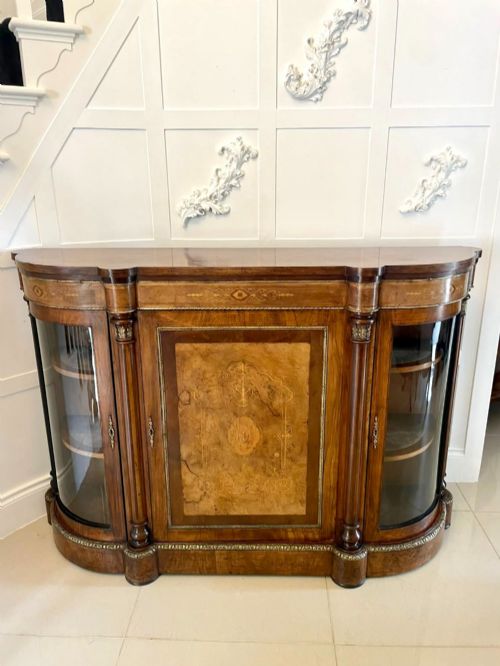
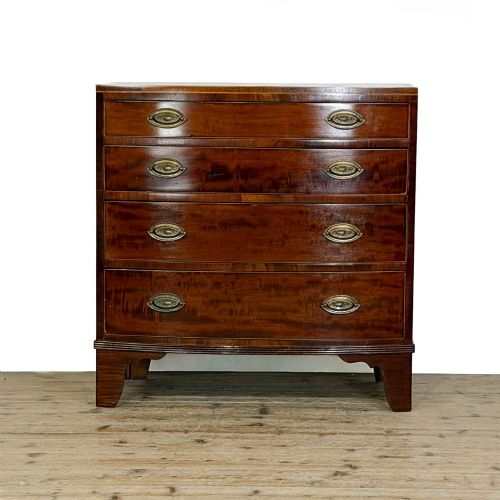
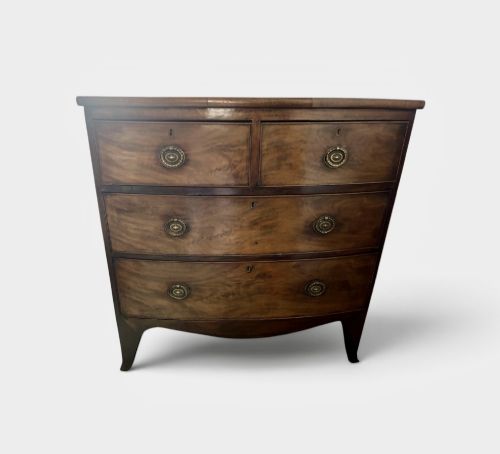
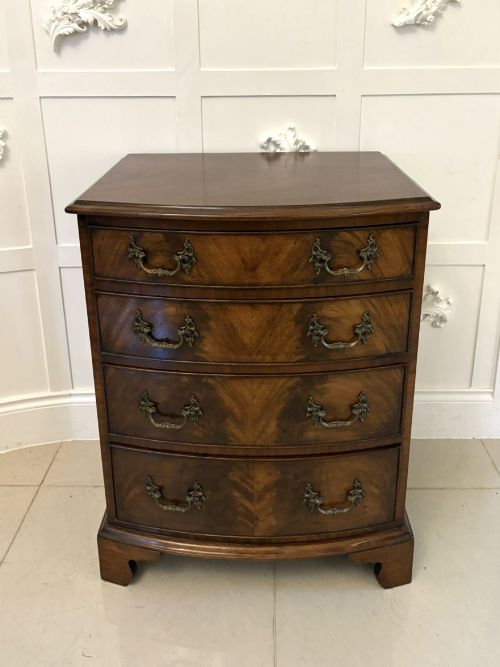
Antique bow front furniture encompasses case pieces designed with a convex, curved front profile that softens room corners and adds visual depth. The form appears most frequently in chests of drawers, alongside corner cabinets, sideboards, and smaller bedside chests across several historic periods.
Makers shaped these pieces from the eighteenth century through the early twentieth century, spanning Georgian, Regency, Victorian, and Edwardian eras. Mahogany dominates the surviving pieces, accompanied by walnut, satinwood, and various inlaid timbers.
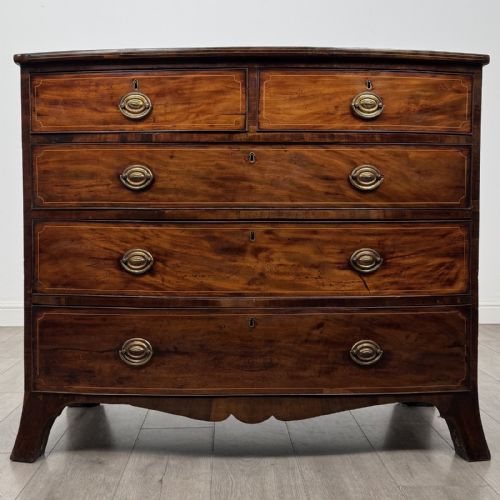
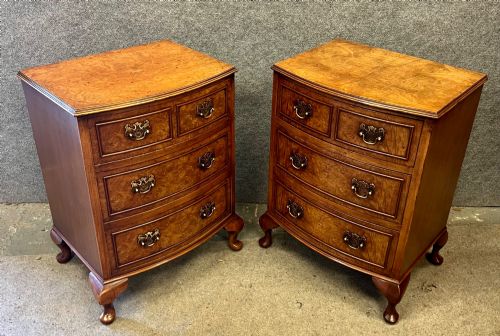
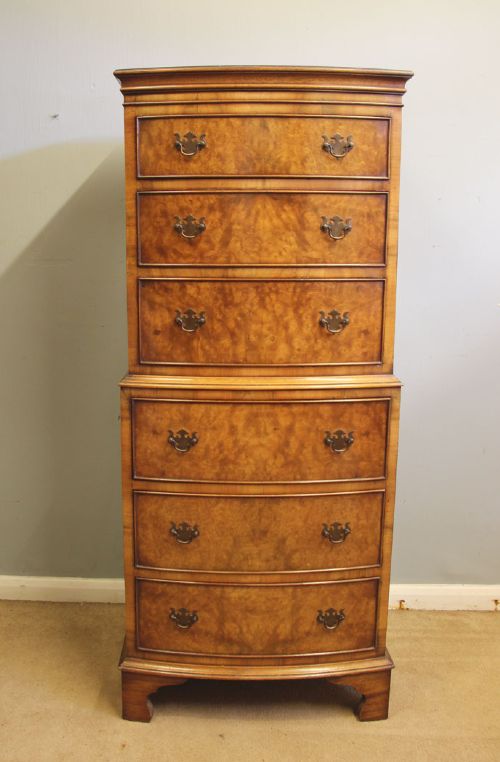
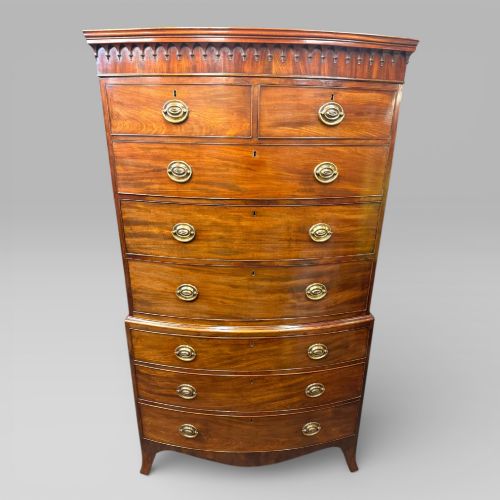
Chest of drawers configurations form the bulk of what buyers encounter, ranging from small two-drawer bedside models to tall chest on chest variants and large Scottish proportions. Sideboards and display cabinets also utilise the curved front to catch light across polished wood surfaces.
Materials and construction methods
Cabinet makers built these pieces using solid timber frames and drawer linings of secondary woods, applying carefully selected veneers like flame mahogany, plum pudding mahogany, and burr walnut to the primary surfaces. Crossbanding and stringing in lighter woods such as boxwood define the edges of drawer fronts and tabletops.
Construction relied on traditional joinery techniques, including hand-cut dovetails for drawer boxes and mortise and tenon joints for the main carcase frames. Brass handles, brackets, and escutcheons were cast and fitted by hand, while glass panels featured in display cabinets and vitrines.
The listings span from the 18th century through the 1930s, featuring mahogany, walnut, satinwood, and brass across various regional British and continental styles.
Factors that separate examples
Quality rests upon the selection and matching of wood veneers, where symmetrical grain patterns and rich natural patination elevate an individual piece above plain timber examples. The precision of the curved drawer front construction and tight joinery also signal superior cabinet making.
Original hardware, including cast brass handles and functioning locks with keys, contributes significantly to integrity. Subtle details like graduated drawer depths and fine stringing inlay separate standard utility pieces from high-status commissions.
Maple & Co.
The Antique Bow Front Furniture Glossary
- Bow front
- A convex, curved front profile characteristic of certain case furniture designed to project outward in the centre.
- Flame mahogany
- A veneer figure displaying flamed or feather-like patterns created by cutting across the bough of the mahogany tree.
- Crossbanding
- A narrow strip of veneer laid around the border of a panel with the grain running at right angles to the central wood.
- Bracket feet
- A simple foot shape formed by two pieces mitred together at the corner, often shaped or bracketed to the base.
- Stringing
- Thin lines of contrasting inlay used to outline drawers, doors, and tabletops for decorative definition.
Antique Bow Front Furniture: Frequently Asked Questions
How do I date antique bow front furniture?
Dating relies on examining construction methods, timber choices, and hardware styles across different eras. Georgian and Regency pieces typically show hand-cut dovetails and specific foot designs, while Edwardian and later items employ different manufacturing tolerances.
Secondary woods and the style of brass handles also provide clear chronological markers for distinguishing eighteenth-century origins from later revival periods.
Where should I place a bow front chest in a room?
The curved profile allows these pieces to sit comfortably against flat walls while softening the geometric lines of standard room layouts. They function effectively in bedrooms as functional drawer storage or in hallways as striking focal points.
Because the front projects outward, ensure adequate clearance in narrow walkways or tight corridors before positioning the cabinet.
How do I care for mahogany and walnut surfaces?
Maintain polished wood surfaces by dusting regularly with a soft, dry cloth and avoiding silicone-based polishes that build up residue over time. Keep timber away from direct heat sources and strong sunlight to prevent veneer cracking and fading.
Applying a traditional beeswax feed periodically helps nourish the grain and preserve the natural patination built up over centuries.
What is the difference between a chest on chest and a tallboy?
A chest on chest consists of two distinct case sections stacked vertically, usually featuring a smaller upper section over a larger base. The term tallboy often refers to similar stacked storage, sometimes built as a single tall unit or incorporating a writing compartment.
Both forms maximise vertical storage space while maintaining the characteristic curved bow front profile.