







Antique Bow Front Bureau
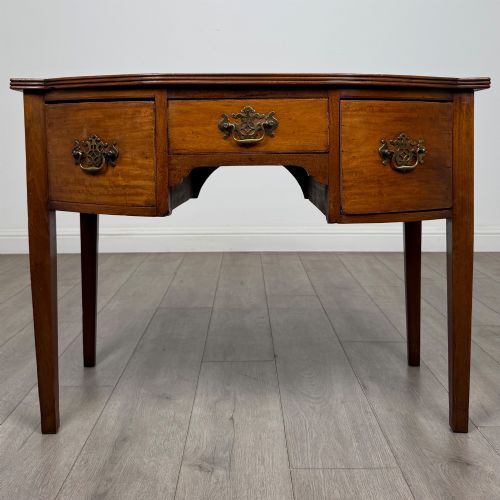
An antique bow front bureau combines practical storage with a writing surface, offering a curved silhouette that softens the room.
Antique Bow Front Bureau
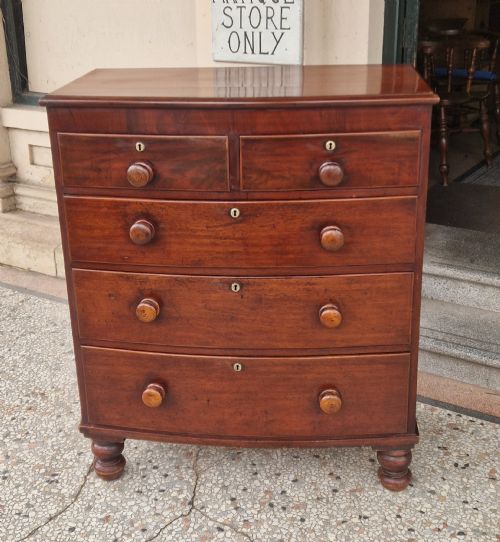
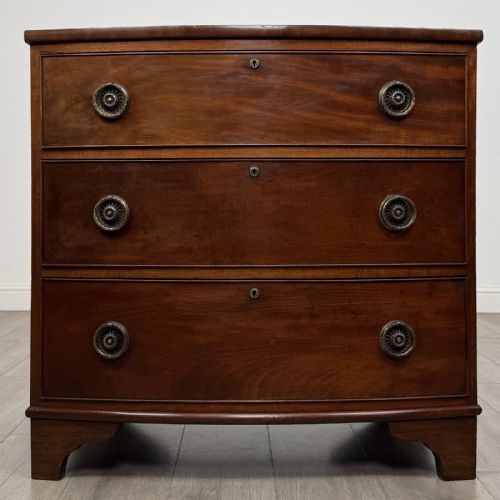
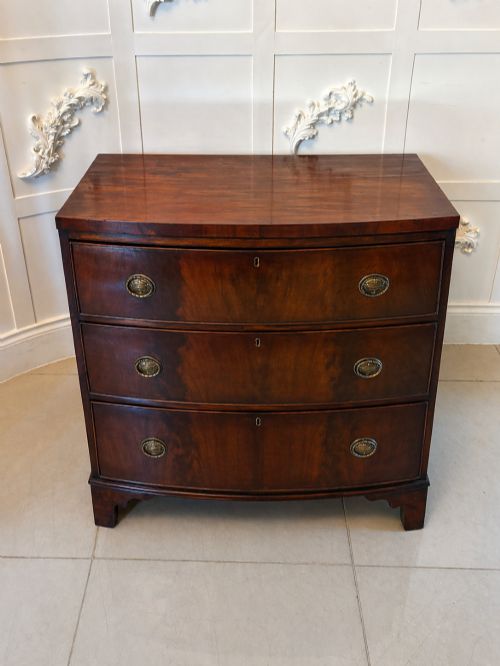
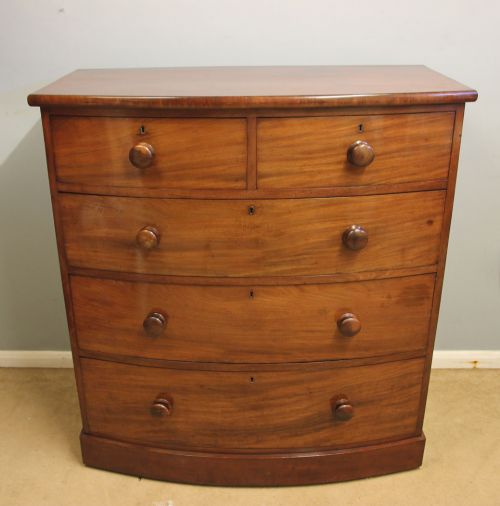
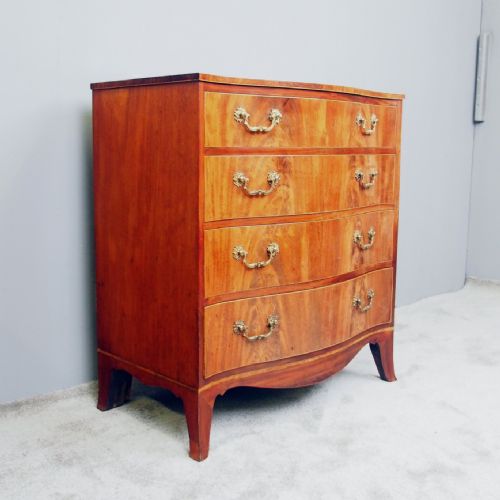
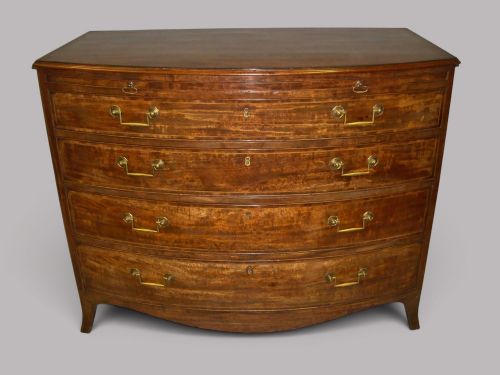
The standard format presents a curved convex front that projects outward, constructed predominantly in mahogany or flame mahogany veneer. Examples span various eras including George III, William IV, and Edwardian Sheraton Revival styles, sometimes incorporating contrasting satinwood inlay or brass handles.
Materials and construction methods
Cabinet makers relied heavily on solid timber and rich veneers, utilising mahogany, flame mahogany, and burr oak to create dramatic grain patterns across the curved drawer fronts. Wood inlay and satinwood banding frequently decorate the surfaces of pieces from the later Georgian and Sheraton Revival periods.
Structural integrity relied on traditional joinery, complemented by cast brass handles and occasionally fitted leather writing surfaces inside specialised secretaire sections. These materials combined to produce robust furniture designed for daily household administration and storage.
Antique Bow Front Bureau Retail Price Guide 2026
Typical asking prices for bow front bureau among the pieces listed under this phrase on Sellingantiques today, from the lower quarter to the upper quarter. They describe what is for sale here now, not the wider market.
Some larger pieces boast proportions so generous they require an entire room to themselves just to let the curve breathe properly.
Distinguishing quality in construction
Superior examples display careful selection of timber veneers, where grain patterns mirror symmetrically across the curved drawers and top surfaces. The crispness of wood inlay and the weight of the brass hardware further separate standard utilitarian items from finer cabinet work.
Proportion and scale dictate the visual success of the curve, alongside the smoothness of drawer operation and the retention of original timber patination. Master cabinet makers achieved tight joints and refined detailing that endure across the centuries.
Edwards and Roberts
The Antique Bow Front Bureau Glossary
- Bow front
- A convex, curved front facade that swells outward, popular in Georgian and Regency cabinet making.
- Flame mahogany
- A veneer cut from the fork of the mahogany tree, producing a distinctive flickering, flame-like grain pattern.
- Satinwood inlay
- A contrasting light-coloured exotic wood inserted into the primary timber surface to create decorative borders.
- Secretaire bookcase
- A tall cabinet featuring a dedicated writing drawer or fold-down desk compartment combined with upper shelving.
- Georgian period
- The era spanning the reigns of the four British monarchs named George, known for classical proportions and fine mahogany furniture.
Antique Bow Front Bureau: Frequently Asked Questions
How do I date a bow front piece?
Dating relies on observing construction techniques, timber choices, and stylistic markers such as bracket feet, handles, and inlay designs.
Earlier pieces from the eighteenth century often utilise different internal drawer linings and cabinet construction compared to later Victorian or Edwardian revivals.
Where should I place a bureau?
These items suit studies, living rooms, or large hallways where the curved front can be appreciated without obstructing walkways.
Ensure placement avoids direct sunlight to protect mahogany veneers and leather writing inserts from fading.
Can I use the desk daily?
Most examples remain structurally robust enough for regular writing and laptop use, provided the writing surface is treated with care.
Checking the stability of fold-down mechanisms ensures safe daily operation.
What is flame mahogany?
Flame mahogany is a decorative wood veneer harvested from where branches join the main trunk, creating rippling patterns.
Cabinet makers reserved this striking timber for the most prominent drawer fronts and tabletops.