
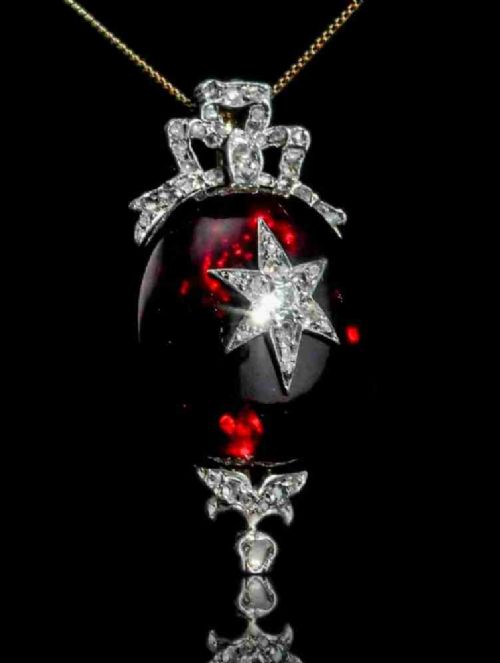


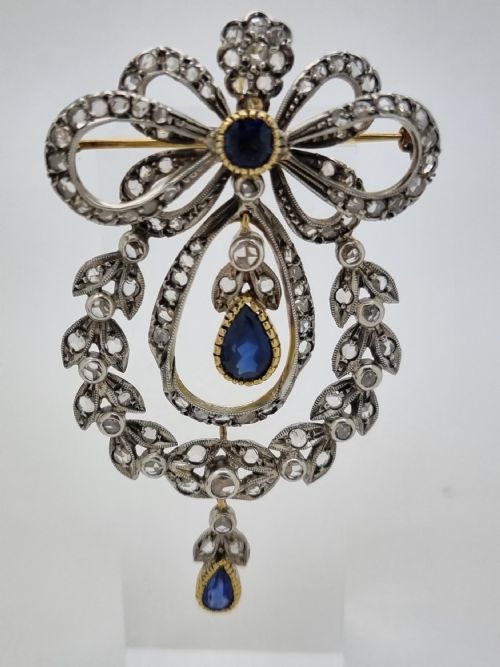


Antique Bow Brooch
An antique bow brooch ties ribbon in precious metals and stones, offering a wearable knot from the Victorian, Edwardian and Art Deco periods.
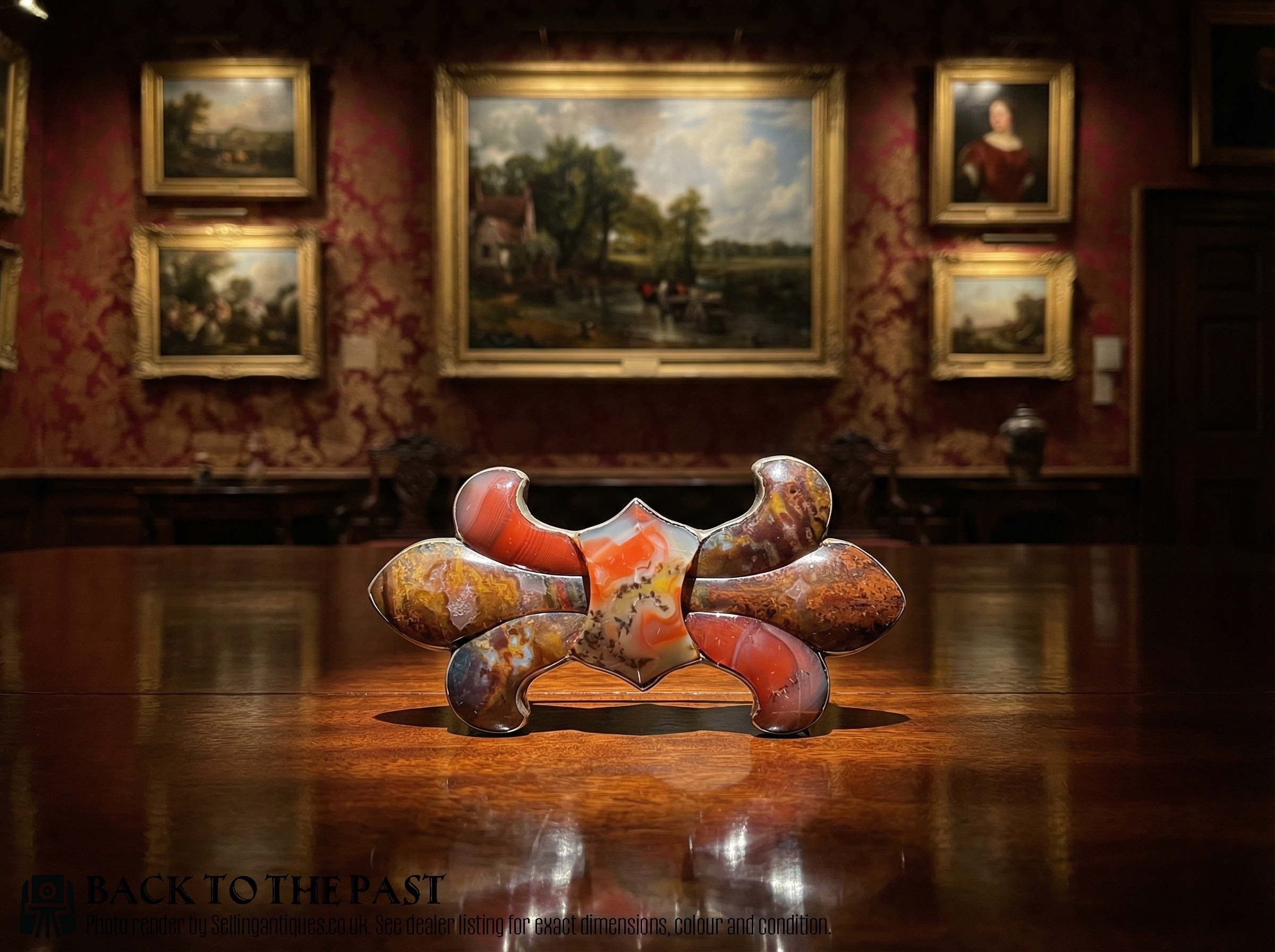
Antique Bow Brooch
When you search for an antique bow brooch, you encounter pieces fashioned into looped ribbons across the Victorian, Edwardian and Art Deco eras. These jewels often incorporate dangles such as heart drops or pendant fittings that transform them into multi-purpose ornaments.
The versions most common on this page combine gold or silver settings with pearls, turquoise, enamel and diamonds. Forms range from compact double collar pins to substantial diamond and sapphire bow brooches.
Victorian Scottish Revival examples appear featuring agate, jasper and pebble stones set in silver. Art Deco pieces introduce platinum and onyx alongside old cut diamonds.
How they were made
Goldsmiths and jewellers utilised 18ct gold, 15ct gold, 14K gold, silver and platinum to form the ribbon loops and structure. Gemstones including diamonds, sapphires, turquoise, garnets and natural pearls were then flush-set, claw-set or applied alongside enamel.
Many items double as pendant brooches, requiring hinged pin stems, secure catch mechanisms and integrated suspension loops. The integration of hardstones like agate and jasper in Scottish pieces demanded precise stone-cutting and silver mounting techniques.
Listings span Victorian, Edwardian and Art Deco periods, incorporating gold, silver, platinum, diamonds, turquoise, pearls, agate and enamel.
What varies in quality
The calibre of lapidary work and stone selection divides the range, particularly in the matching of natural pearls, turquoise cabochons and old cut diamonds. Superior pieces display harmonious proportions in the ribbon loops and precise enamel work without loss.
Metalwork execution also differentiates examples, where refined chased details, robust pin mechanisms and integrated convertible loops elevate the construction. Cartier Paris items demonstrate master craftsmanship through exacting gem arrangement and platinum fabrication.
Cartier Paris
The Antique Bow Brooch Glossary
- Bow brooch
- A piece of jewellery fashioned in the shape of a tied ribbon knot, worn pinned to garments.
- Pendant brooch
- An ornament fitted with both a pin and a loop, allowing it to be worn on a chain or fastened directly to clothing.
- Old cut diamond
- A diamond shape characterised by a smaller table, higher crown and larger culet, typical of pieces predating modern brilliant cutting.
- Cabochon
- A gemstone shaped and polished with a smooth convex surface rather than faceted.
- Double collar brooch
- A specific pin form historically used to fasten stiff detachable shirt collars.
- Paste
- Hand-cut glass utilised in historic jewellery to imitate gemstones.
Antique Bow Brooch: Frequently Asked Questions
How do I wear a bow brooch?
These pieces pin securely to coat lapels, necklines or the centre of collars using the traditional pin and C-clasp or safety catch on the reverse.
Many examples include a hidden loop that allows the piece to suspend from a chain as a pendant.
Are these brooches convertible?
Several pieces function as both a brooch and a pendant through integrated loops or bails attached to the reverse framework.
This dual format was popular in the nineteenth and early twentieth centuries for day and evening wear.
What materials distinguish Victorian Scottish pieces?
Victorian Scottish Revival items utilise local hardstones such as agate and jasper mounted in silver settings.
These designs reflect regional interest in domestic minerals during the nineteenth century.
How do I tell Edwardian pieces apart from Victorian ones?
Edwardian examples frequently favour platinum and silver-topped gold settings with intricate diamond and pearl clusters.
Victorian pieces often employ yellow gold, coloured gemstones like turquoise and garnet, and heavier stone settings.