




Antique Boat Sign
When you search for an antique boat sign, you are looking at maritime paintings, watercolours, and ceramics depicting vessels from the nineteenth and twentieth centuries.
Antique Boat Sign
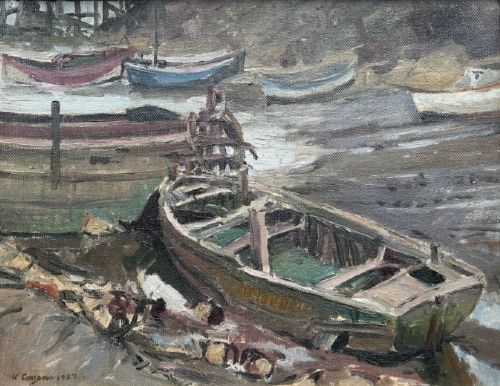
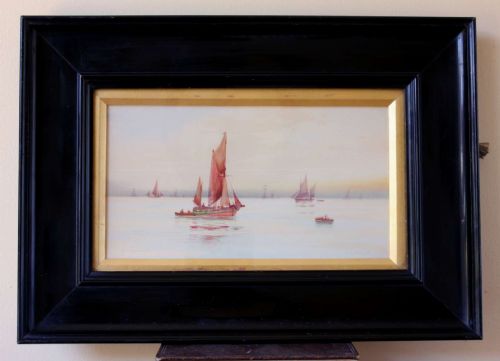
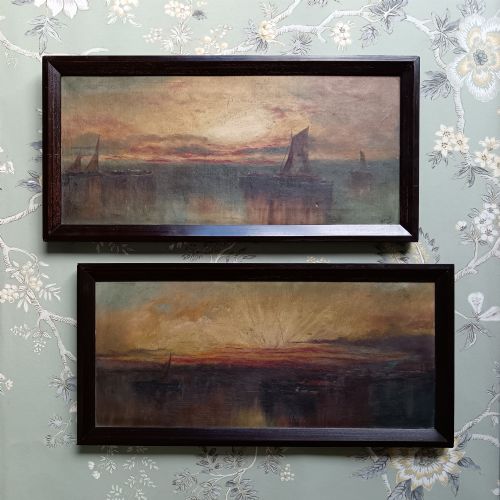
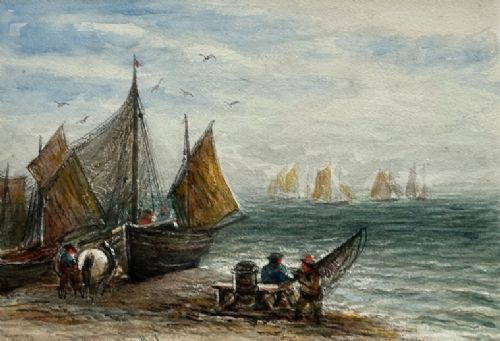
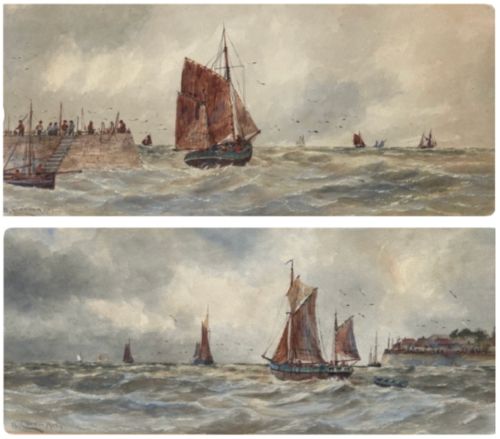
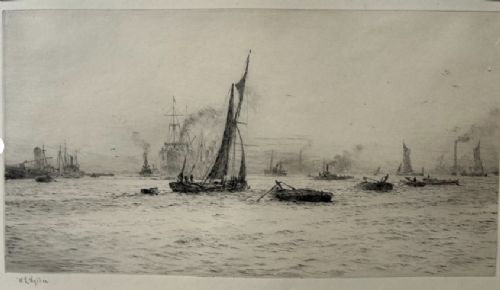
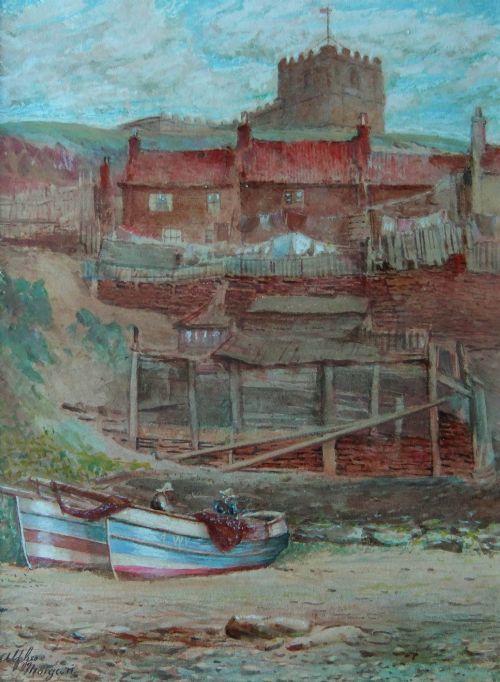
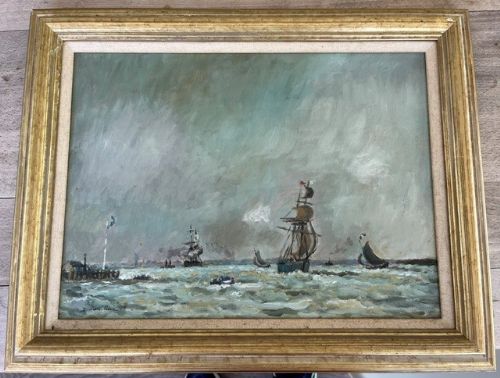
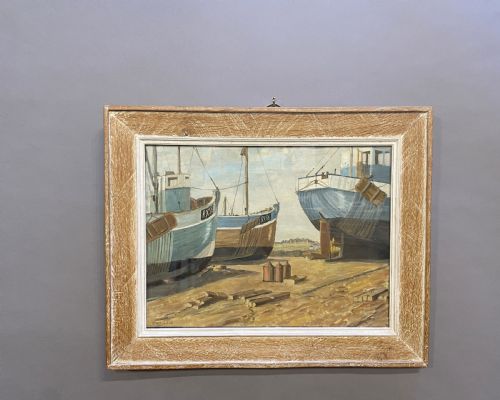
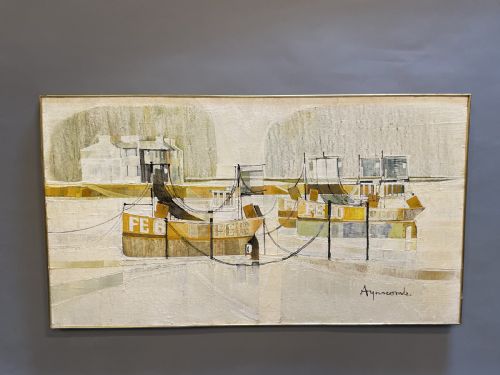
The term antique boat sign covers a diverse selection of maritime paintings, watercolours, etchings, and ceramic pieces produced across the nineteenth and early twentieth centuries. Buyers seeking an antique boat sign typically encounter framed watercolours and oil paintings on canvas, board, or card depicting coastal scenes, harbours, and fishing vessels.
Subject matter ranges from calm river scenes with rowing boats to stormy seas with trawlers and fishing boats off the Yorkshire coast. These works document maritime history through the hands of period artists working in watercolour, ink, and oil.
How they were made
Artists executed these works using traditional pigment applications on varied supports including stretched canvas, wooden panels, heavy paper, and prepared card. Watercolours relied on fine washes and pigment layers, whilst oil paintings utilised rich mediums built up on board or canvas.
Printmakers applied techniques like etching and aquatint onto paper plates, often adding pencil signatures. Ceramic items such as boat-shaped bowls involved hand-painted details fired onto glazed earthenware bodies.
Antique Boat Sign Retail Price Guide 2026
Typical asking prices for boat sign among the pieces listed under this phrase on Sellingantiques today, from the lower quarter to the upper quarter. They describe what is for sale here now, not the wider market.
Subjects range from calm river scenes with rowing boats to stormy seas with trawlers off the Yorkshire coast.
What varies in quality
Quality rests upon the handling of light, atmospheric perspective, and the confidence of the brushwork or line. Finer examples display meticulous detail in rigging and water movement, whereas lesser works rely on formulaic compositions.
The preservation of the pigment and the integrity of the original support determine the longevity of each piece. Works framed in period frames with clear artist signatures command stronger attention from collectors.
James Orrock·William Cannon·B. Nash·William Lionel Wyllie·Alfred G. Morgan·Thomas Bush Hardy·Tom Clough·William Tuck·T.S. Wallis·J. Southall·John Bell·Sam Bough·Fred Lawson·Carleton Grant·Norman Janes·Charles Edward Wilson·R. Thomas·Louis Van Staaten·Charles Williams·William James S. Crampton·W. Tetley·Sidney Grey·Charles James Lewis·Samual Halpert·John Shirley Fox
The Antique Boat Sign Glossary
- Watercolour
- A painting method where fine pigment is suspended in a water-based solution and applied to paper. This medium allows for translucent washes that capture changing coastal light.
- Seascape
- A work of art depicting the sea, coastal views, or marine vessels. These compositions form the core of maritime collections.
- Etching
- A printmaking process where acid cuts into unprotected parts of a metal plate to hold ink. Artists use this technique to produce detailed linear maritime prints.
- Coble
- A traditional type of open fishing boat used on the northeast coast of England. These vessels appear frequently in regional Victorian and Edwardian watercolours.
- Impressionism
- A style of painting emphasising light and the shifting effects of colour rather than rigid detail. French and British artists adopted this approach for atmospheric harbour scenes.
Antique Boat Sign: Frequently Asked Questions
What is an antique boat sign?
An antique boat sign encompasses vintage maritime paintings, watercolours, and related signage featuring nautical subjects from the nineteenth and twentieth centuries.
These pieces capture coastal life, commercial fishing boats, and leisure craft created by period artists working in oil, watercolour, and ink.
How were these maritime scenes displayed?
Period artworks were typically framed in wood, often with gilt moulding, to protect the delicate paper or canvas surfaces from environmental damage.
Larger oil paintings required robust stretcher frames and decorative surrounds, whilst watercolours were mounted under glass with paper mats.
How do I identify an Edwardian painting?
Edwardian pieces often feature brighter palettes and looser brushwork compared to strict Victorian academic styles, reflecting early twentieth-century maritime interests.
Signatures, dates, and framing materials also help narrow down the production period to the decade surrounding nineteen hundred.
Where were these coastal scenes painted?
Artists worked across British and European coastal towns, recording active harbours such as Whitby, Brighton, and Dutch ports.
Painters travelled directly to the shoreline to sketch working fishing vessels and tidal changes in real time.