


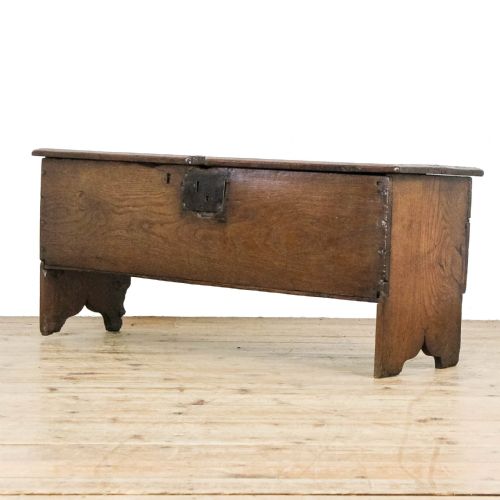


Antique Board Chest
An antique board chest represents early utilitarian joinery, offering robust storage through straightforward construction.
Antique Board Chest
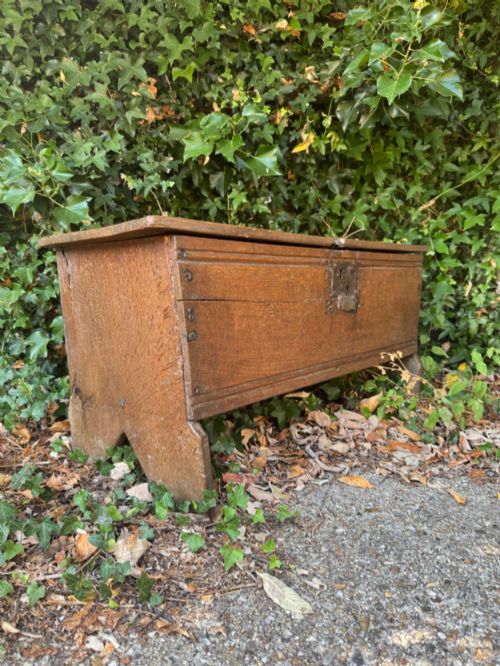
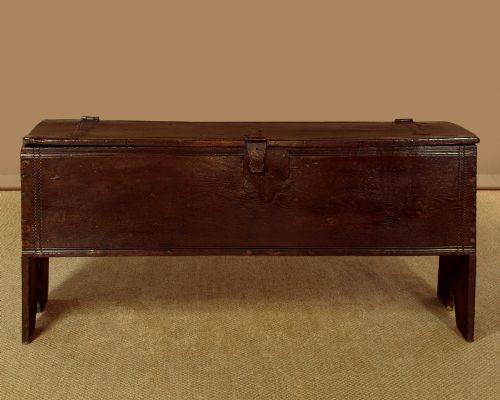
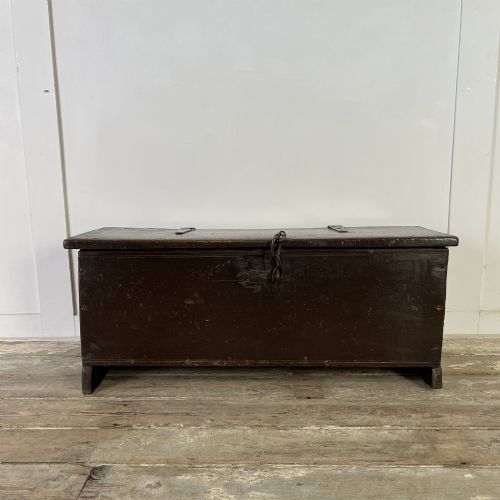
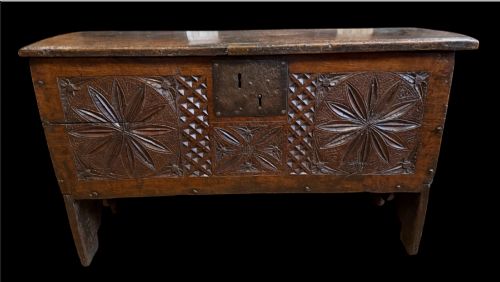
When searching for an antique board chest, you encounter sturdy storage forms constructed from thick vertical timber planks rather than framed panels. These pieces primarily manifest as six-plank coffers, sword chests, and primitive storage boxes dating from the sixteenth and seventeenth centuries.
The domestic forms seen here reflect early vernacular furniture traditions, predominantly originating from English and Welsh workshops during the Elizabethan and Stuart periods. Regional examples often display distinct local characteristics in their proportions and board thicknesses.
While earlier centuries dominate the core selection, occasional later adaptations and related storage pieces appear to show the longevity of board construction methods. These robust receptacles served essential household functions, storing textiles, valuables, and weapons.
Materials and construction methods
The primary material across the listings is native oak, chosen for its strength, durability, and local availability during the sixteenth and seventeenth centuries. Elm also appears in vernacular pieces, providing tough utility for simpler rural forms.
Joinery relies on simple board construction where vertical sides, front, and back planks connect directly to base boards and ends, often secured with iron or wrought iron hardware, hinges, and primitive locking mechanisms. Carpenters used basic hand tools to pit-saw and shape heavy timber planks without modern machinery.
Early makers occasionally misjudged timber shrinkage, leaving gaps big enough for mice to inspect the contents.
Quality variations in board chests
Quality in these early pieces rests upon the thickness of the original timber planks and the integrity of the board joints. Thicker oak boards and minimal replacement timber preserve the structural honesty expected in sixteenth and seventeenth-century work.
Surface preservation distinguishes superior survivals, where untouched historic patination and minimal timber shrinkage reveal genuine age. The restraint of early carved decoration, where present, adds distinction compared to plain utility boxes.
The Antique Board Chest Glossary
- Six-plank coffer
- A simple chest constructed from six individual planks of timber pinned together at the corners. This represents the earliest form of domestic box construction.
- Sword chest
- A long, narrow storage box specifically designed to accommodate long Tudor and Stuart weaponry. These pieces feature elongated proportions compared to standard square coffers.
- Vernacular
- Furniture made by local craftsmen for everyday use rather than high-style court workshops. These pieces utilise regional timbers and traditional local building methods.
- Elm
- A dense, tough hardwood utilised in country furniture making. It resists splitting and was frequently chosen for utilitarian boards.
Antique Board Chest: Frequently Asked Questions
What is an antique board chest used for?
These robust receptacles originally served secure domestic storage for valuable textiles, documents, and personal belongings in early households.
Today, collectors utilise them as statement coffee tables, blanket boxes, or hallway storage benches that anchor a room.
How do I date an early board chest?
Dating relies on examining the construction marks, timber species, and primitive hardware methods characteristic of sixteenth and seventeenth-century joinery.
Tool marks left by pit-sawing and hand-forged iron nails or hinges provide reliable physical evidence of period manufacture.
Are board chests made of solid oak?
The vast majority of period examples utilise heavy native oak boards hewn directly from local woodlands by early carpenters.
Alternative domestic hardwoods like elm occasionally appear in regional country pieces intended for everyday utilitarian duties.
How do I care for an old board chest?
Maintain stable indoor humidity levels away from direct heat sources to prevent the historic timber planks from drying and splitting.
Apply occasional traditional beeswax polish to nourish the dry oak surface and preserve the natural patination.