

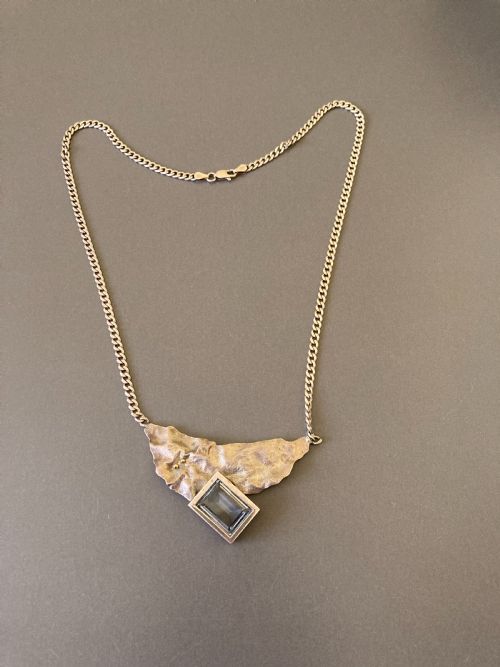


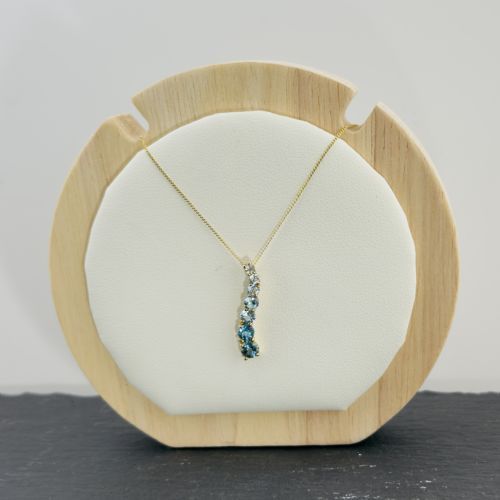


Antique Blue Stone Necklace
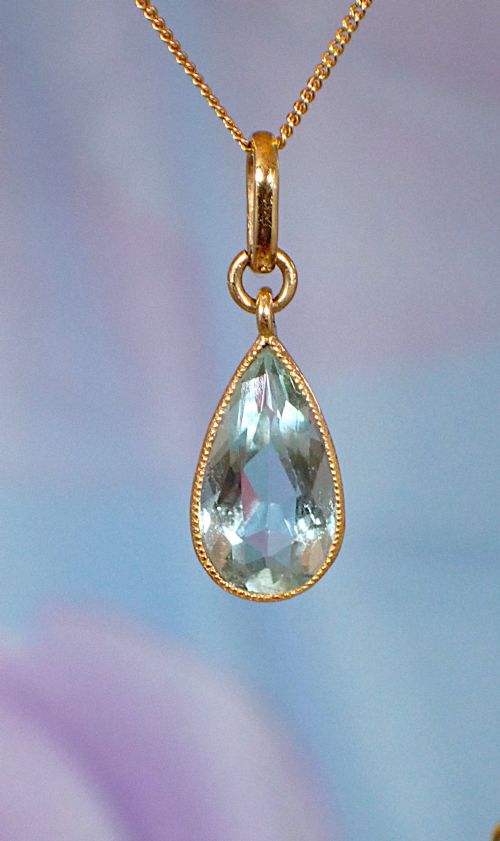
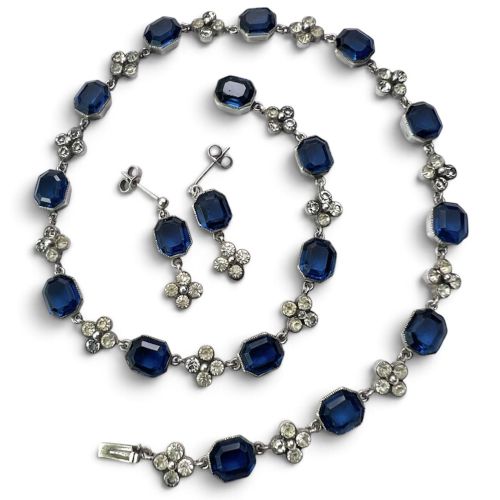
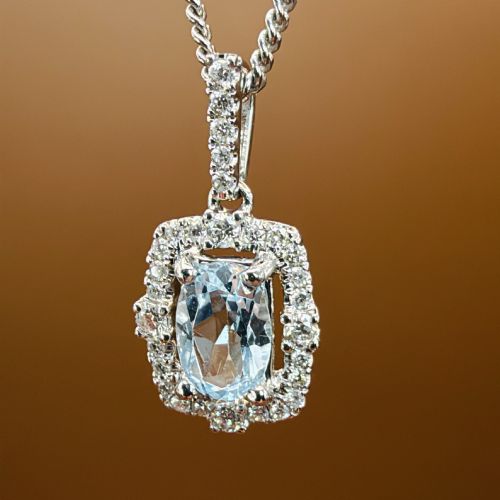
An antique blue stone necklace brings together deep sapphires, cool aquamarines and bright turquoise set in gold or silver for daily wear.
Antique Blue Stone Necklace
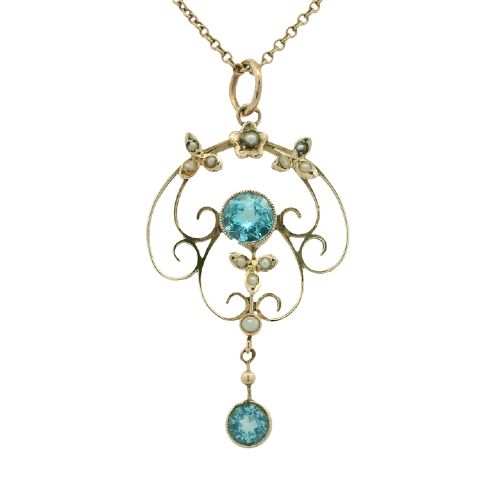
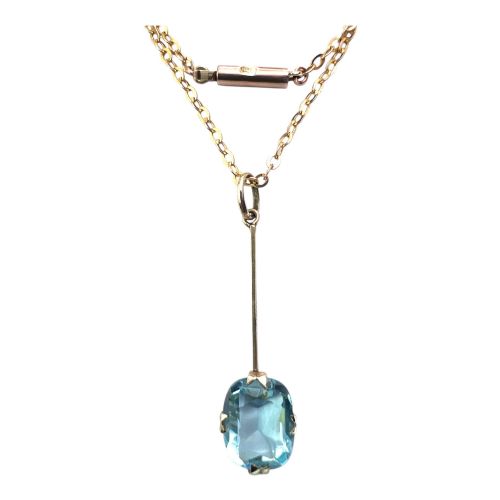
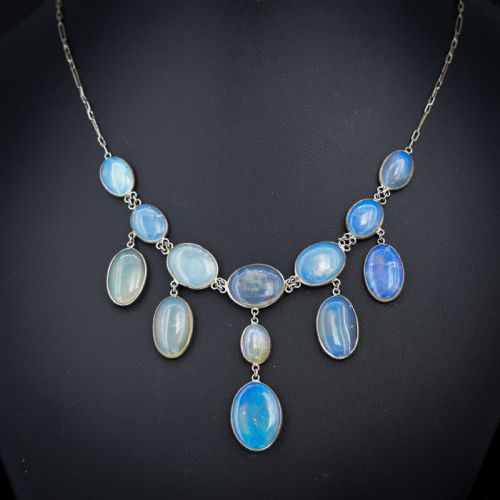
An antique blue stone necklace spans decades from the late nineteenth century through the mid twentieth century, covering Victorian, Edwardian, Art Nouveau, Art Deco, and mid-century periods. These items appear as pendants, drop necklaces, festoon designs, and matched jewellery sets.
The materials holding the blue stones include silver, nine-carat yellow gold, nine-carat rose gold, and eighteen-carat gold. Designs range from delicate Edwardian and Arts and Crafts negligee settings to bold Art Deco paste glass arrangements.
How they were made
Goldsmiths and silversmiths utilised nine-carat and eighteen-carat gold alongside silver to mount natural gems and paste glass. Metalwork techniques include intricate filigree wirework, fringe drops, and structured festoon chains.
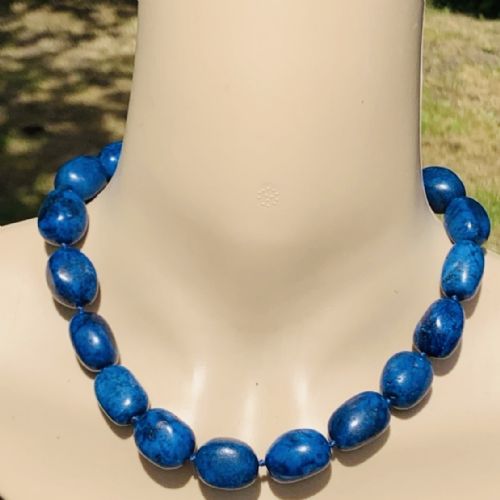
Lapidaries shaped stones into cabochons, faceted cuts, and flat beads to catch the light within pendant and necklace settings. Pearls and diamonds frequently accompany the central blue stones in cluster and drop configurations.
Edwardian artisans cleverly made sure every single pendant danced on the collarbone.
What varies in quality
Quality rests upon the originality of the metalwork and the depth of colour in the stones, whether natural aquamarine, sapphire, turquoise, lapis lazuli, or paste glass. Finer examples display meticulous filigree and balanced proportions between pendant and chain.
The integrity of the setting defines the upper tier, where stones remain secure in hand-worked gold or silver without disturbance to the original clasp or link structure.
The Antique Blue Stone Necklace Glossary
- Negligee necklace
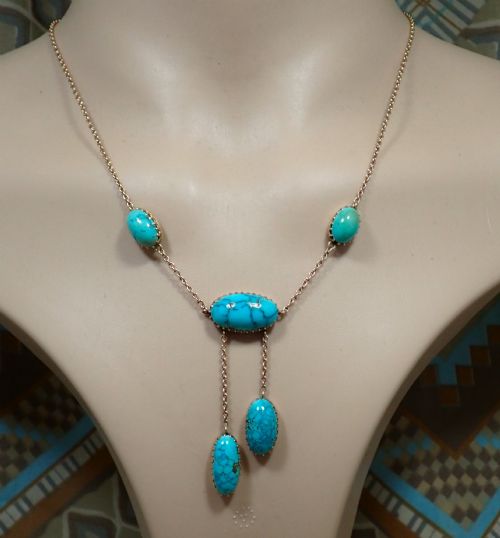
- A pendant style featuring two drops suspended at slightly different lengths from a central connector. This design became popular during the Edwardian era.
- Festoon necklace
- A decorative chain style featuring swags of beads or metal linked across the collarbone. It often incorporates fringe drops hanging below the main line.
- Cabochon
- A gemstone cut with a smooth, rounded, convex top rather than faceted planes. This shape suits opaque stones like turquoise and lapis lazuli.
- Paste glass
- Highly refractive lead glass hand-cut and polished to imitate precious gemstones. It appears frequently in period costume and fine jewellery sets.
Antique Blue Stone Necklace: Frequently Asked Questions
What periods do these necklaces come from?
The pieces span several decades from the late Victorian and Art Nouveau eras through the Edwardian, Art Deco, and mid-century periods. Each era brings distinct metalwork styles and stone combinations.
Craftsmanship shifts from delicate filigree in the eighteen-nineties to geometric lines in the nineteen-twenties and bolder atomic forms by nineteen-fifty.
How should I care for an antique chain?
Older chains and delicate clasps require gentle handling and storage away from harder items to prevent twisting or strain. Many pieces feature spring rings or bolt rings characteristic of their manufacturing period.
Professional cleaning keeps the gold, silver, and stone settings secure without damaging fragile pearls or softer turquoise.
What is a negligee necklace?
A negligee necklace suspends two unequal drops from a central ribbon or motif, creating an asymmetric pendant effect. This silhouette gained widespread favour during the Edwardian and Arts and Crafts periods.
Makers often paired aquamarines or turquoise with small pearls in these dangling configurations.