





Antique Black Powder Weapon
An antique black powder weapon is a piece of history that carries the smoke and mechanics of early combat, and buyers seek them out for their tactile connection to past conflicts.
Antique Black Powder Weapon
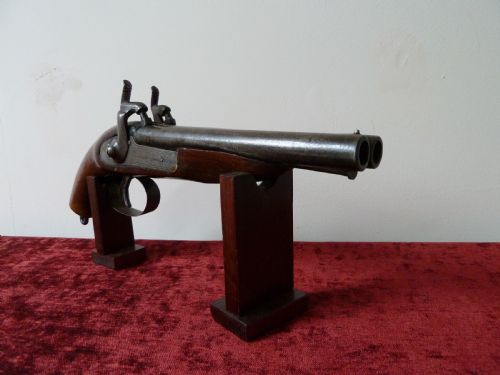
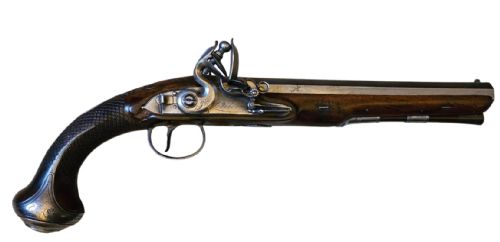
An antique black powder weapon covers firearms from the 18th century and 19th century, spanning styles from Georgian and Victorian military to 18th century French and Mughal Empire designs. When searching for an antique black powder weapon, buyers most commonly encounter items classified as antique firearms, militaria, and arms and armour.
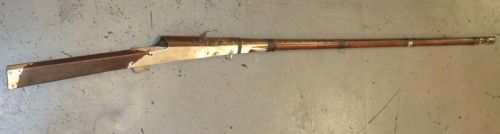
The selection ranges from shoulder arms like the English Brown Bess flintlock musket and the East India Company model F percussion musket to the early 18th century Indian Toradar matchlock musket. Handguns are equally represented through double barrel percussion pistols, officers percussion pistols from London and Newark makers, and French holster pistols.
These items reflect specific periods of military and civilian use, encompassing the Napoleonic era through mid-nineteenth century British service. Each piece demonstrates the mechanical evolution from matchlock and flintlock firing mechanisms to later percussion systems.
How they were made
Makers constructed these arms using robust combinations of steel, iron, and brass for barrels and lock plates, paired with stocks shaped from walnut and various hardwoods. Metal components involved forging and casting, while wooden stocks required careful shaping to house the lock mechanisms and barrel tangs securely.
Antique Black Powder Weapon Retail Price Guide 2026
Typical asking prices for black powder weapon among the pieces listed under this phrase on Sellingantiques today, from the lower quarter to the upper quarter. They describe what is for sale here now, not the wider market.
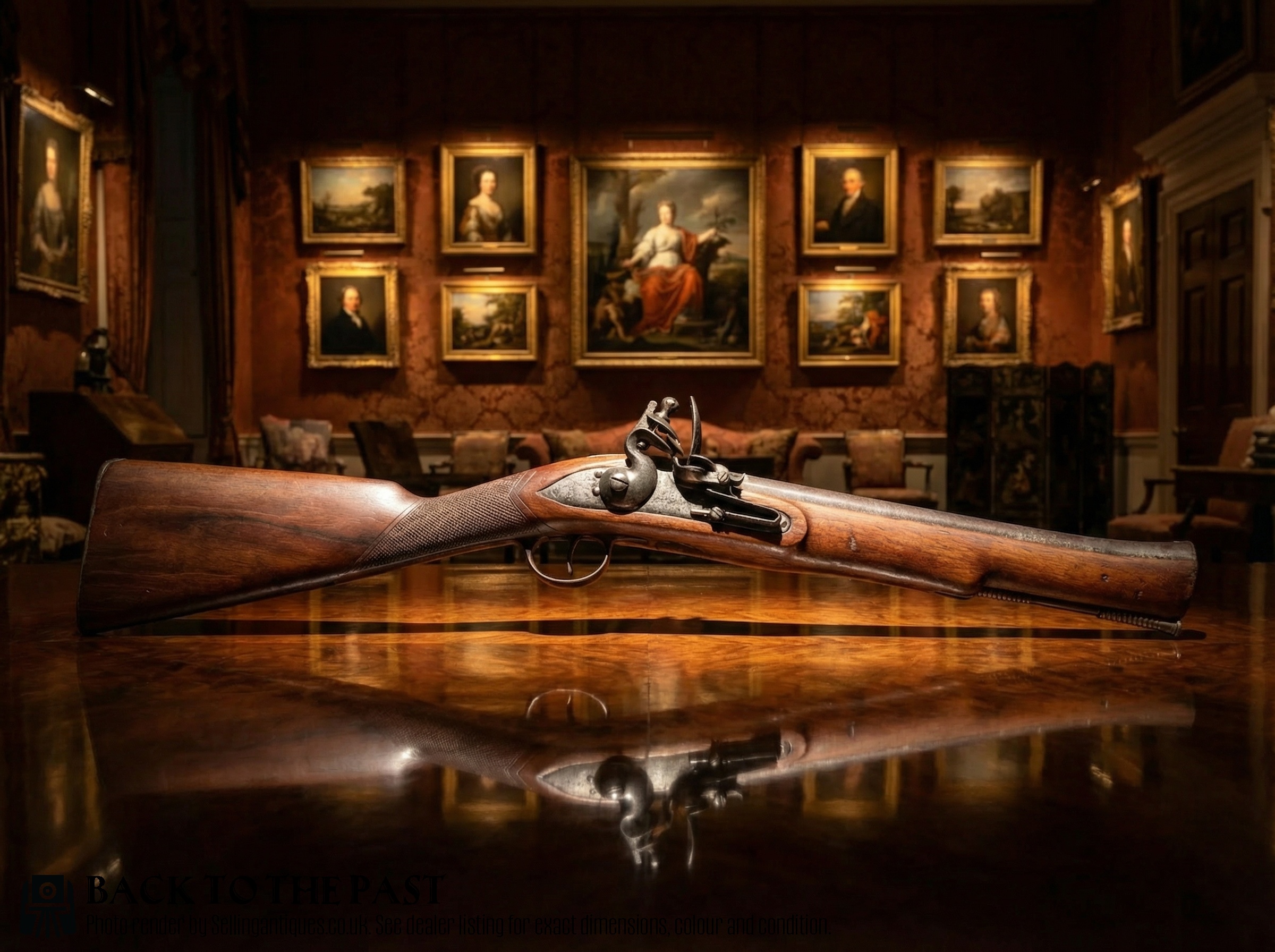
Some barrels flare just enough at the muzzle to make short-range persuasion look remarkably stylish.
What varies in quality
The standard of an antique black powder weapon often rests on the clarity of maker signatures, such as Sargant & Son, Barber of Newark, or Parisian marks, alongside London origin stamps. Finer examples display crisper engraving on lock plates and superior wood grain in the walnut or hardwood stocks.
Mechanical crispness in the action and the original matching condition of lock and barrel components distinguish higher-tier specimens from heavily altered or replacement-part arms. The integration of brass mounts and the survival of original finish or patina shape the overall standing of each piece.
Sargant & Son·Barber of Newark
The Antique Black Powder Weapon Glossary
- Flintlock
- A firearm ignition mechanism that uses a piece of flint struck against a steel frizzen to create sparks for the black powder charge.
- Percussion
- An ignition system utilising a small percussion cap struck by a hammer to ignite the powder inside the barrel, replacing earlier flintlock designs.
- Smoothbore
- A barrel without rifling grooves inside the bore, standard for muskets and blunderbusses of the Georgian and Napoleonic periods.
- Matchlock
- An early firearm action where a burning slow match is lowered into a pan of priming powder by means of a lever.
- Blunderbuss
- A muzzle-loading firearm with a flared barrel designed to scatter shot at close range, frequently utilised in the 18th century.
Antique Black Powder Weapon: Frequently Asked Questions
What is a black powder weapon?
An antique black powder weapon is a muzzle-loading firearm that relies on loose gunpowder for propulsion, encompassing matchlock, flintlock, and percussion systems.
These pieces date primarily from the 18th and 19th centuries and served in both military and civilian capacities across various global empires.
How do flintlock and percussion differ?
Flintlock mechanisms generate a spark by striking flint against steel into a priming pan, whereas percussion systems use a chemical cap struck directly by a hammer.
Percussion ignition, arriving around the 19th century, offered greater reliability in damp weather compared to earlier flintlock arms.
What periods do these weapons cover?
The available pieces span the 18th century, Georgian era, Napoleonic period, and Victorian military eras up to mid-century 1850 designs.
Each period exhibits distinct stylistic changes in furniture, brass mountings, and stock geometry.
How were muskets and pistols used?
Muskets served as standard infantry shoulder arms for line regiments and colonial forces, while pistols functioned as sidearms for officers and travellers.
Specialist arms like blunderbusses protected coaches and property at close quarters.