

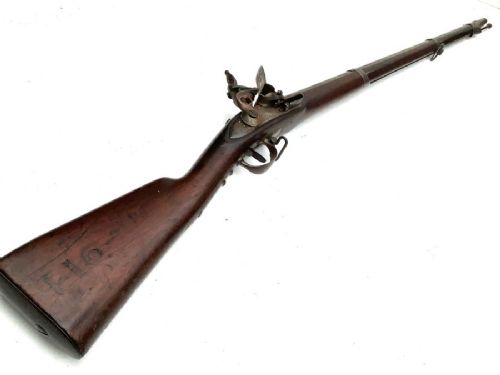
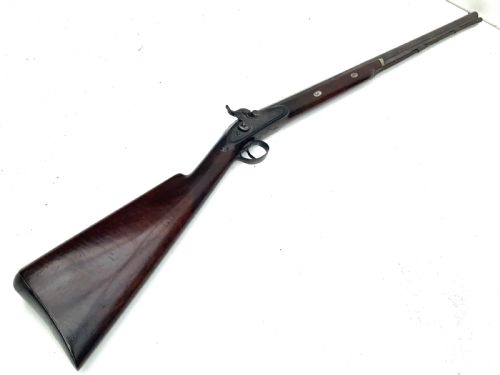


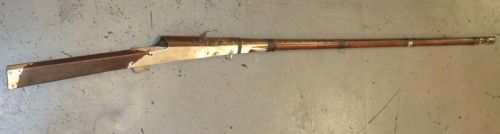
Antique Black Powder Musket
These antique black powder musket pieces are functional military and sporting arms built to last, offering collectors a tangible link to centuries of warfare and shooting history.
Antique Black Powder Musket
An antique black powder musket covers historic firearms from the eighteenth and nineteenth centuries, spanning Georgian, Victorian, Napoleonic, and colonial eras. Buyers encounter military and sporting arms, including flintlock, percussion, matchlock, and blunderbuss designs.
The selections on this page feature British, French, American, and Indian origins, utilising mechanisms such as the Brown Bess, Charleville, Enfield, and Toradar. These arms trace the evolution of smoothbore and rifled military technology across global conflicts and civilian use.
How they were made
Makers fashioned these arms using forged steel and iron for barrels and locks, paired with wooden stocks of walnut and hardwood. Brass components frequently appear on mounts, trigger guards, and butt plates, providing durability and decorative contrast.
Lock mechanisms rely on intricate steel springs and hammers, whether operating via flintlock ignition, percussion caps, or early matchlock systems. Stocks were hand-carved and fitted to accommodate barrels secured by pins, bands, or brass furniture.
Antique Black Powder Musket Retail Price Guide 2026
Typical asking prices for black powder musket among the pieces listed under this phrase on Sellingantiques today, from the lower quarter to the upper quarter. They describe what is for sale here now, not the wider market.
Listings feature walnut, hardwood, steel, brass, iron, and leather materials across 18th and 19th century military and sporting pieces.
What varies in quality
Quality in these arms rests on the integrity of the metalwork and the preservation of original stock timber. Crisp action mechanics and legible maker or government acceptance markings elevate a piece above standard examples.
The survival of original surface finishes, unpolished brass, and matching components across the lock and barrel distinguishes superior specimens. Evidence of period use without destructive alterations preserves the historical value of the arm.
John Manton & Son·Sargant & Son
The Antique Black Powder Musket Glossary
- Flintlock
- An ignition mechanism that uses a piece of flint striking a steel frizzen to create sparks for the gunpowder charge. This system dominated military and civilian firearms throughout the eighteenth and early nineteenth centuries.
- Percussion cap
- A small metal cup containing a priming compound placed on a nipple, which explodes when struck by the hammer to ignite the powder. It replaced the flintlock system during the nineteenth century.
- Smoothbore
- A barrel without internal rifling grooves, designed to fire lead balls or shot over shorter distances. Most early military muskets utilised this bore type before the widespread adoption of rifling.
- Matchlock
- An early firearm mechanism where a burning slow match is lowered into a pan of priming powder to fire the weapon. This system represents one of the earliest mechanical ignitions for shoulder arms.
- Blunderbuss
- A short-range firearm with a flared muzzle designed to scatter lead balls or multiple projectiles. These arms were widely used for coach defence and close-quarters combat.
Antique Black Powder Musket: Frequently Asked Questions
How do flintlock and percussion muskets differ?
Flintlocks rely on a flint striking steel to create sparks that ignite the powder charge in an external pan. Percussion muskets use a hammer striking a primed cap placed on a nipple, offering faster and more reliable ignition.
The transition from flint to percussion occurred during the nineteenth century, rendering older flintlock systems obsolete for standard military service.
What is a Brown Bess musket?
The Brown Bess is the colloquial term for the standard-pattern smoothbore flintlock musket used by the British Army for over a century. These arms saw extensive service during the Georgian and Napoleonic periods.
Examples were produced by various government contractors and private makers, featuring distinctive brass furniture and full-length walnut stocks.
Were these arms used in India?
British forces utilised standard muskets across colonial territories, including East India Company variations deployed during military campaigns. Local craftsmen also produced distinct regional arms, such as the Indian matchlock.
These pieces reflect the complex exchange of military technology and trade across the Mughal Empire and British territories.