


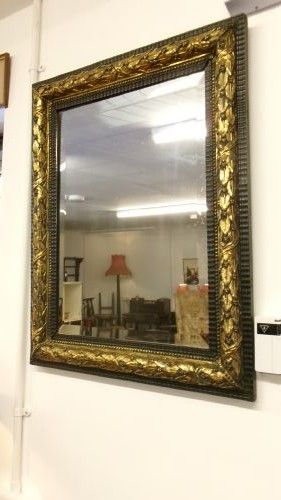
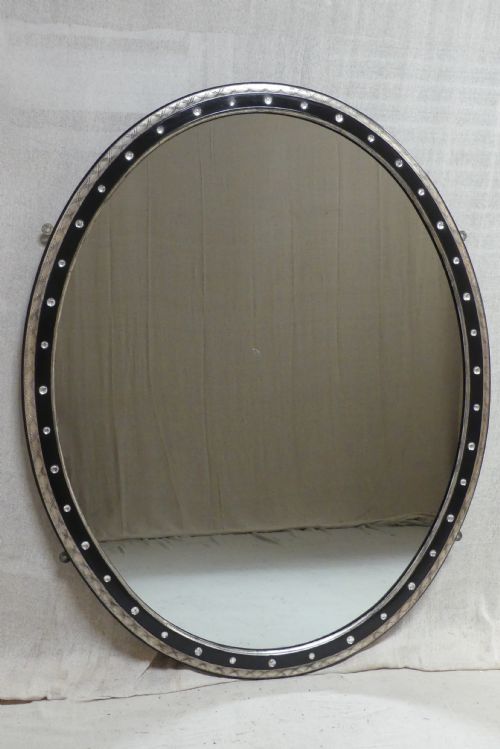
Antique Black Frame Mirror
An antique black frame mirror brings dark, grounded contrast and striking period presence to an interior through ebonised wood, carved gesso, and gilt highlights.
Antique Black Frame Mirror
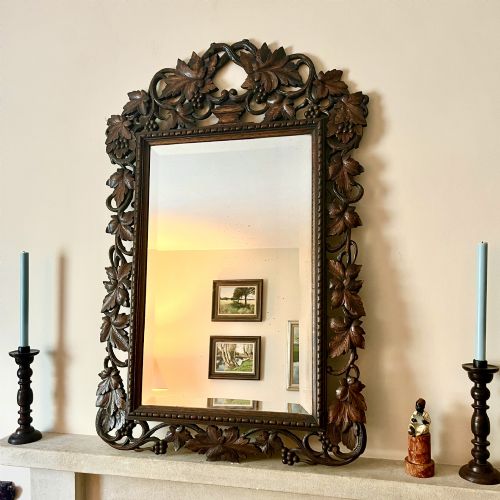
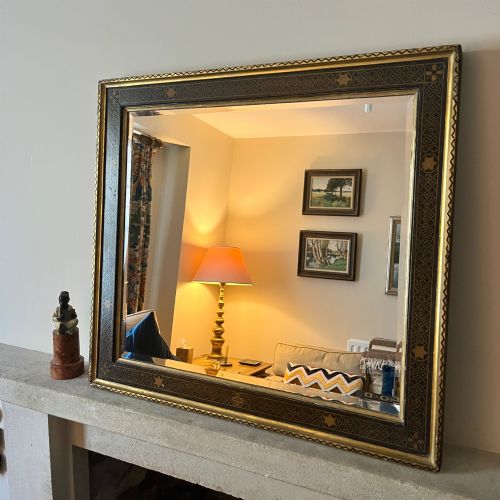
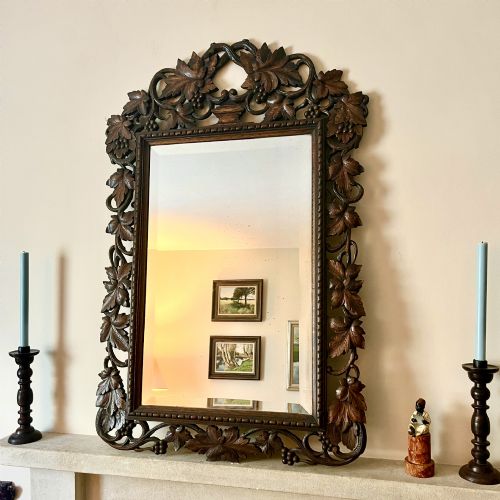
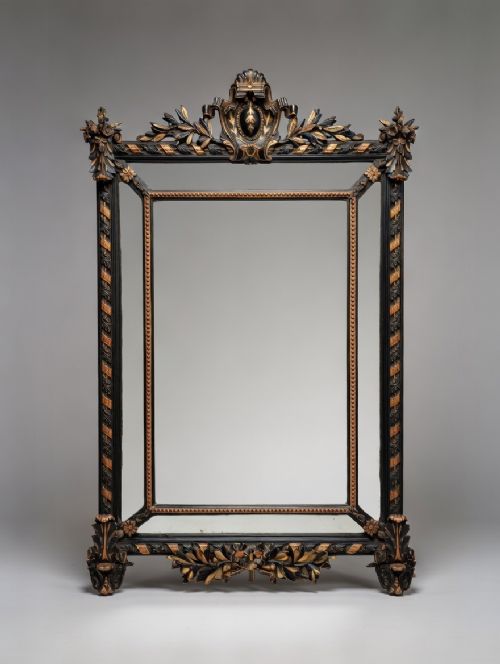
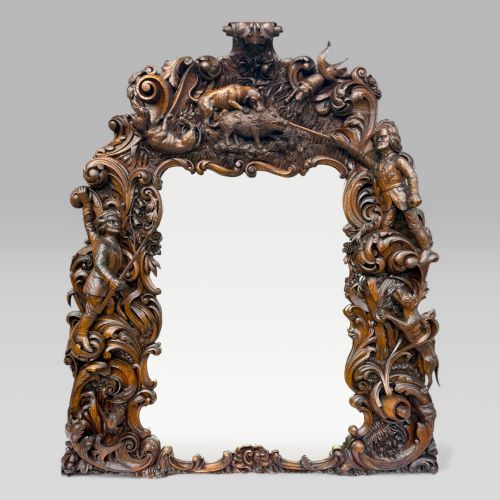
An antique black frame mirror encompasses dark-finished wall hangings, grand overmantles, and decorative table pieces found across the nineteenth and early twentieth centuries. These works span distinct regional schools, including ornately carved Black Forest pieces, French Napoleon III cushion designs, and English Victorian examples.
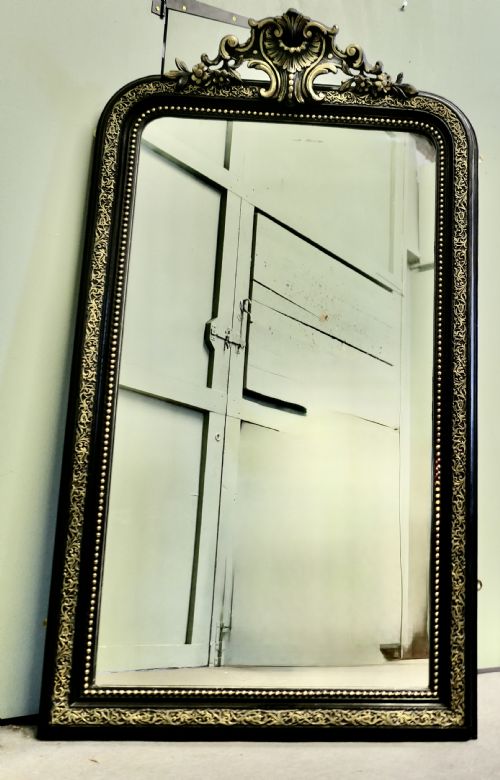
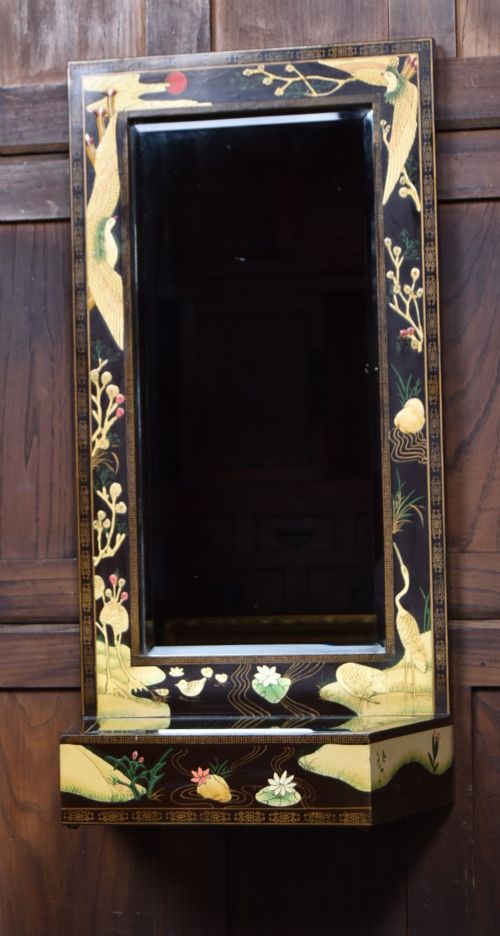
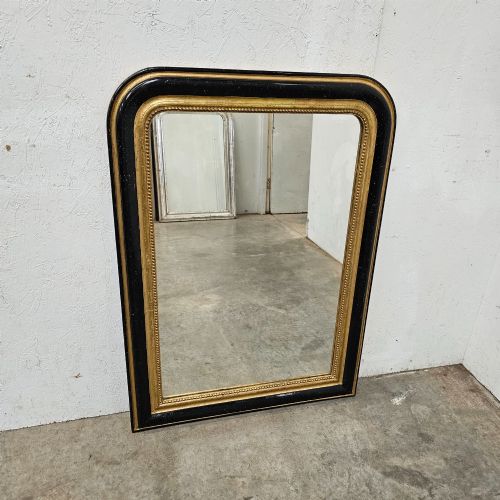
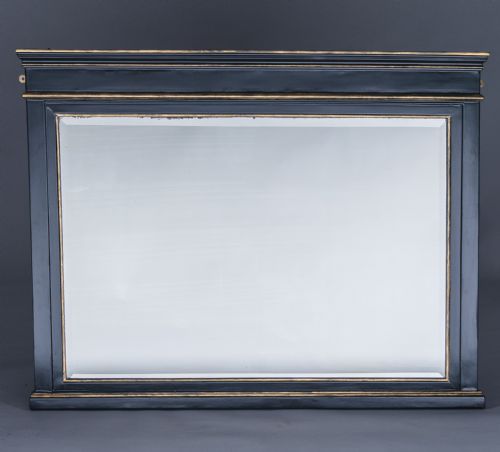
The version most commonly met on this page is the Victorian ebonised and parcel-gilt overmantle mirror, designed to sit commandingly above a fireplace. Buyers also encounter taller pier mirrors, Edwardian chinoiserie ovals, and occasional specialist items like fairground fun house mirrors.
The forms adapt to various domestic spaces, appearing as large floor-standing units, horizontal reception room wall mirrors, and smaller hall or dressing table variants. Each piece relies on dark woodwork or painted black surfaces to anchor the surrounding room scheme.
Materials and construction
The construction typically relies on solid wood, such as oak or pine, which is then ebonised to simulate costly ebony or coated in black paint and gesso. Gesso acts as a smooth plaster base for intricate mouldings and supports parcel-gilt highlights in gold leaf.
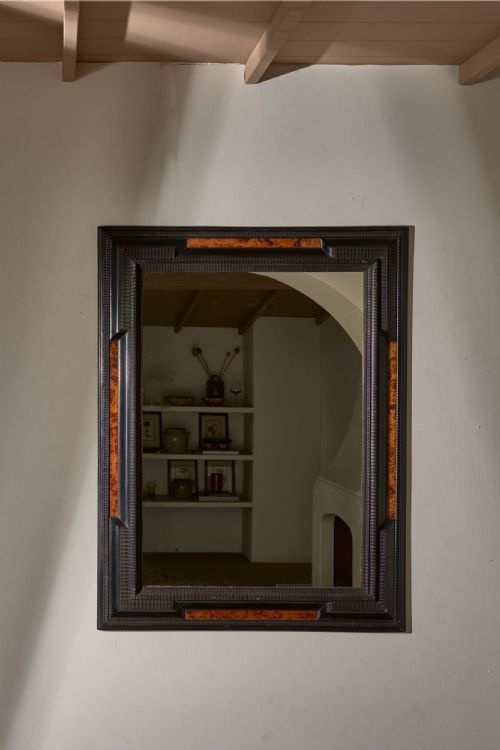
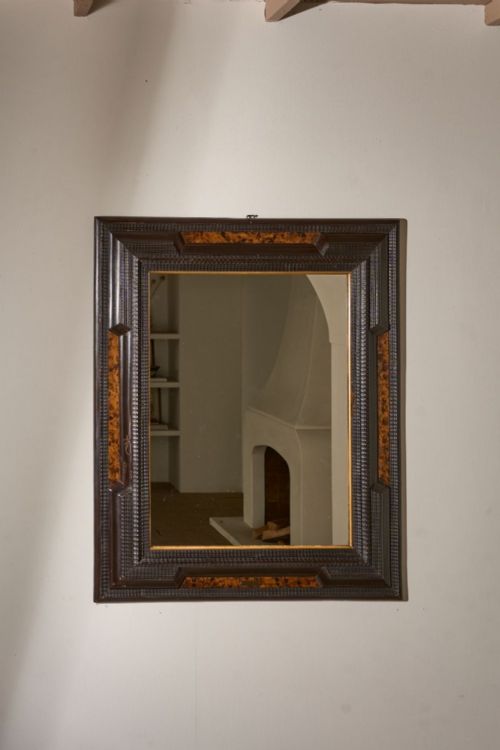
Many frames combine carved wooden elements with applied brass mounts, faux tortoiseshell finishes, or reverse-painted glass panels. Mirror glass itself is set within deep rebates, sometimes featuring bevelled edges or acid-etched pub mirror designs from the late Victorian and Edwardian eras.
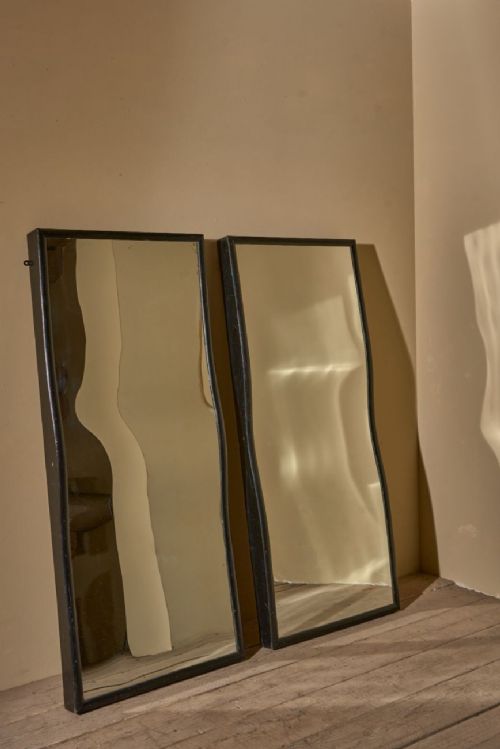
A scattering of fairground fun house mirrors brings intentionally crooked reflections alongside polite Victorian decor.
Distinguishing finer works
The calibre of an antique black frame mirror rests on the crispness of its hand-carved ornamentation and the depth of the ebonised finish. Finer pieces display sharply rendered foliage, figures, or scrolls in the gesso and wood rather than soft, moulded resin substitutes.
The treatment of the parcel-gilt details further separates standard production from superior craftsmanship, with higher-grade examples showing genuine gold leaf applied to accentuate specific carved motifs. Original silvered mirror plates with appropriate age foxing also elevate the integrity of the piece.
The Antique Black Frame Mirror Glossary
- Ebonised Wood
- Timber treated with stains, dyes, or dark polish to imitate high-cost ebony. This dark finish gained immense popularity during the Victorian period.
- Parcel-Gilt
- A decorative technique where specific raised portions of a dark frame are highlighted with gold leaf or gilding. It creates a striking contrast against black woodwork.
- Overmantle Mirror
- A wide mirror specifically proportioned to hang on the wall directly above a fireplace mantelpiece. These often feature expansive horizontal formats.
- Cushion Mirror
- A frame style with a convex, outward-sloping profile that frames the central glass like a pillow. It reflects light from multiple angles.
- Gesso
- A plaster-like mixture of chalk and binder applied to wood frames to create a smooth surface for carving and gilding. It allows for intricate relief ornamentation.
Antique Black Frame Mirror: Frequently Asked Questions
Where should I hang an overmantle mirror?
These large horizontal mirrors belong above a fireplace mantelpiece where they naturally draw the eye and reflect light across the room. They also function effectively above low sideboards or large console tables in reception spaces.
Ensure the wall fixings match the considerable weight of timber, gesso, and glass. Hanging them at the correct height ensures they capture balanced reflections of the interior.
How do I date a Victorian ebonised mirror?
Examine the construction methods visible at the back of the frame, alongside the type of wood and fasteners used. Victorian examples from the mid to late nineteenth century often feature hand-cut joints and heavy gesso ornamentation.
Stylistic cues such as Aesthetic Movement geometric lines or parcel-gilt highlights help narrow the decade. Original glass plates with minor foxing also point securely to nineteenth-century manufacture.
What is a Black Forest mirror?
These are highly distinctive carved wooden mirrors originating from the mountainous region of central Europe during the nineteenth century. They typically feature deep relief carvings of natural motifs like oak leaves, squirrels, or game.
The dark wood frames display exceptional sculptural depth and tactile detail. They bring a rustic yet sophisticated character to country houses and traditional interiors.
Are fairground mirrors antique?
Certain fairground and fun house mirrors date from the late nineteenth and early twentieth centuries. These specialised pieces were built for amusement parks and feature distorted glass designed to alter reflections.
They represent a quirky offshoot of standard mirror production and appeal to specialist collectors. Their history is distinct from domestic wall and hall mirrors.
How do I care for antique glass?
Clean the mirror plate gently using a soft microfibre cloth and a mild, ammonia-free glass cleaner applied to the cloth rather than directly to the glass. This prevents moisture from seeping behind the silvered backing.
Protect the ebonised wood and gilt frame from direct sunlight and excessive humidity. Regular dusting with a dry cloth keeps the dark finish stable over time.