


Antique Bijouterie Case
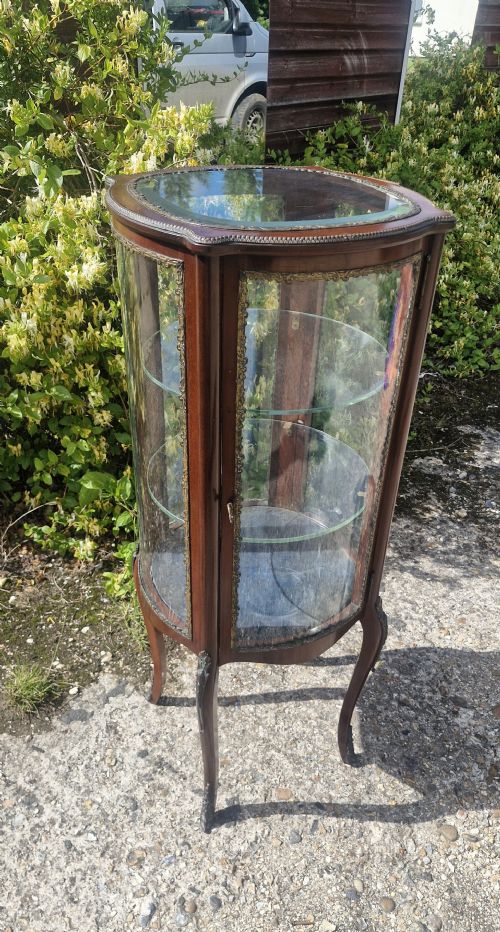
An antique bijouterie case holds small treasures under glass, combining timber frames with velvet linings to display rings, medals and curiosities.
Antique Bijouterie Case
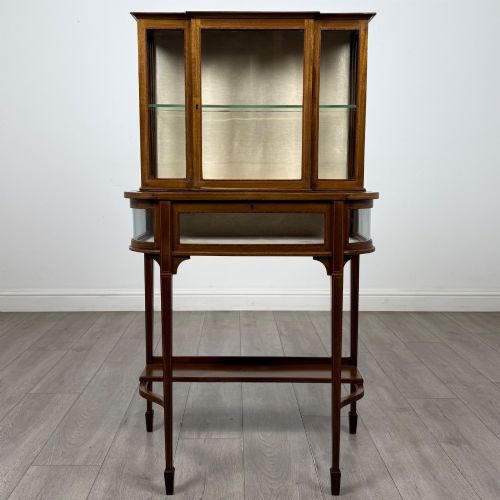
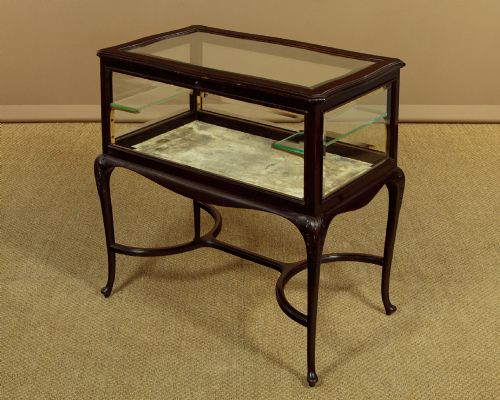
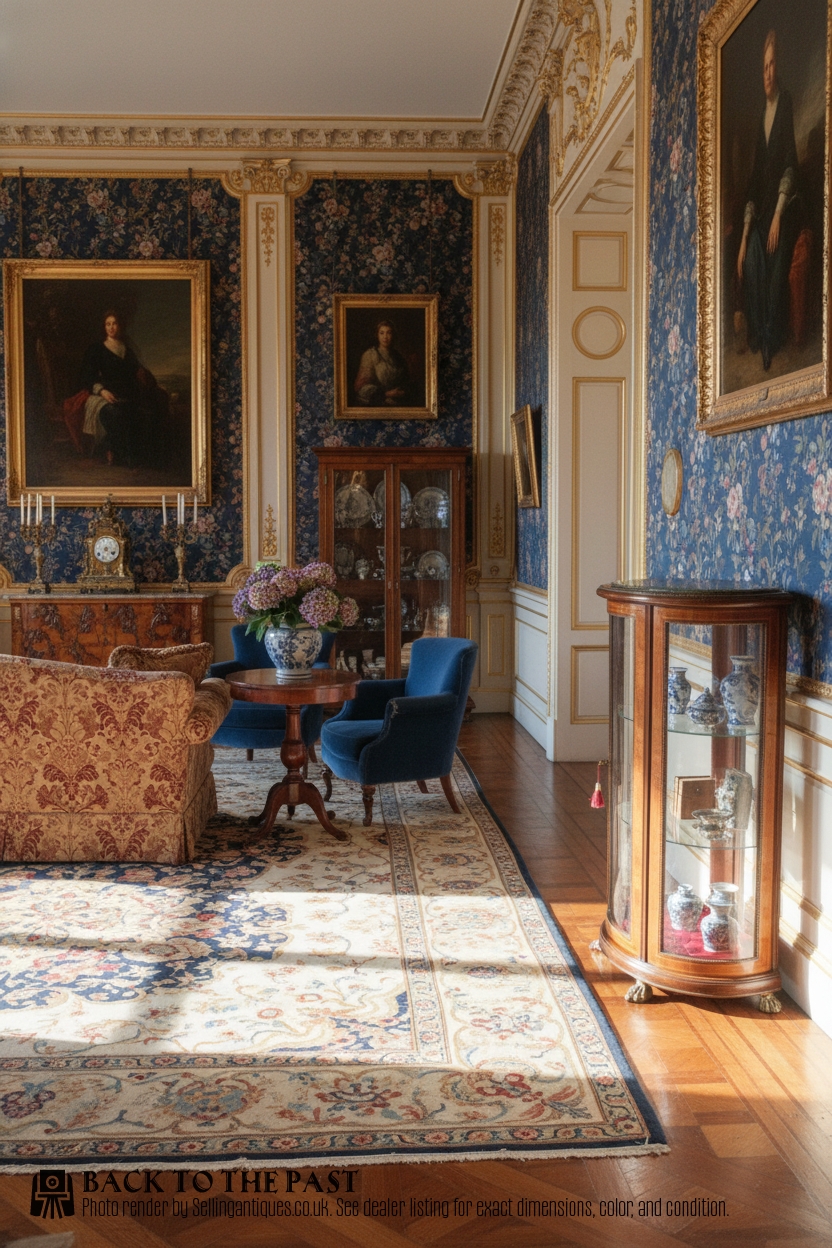
An antique bijouterie case gathers tabletop display tables, freestanding cabinets and countertop showcases designed specifically to exhibit small personal valuables and collectors' specimens under protective glass lids.
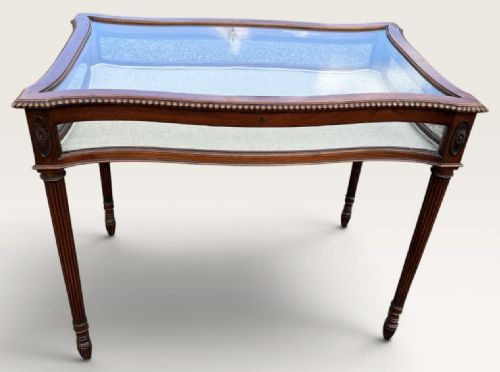
The pieces appearing most often on this page belong to the Edwardian period and the later decades of the nineteenth century, taking the form of mahogany or rosewood display tables raised on slender legs.
Makers drew on established French and English aesthetics, producing serpentine, kidney-shaped and rectangular vitrines outfitted with hinged glazing for daily viewing.
How they were made
Cabinetmakers constructed the structural carcasses primarily from mahogany, rosewood or satinwood, frequently applying decorative crossbanding, marquetry inlay or brass stringing to the primary surfaces.
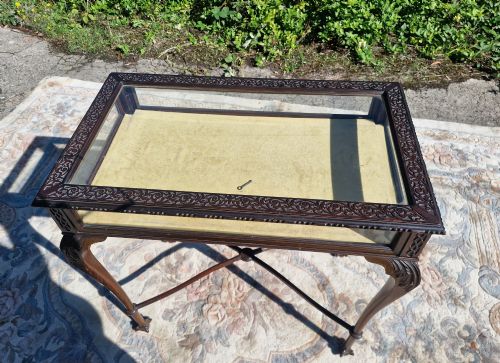
Glazed lids and panels were framed in timber or cast metal, while mounts and edgings utilised ormolu or gilded bronze to accent the classical curves of the Revival styles.
Interiors were routinely lined with plush velvet, silk or other fabrics to cushion delicate items against the wooden base of the display well.
Two distinct display tables bear later sign-written details for Breitling watches, hinting at past lives in commercial retail.
What varies in quality
The standard of timber selection and the precision of inlaid details set finer examples apart from simpler utilitarian display pieces.
Cast bronze ormolu mounts show sharper chasing and heavier gilding on high-grade cabinets compared to lighter brass pressings found on standard production items.
Interior joinery, original working locks, and the weight of the bevelled glass panes reflect the original investment put into the construction.
The Antique Bijouterie Case Glossary
- Bijouterie
- Small decorative items and jewellery meant for personal adornment or display. The term also describes the specialised tables and cabinets built to house them.
- Ormolu
- Gilded bronze mounts applied to furniture. This decorative technique added metallic highlights to French and English display cases.
- Vitrine
- A glass-fronted or glass-topped cabinet used for exhibition. These cases protect fragile collections while offering all-round visibility.
- Crossbanding
- A decorative border of veneer laid with the grain running perpendicular to the main panel. It framed the tops of tables and cabinet doors.
- Serpentine
- A curved shape featuring a convex centre flanked by concave ends. This undulating outline appears frequently on high-style display tables.
Antique Bijouterie Case: Frequently Asked Questions
What did people store inside an antique bijouterie case?
These glass-topped tables and cabinets held personal collections of rings, pocket watches, portrait miniatures, medals and small curiosities.
Owners placed them in drawing rooms to let guests inspect delicate ornaments without handling the items directly.
How do I tell Edwardian cases from Victorian examples?
Victorian pieces often rely on heavier rosewood or dark mahogany frames with substantial ormolu mounts and deep carving.
Edwardian versions tend to feature lighter satinwood, delicate inlay work, and slender tapered legs influenced by eighteenth-century revivals.
Can I use these cases for modern jewellery display?
The velvet-lined interiors and secure glass lids make these cabinets ideal for exhibiting contemporary rings, watches and small collectibles.
Their enclosed design protects modern valuables from dust while keeping them visible in a domestic setting.
Were these cases meant for homes or shops?
While many elegant tables and cabinets graced private drawing rooms, larger countertop and freestanding variants served retail jewellers.
Commercial versions often included heavy locks and practical proportions suited to daily mercantile trading.
How should I clean the fabric lining?
Original velvet and silk linings require gentle surface dusting with a soft brush rather than liquid cleaners.
Harsh treatments risk damaging fragile historic textiles and the timber substrates beneath them.