


Antique Big Cat Art
Antique big cat art captures the raw power and sleek forms of lions, leopards, and panthers through enduring sculpture and works on paper.
Antique Big Cat Art
Antique big cat art encompasses sculptures, framed prints, oil paintings, and etchings depicting large feline predators across various historical periods. These pieces range from finely detailed works on paper to substantial sculptural forms.
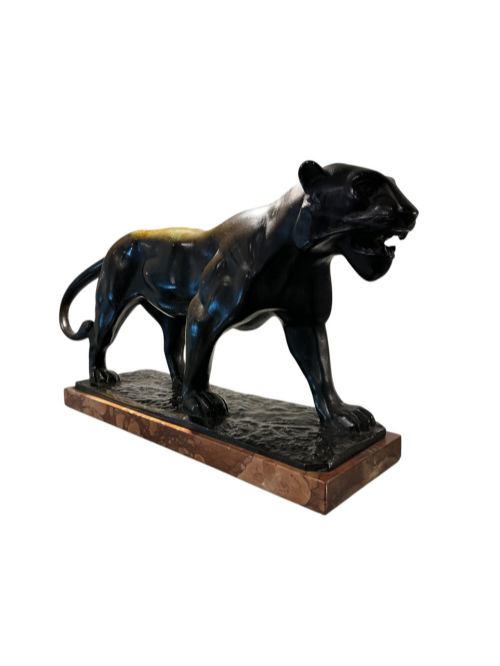
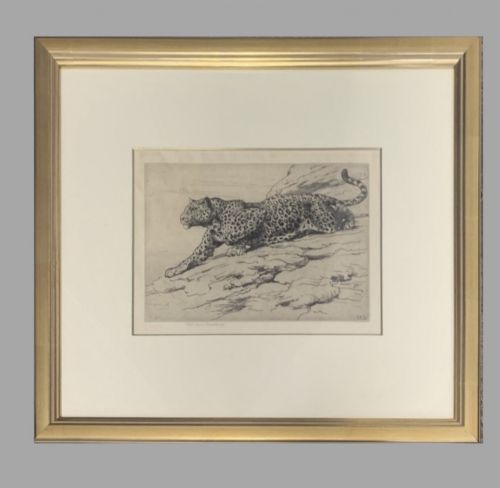
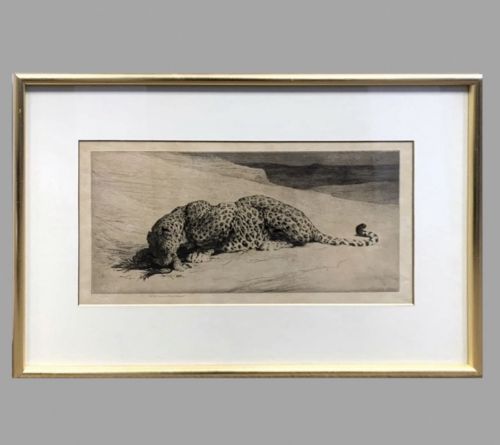
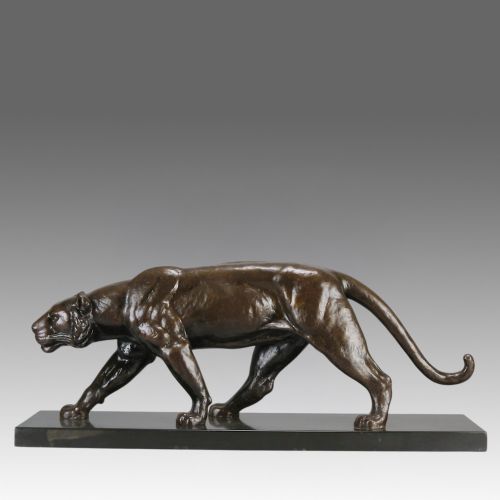
Buyers searching for antique big cat art will most frequently encounter bronze and spelter sculptures mounted on marble bases, alongside signed artist proof etchings. Art Deco and Victorian styles dominate the available selections.
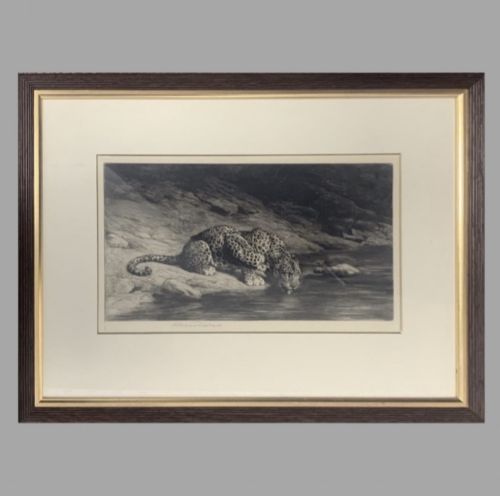
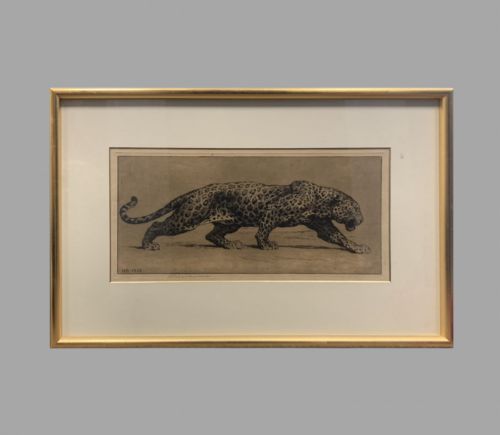
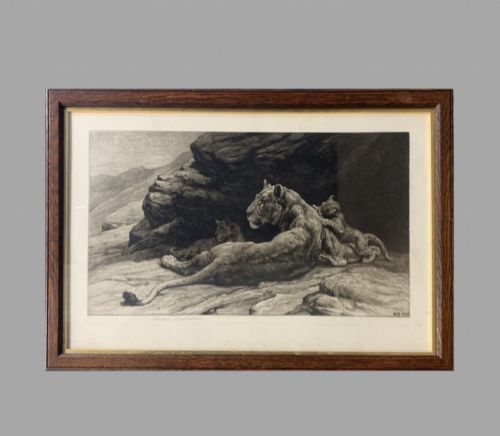
The physical forms vary from prowling leopards and drinking panthers to stalking lions and resting lionesses. Sculptures often utilise contrasting materials like dark patinated metals against pale stone.
Materials and Techniques
Sculptural pieces rely on cast bronze, spelter, and carved marble or alabaster, often pairing a metallic animal figure with a contrasting stone base. Foundries utilised patination techniques to darken metal surfaces and highlight musculature.
Works on paper employ ink, etching processes on paper or vellum, and oil paint on canvas to capture fine details of fur and expression. Etchings were often produced in limited editions as signed artist proofs.
Listings feature periods spanning the late Victorian era through the Art Deco movement, utilising bronze, marble, paper, and spelter.
Distinctions in Quality
Quality rests in the anatomical accuracy of the feline form and the precision of the casting or engraving work. Finer sculptures exhibit nuanced musculature and crisp facial details rather than soft edges.
The choice of material elevates a piece, with heavy bronze castings and genuine marble bases sitting above spelter and simpler supports. Signed artist proofs on paper command attention through the clarity of the printed line.
Herbert Dicksee·Alexandre Ouline·Clovis Masson·Cuthbert Edmund Swan·Michel Decoux·Georges Gardet
The Antique Big Cat Art Glossary
- Animalier
- Art focused on the realistic depiction of animals, particularly popular in nineteenth-century European sculpture. Artists in this tradition studied live specimens in menageries to achieve lifelike postures.
- Spelter
- A zinc alloy commonly used as a cheaper alternative to bronze in decorative figures. It is often painted or patinated to simulate heavier metals.
- Artist Proof
- An impression of a print taken in the printmaking process to verify the state of the plate. These are typically retained by the artist and hold particular value.
- Patina
- A thin layer that develops on the surface of bronze through age and chemical treatment. It alters the colour and protects the underlying metal.
- Vellum
- A fine parchment made from calfskin used as a durable surface for fine drawings and etchings. It provides a smooth texture that absorbs ink evenly.
Antique Big Cat Art: Frequently Asked Questions
How do I identify Art Deco big cat sculptures?
Art Deco big cat sculptures generally feature streamlined silhouettes, stylised muscle structures, and geometric bases made from black or multi-coloured marble.
These pieces often depict panthers in prowling or stretching postures, reflecting the sleek aesthetic of the interwar period.
What is the difference between bronze and spelter figures?
Bronze is a heavy, durable copper alloy that holds fine casting detail and develops a rich patina over time. Spelter is a softer, lighter zinc-based metal that was frequently used for more affordable decorative figures.
Under closer inspection, spelter is lighter in weight and may show signs of wear beneath its surface paint or plating.
How should I care for antique works on paper?
Works on paper and etchings require protection from direct sunlight to prevent the fading of ink and discolouration of the paper or vellum. Framing should use acid-free materials and UV-filtering glass to maintain their condition.
Keep these pieces in environments with stable humidity levels to avoid warping or foxing.
Where were most of these bronze sculptures made?
Many of the nineteenth and early twentieth-century bronze animal sculptures originated in France, produced by skilled foundries and prominent animalier artists. These workshops specialised in realistic animal studies and employed sophisticated casting methods.
Pieces from this origin often bear foundry marks or artist signatures stamped directly into the metal.