




Antique Bible Chest
An antique bible chest is a sturdy receptacle designed to protect sacred texts, and you are most likely to encounter robust oak examples from the seventeenth century here.
Antique Bible Chest
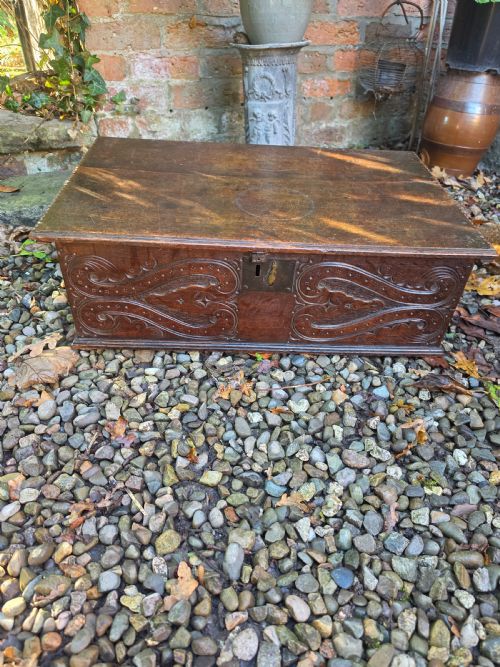
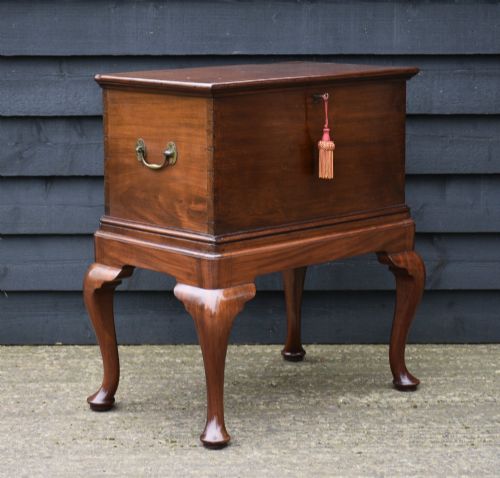
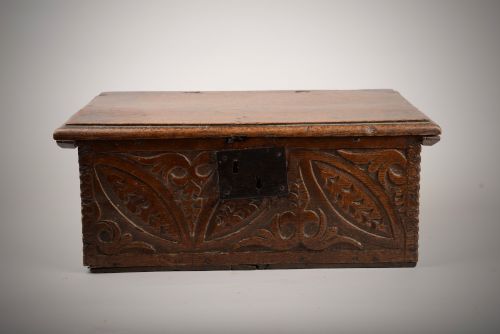
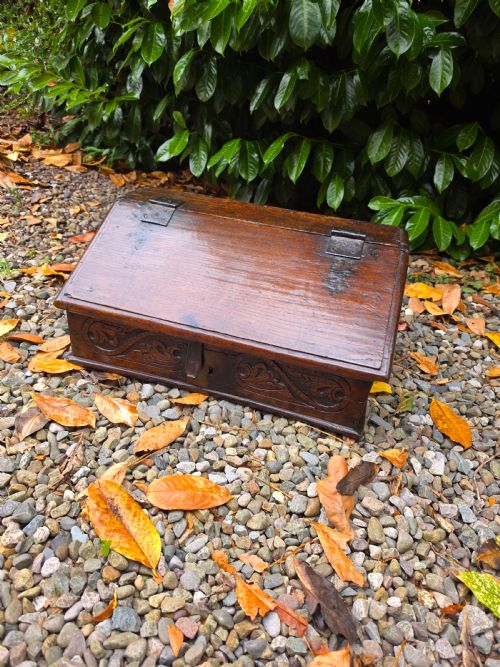
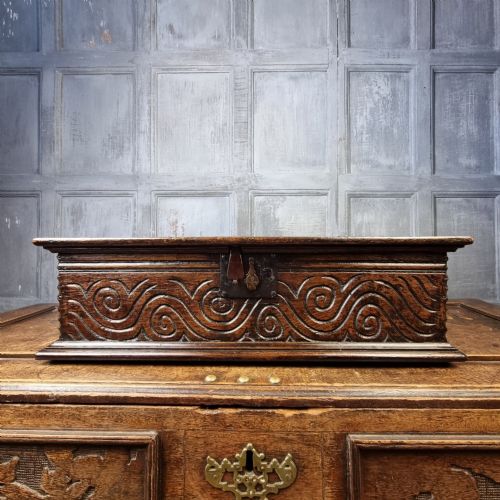
An antique bible chest, often termed a bible box or document box, provides a compact tabletop repository for storing devotional books and household records safely in domestic interiors. These pieces appear frequently as seventeenth-century oak constructions, sitting directly on surfaces or occasionally raised upon integrated stands or turned feet.
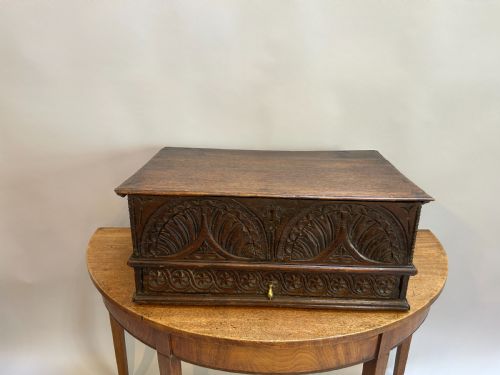
Beyond standard tabletop formats, the inventory includes regional variations such as the Welsh coffer bach, alongside desk boxes featuring slant fronts and internal drawers. Earlier examples display carved friezes, chip carving, or contrasting holly and bog oak inlay, whilst later nineteenth-century interpretations adapt the traditional form in mahogany.
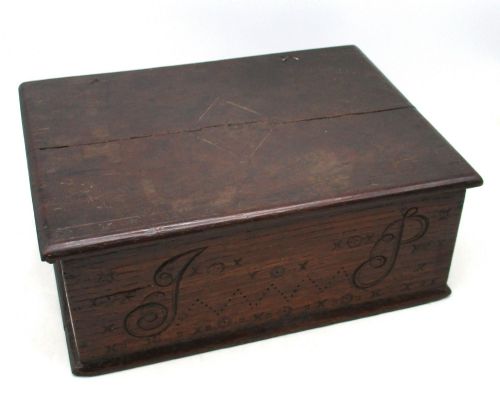
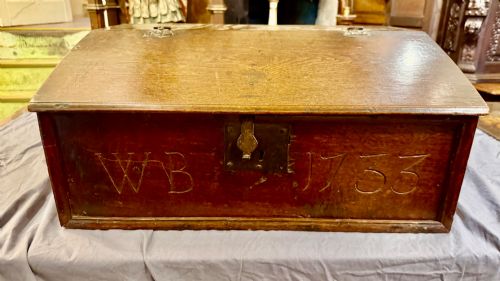
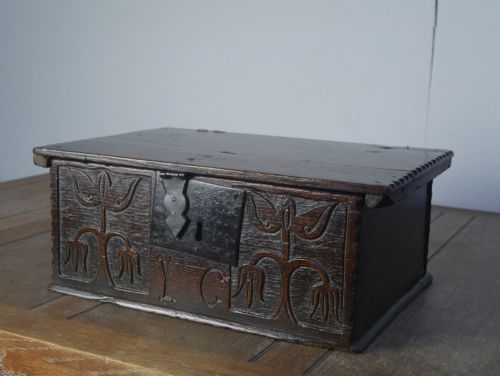
The objects serve multiple functional roles across different periods, transitioning from secure book storage to general document preservation, and occasionally functioning as close stools or box stools. Buyers encounter everything from plain utilitarian boxes bearing dates and initials to highly decorated carved panels originating from specific houses.
How they were made
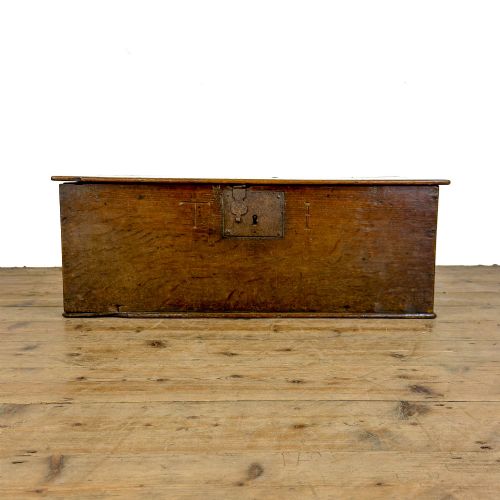
Joinery defines the construction of these items, relying predominantly on solid oak boards assembled with traditional pegging and panel-in-frame techniques to withstand heavy daily use. Cabinet makers utilised native timber, supplementing the primary oak with contrasting woods like holly and bog oak for decorative inlay work on select panels.
Iron and brass hardware provides both structural reinforcement and security, with strap hinges, lock plates, and carrying handles fitted to lid boxes and coffers. Surface decoration is achieved through chip carving, incised lettering for dates and initials, and applied mouldings on the front panels.
Antique Bible Chest Retail Price Guide 2026
Typical asking prices for bible chest among the pieces listed under this phrase on Sellingantiques today, from the lower quarter to the upper quarter. They describe what is for sale here now, not the wider market.
One remarkably versatile seventeenth-century survivor doubles as an oak box stool and a close stool, proving our ancestors liked multi-tasking furniture too.
What varies in quality
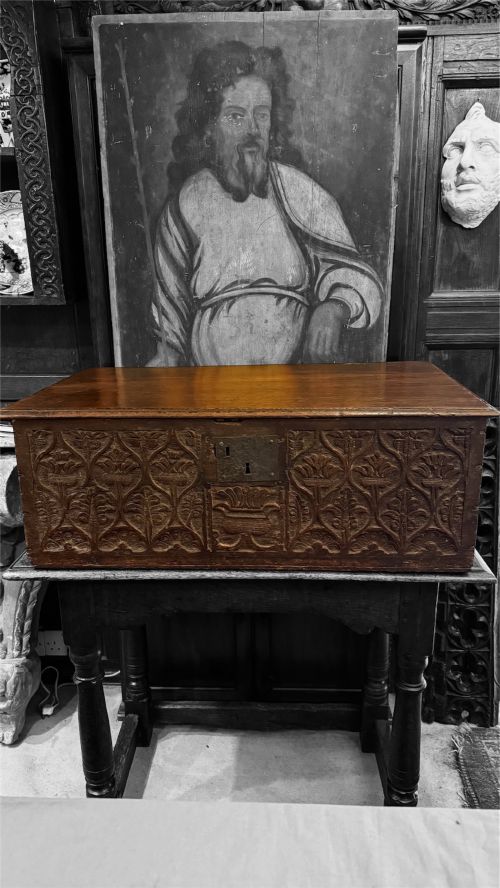
The depth and crispness of the carving distinguish finer pieces from simpler utilitarian boxes, particularly where artisan hands have shaped geometric or floral friezes. Original surface patination and the survival of contemporary ironwork, such as hinges and locks, elevate the standing of a piece considerably.
Structural integrity depends on the retention of original timber boards without extensive replacement, and the presence of internal fittings like small drawers adds notable character and complexity. Regional distinctiveness, such as the proportions and feet of Welsh coffer bach examples, dictates the desirability among collectors.
The Antique Bible Chest Glossary
- Bible box
- A small wooden chest originally constructed to hold a family bible securely on a table. These portable boxes often feature slanted lids to double as a writing surface.
- Coffer bach
- A small Welsh chest, translating literally as little coffer, traditionally used to store valuables or linen. They frequently incorporate small drawers beneath the main compartment and rest on feet.
- Close stool
- A piece of furniture enclosing a chamber pot, disguised as a box stool or small chest. Seventeenth-century examples integrate this utilitarian function within a standard box form.
- Bog oak
- Subfossil oak that has been buried in peat bogs for centuries, turning a dark brown or black colour. Craftsmen used this dense material for contrasting inlay work.
- Chip carving
- A woodworking technique where small chips are removed from the surface of the timber to create geometric patterns. This style appears frequently on seventeenth-century panels.
Antique Bible Chest: Frequently Asked Questions
What is an antique bible chest used for?
These boxes provided a secure, dry place to store large family bibles and important legal documents in homes before fitted furniture became common.
Today, they serve as decorative storage containers on sideboards or tables for modern letters and small items.
How do I identify a seventeenth century box?
Seventeenth-century pieces typically feature heavy oak construction, hand-carved geometric or floral friezes, and pegged joinery without modern fixings.
Many bear carved initials and dates from the 1600s directly into the wood of the front panel.
What is a Welsh coffer bach?
A coffer bach is a miniature chest originating from Wales, built with a lift-up lid and usually one or two small drawers at the base.
They were often made as marriage gifts or presentation pieces by local cabinet makers using native oak.
Where should I place a desk box?
Desk boxes sit well on sturdy tables, sideboards, or deep windowsills where their carved lids and front panels remain visible.
Ensure they are kept away from direct heat sources to prevent the old oak from drying out and splitting.