




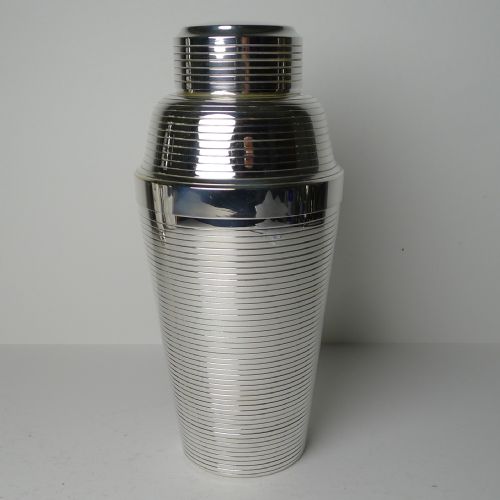

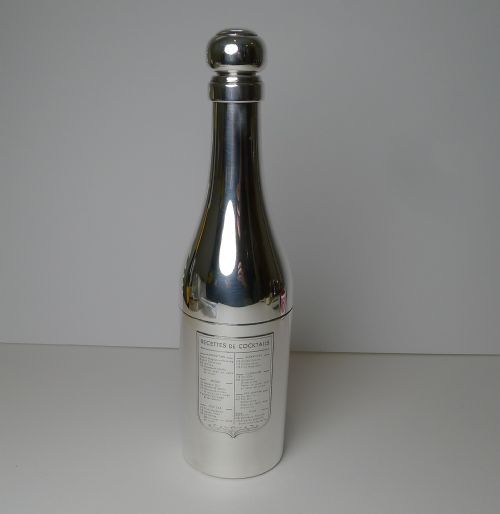


Antique Beverage Shaker
An antique beverage shaker brings distinct Art Deco style to your home bar, offering functional metal barware designed for mixing drinks.
Antique Beverage Shaker
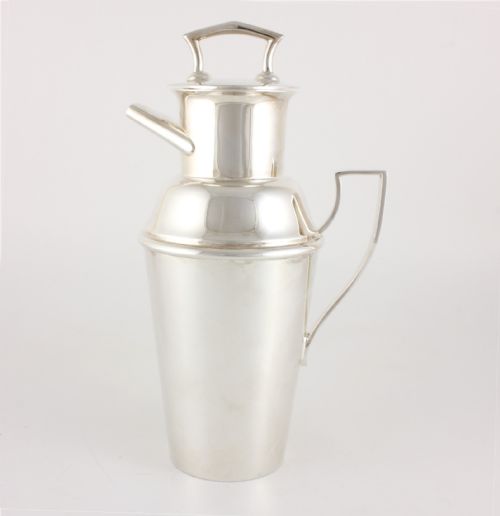
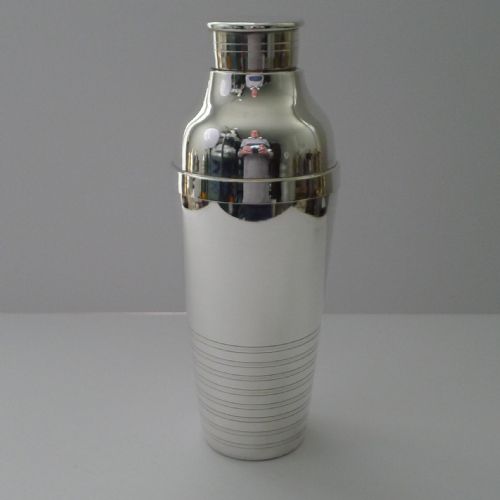
An antique beverage shaker is a piece of barware primarily originating from the 1920s, 1930s, and 1940s, embodying the geometric forms typical of the Art Deco period. These items function practically while serving as striking display pieces on a bar counter.
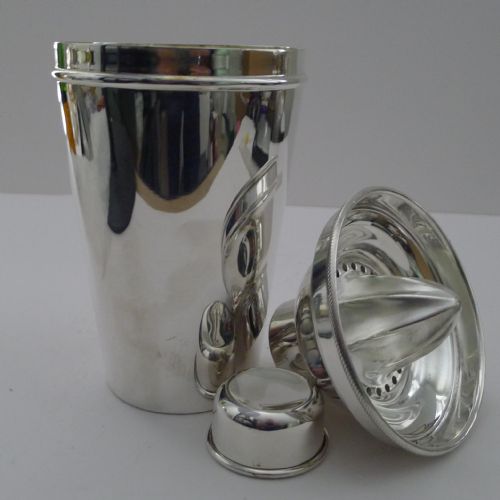
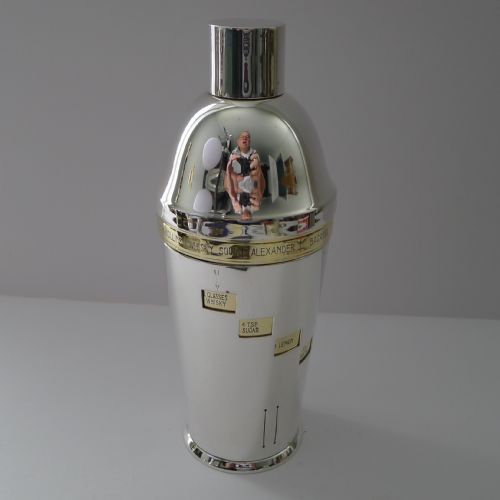
The versions most commonly met on this page take the form of cocktail shakers and cocktail mixers. Many incorporate clever functional details such as integral lemon squeezers, rotating recipe cylinders, or rolling mixer mechanisms.
Makers and origins vary across English, French, American, and Italian workshops, yielding diverse physical silhouettes. From milk churn shapes to champagne bottle forms, each piece reflects the cocktail culture of its era.
How They Were Made
These pieces rely heavily on metalworking techniques applied to silver plate, electroplated nickel silver, EPNS, brass, and sterling silver. Craftsmen shaped these base metals to achieve the smooth cylinders and stepped profiles characteristic of the style.
Plating methods applied a durable silver layer over base metals like brass or nickel silver, ensuring a bright finish suitable for hospitality use. Integrated elements like internal squeezers and recipe rings demonstrate precise mechanical assembly.
Design forms include cocktail shakers shaped like milk churns and champagne bottles.
What Varies in Quality
Quality rests upon the weight of the metal used in the body and the precision with which internal mechanisms operate. Substantial gauge silver plate or sterling silver provides a heavier, more balanced feel in the hand than lighter alternatives.
Asprey & Co·Hukin & Heath·Adie Brothers·Mappin & Webb·Harrods·Tuttle
The Antique Beverage Shaker Glossary
- EPNS
- Electroplated Nickel Silver. This designates a base metal alloy of copper, nickel, and zinc coated with a layer of pure silver.
- Art Deco
- A design style dominant in the 1920s and 1930s characterised by sleek geometric shapes, streamlined forms, and modern industrial aesthetics.
- Sterling silver
- A precious metal alloy consisting of silver and a small proportion of other metals for added durability.
- Silver plate
- A coating of fine silver applied to a base metal substrate, commonly utilised in mid-century barware production.
- Barware
- Utensils and vessels designed for the preparation and serving of alcoholic drinks.
Antique Beverage Shaker: Frequently Asked Questions
How do I use a vintage cocktail shaker?
These vessels are designed to chill and mix ingredients by combining spirits and ice within the metal chamber before pouring.
Fitted lids and internal strainers hold back ice cubes while allowing the blended beverage to flow freely into glassware.
What materials are these shakers made from?
The construction typically involves silver plate, electroplated nickel silver, brass, or solid sterling silver.
Durability comes from sturdy base metals finished with a protective and decorative metallic plating layer.
How do I clean antique silver plate?
Care requires gentle washing with warm water and mild soap, followed by drying with a soft cloth to protect the surface.
Abrasive cleaners and harsh scrubbing pads should be avoided to preserve the thin silver layer and any engraved decoration.
How can I tell the period?
Stylistic cues such as strict geometric lines and machine-age motifs point directly to the 1920s and 1930s Art Deco era.
Maker marks stamped onto the base often provide further clues to the exact decade of manufacture.