



Antique Bedroom Bureau
An antique bedroom bureau offers practical bedside storage and a writing surface, combining period character with everyday utility in the sleeping quarters.
Antique Bedroom Bureau
When you search for an antique bedroom bureau, you encounter pieces designed for private chambers, primarily taking the form of chests of drawers alongside dedicated writing furniture. These items originate from periods spanning the seventeenth through the early twentieth centuries, reflecting changing domestic habits in British and continental households.
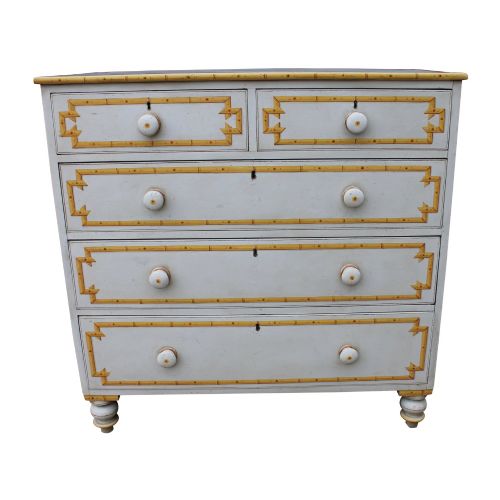
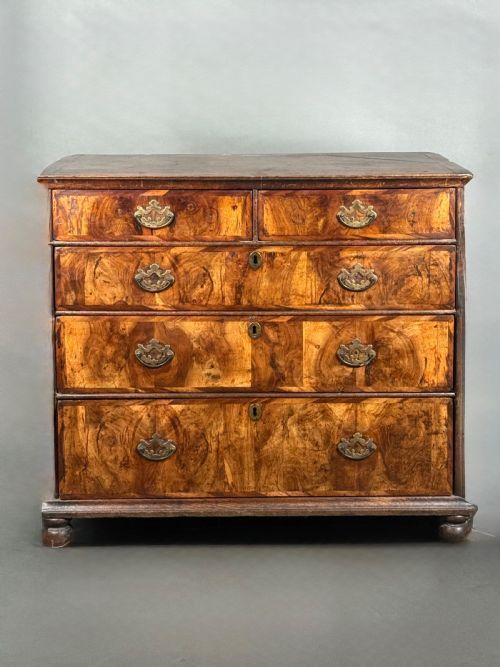
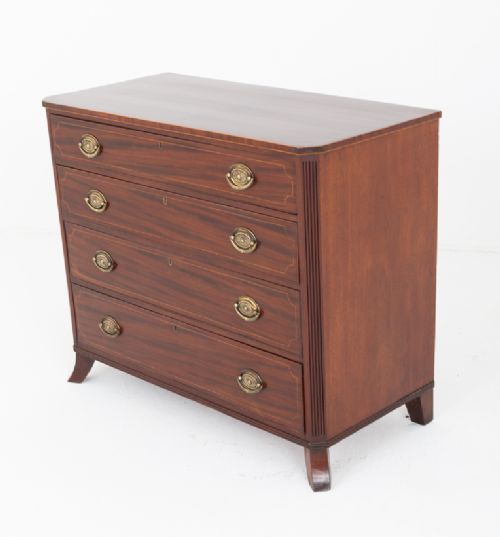
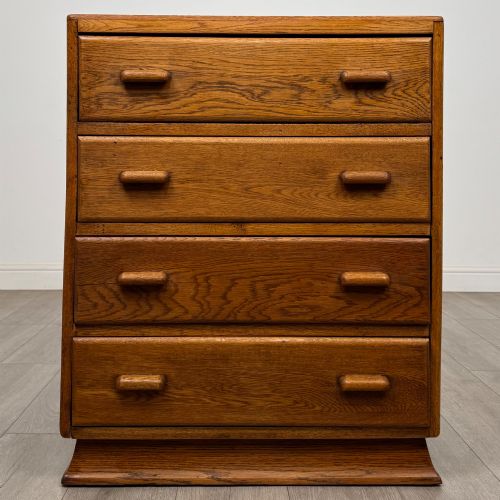
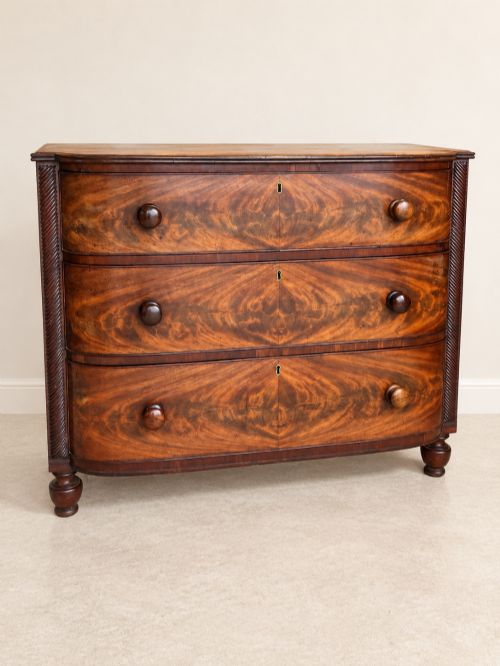
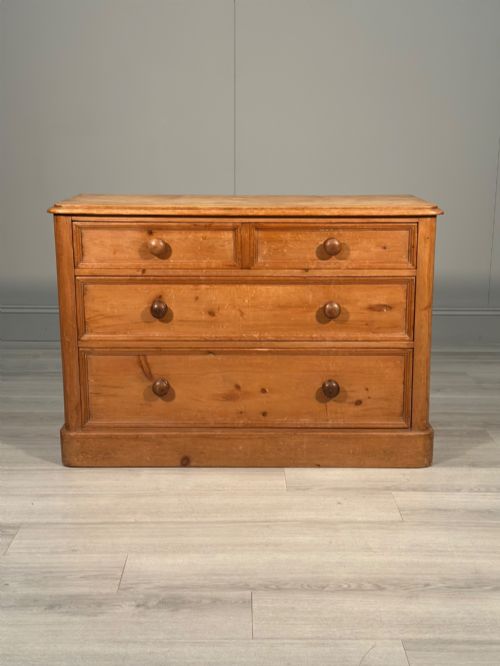
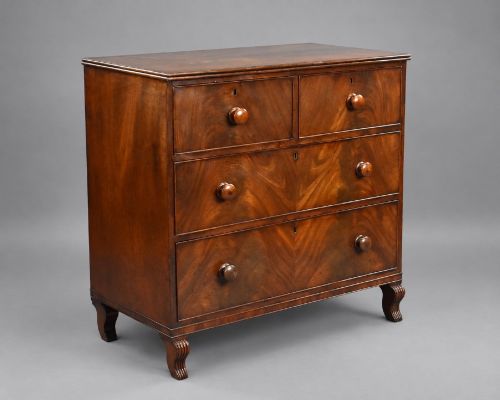
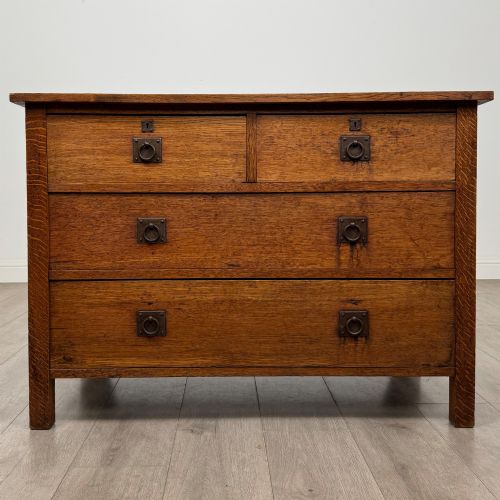
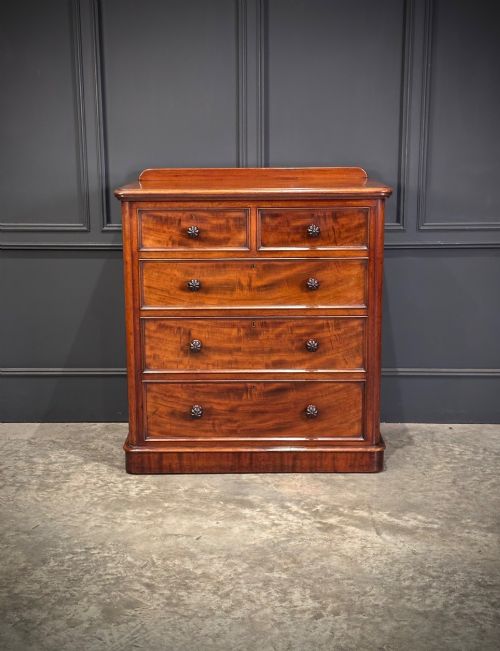
The material record on this page demonstrates that mahogany, oak, pine, and walnut dominate the selection, often shaped into chests with supplementary writing slides or fitted compartments. Edwardian, Victorian, and Georgian examples appear frequently, ranging from simple pine storage units to figured walnut and flame mahogany showpieces.
Materials and Construction Methods
Cabinet makers utilised solid timbers like oak, pine, and mahogany for structural integrity, while applying fine veneers such as flame mahogany and figured walnut to visible drawer fronts and surfaces. Brass hardware, including drop handles and escutcheons, provides functional fastening and decorative contrast against the dark wood grains.
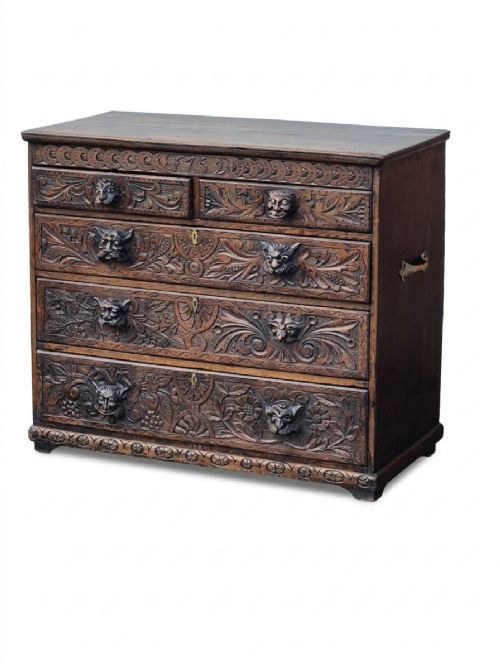
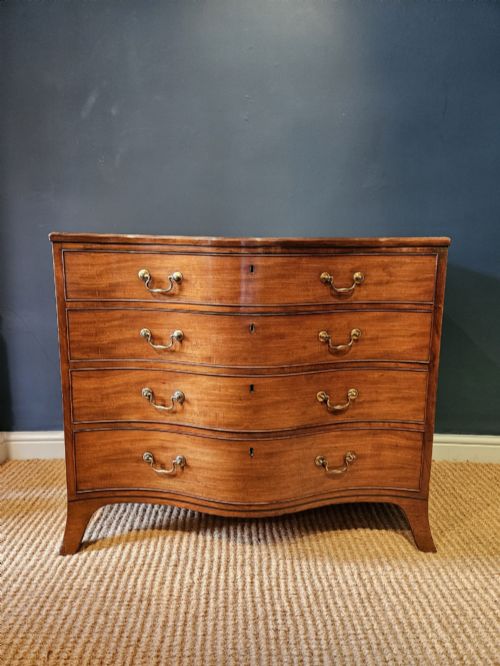
Joinery techniques evolved across the periods represented, employing dovetailed drawer construction and hand-carved details such as the grotesque Green Man motifs or serpentine curves seen in later regional variants. Painted finishes and bone inlays also occur in specific Edwardian and Victorian pieces, adding surface decoration to the underlying timber frame.
Listings feature woods including mahogany, oak, pine, walnut, and bone across eighteenth, nineteenth, and twentieth-century periods.
Distinctions in Quality and Craftsmanship
Quality in these pieces depends on the selection of timber and the precision of the cabinet work, particularly in the matching of veneer grains across drawer fronts. Superior examples exhibit seamless dovetailing, original brass hardware, and carefully integrated secondary woods that maintain structural stability over centuries.
The refinement of carved ornament, such as serpentine shaping or bespoke stylistic flourishes like Biedermeier geometry, separates standard utilitarian storage from masterwork furniture. The integrity of the polish and the retention of original fixtures further distinguish exceptional specimens from later altered items.
Sir Clough Williams-Ellis·Harris Lebus of Tottenham
The Antique Bedroom Bureau Glossary
- Bureaux
- A desk with a sloping lid enclosing fitted compartments, frequently associated with writing and storage in domestic chambers.
- Serpentine front
- A furniture front curved with a convex centre flanked by concave wings, creating an undulating silhouette.
- Flame mahogany veneer
- A sliced timber sheet displaying a characteristic flickering flame pattern, prized for decorative cabinet fronts.
- Brushing slide
- A pull-out board located above the top drawers, historically used for dusting clothes or writing brief notes.
- Dovetail
- A joint formed by interlocking wedge-shaped fingers, standard in high-grade drawer construction for lasting strength.
Antique Bedroom Bureau: Frequently Asked Questions
What is an antique bedroom bureau?
An antique bedroom bureau is a piece of furniture designed for sleeping quarters, combining drawer storage with a writing surface or compartment.
These pieces range from simple pine chests to elaborate walnut and mahogany desks used for personal correspondence and clothing storage.
How do I identify a Georgian bureau?
Georgian pieces typically feature solid proportions in mahogany or oak, accented with brass handles and precise hand-cut dovetails.
Stylistic markers include bracket feet, cockbeading around drawers, and optional brushing slides for writing.
Where were these pieces used?
These items served primarily in private bedchambers and dressing rooms for storing garments and writing letters.
Their compact forms allowed them to fit comfortably alongside beds while providing private storage away from public entertaining rooms.
How do I care for antique wood?
Maintain antique timber by keeping it away from direct sunlight and sudden temperature changes that cause wood to split.
Apply traditional wax polish sparingly and buff with a soft cloth to preserve the natural lustre of the grain.