



Antique Bear Sculpture
An antique bear sculpture brings tactile presence into a room, capturing the power and posture of the animal in carved wood or cast bronze.
Antique Bear Sculpture
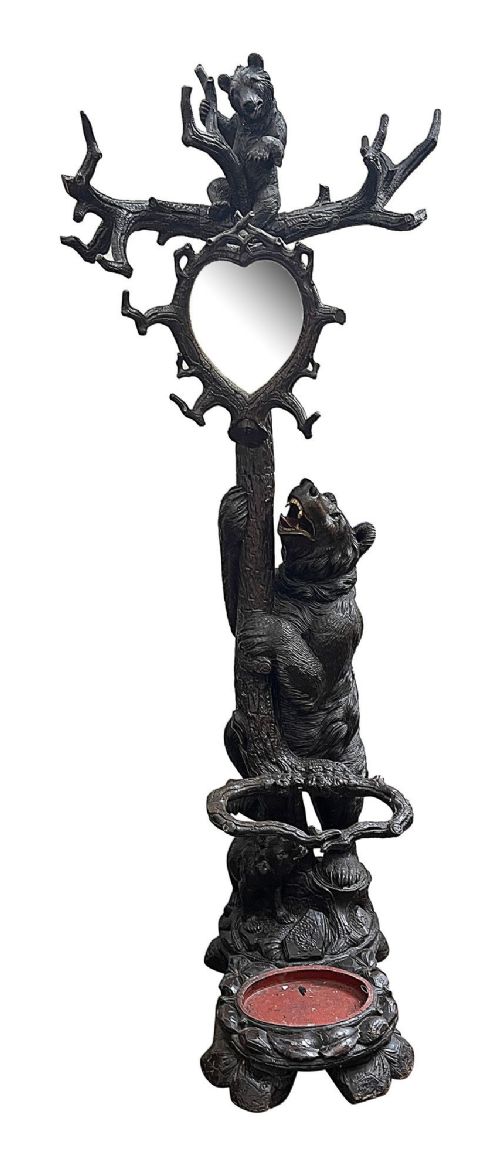
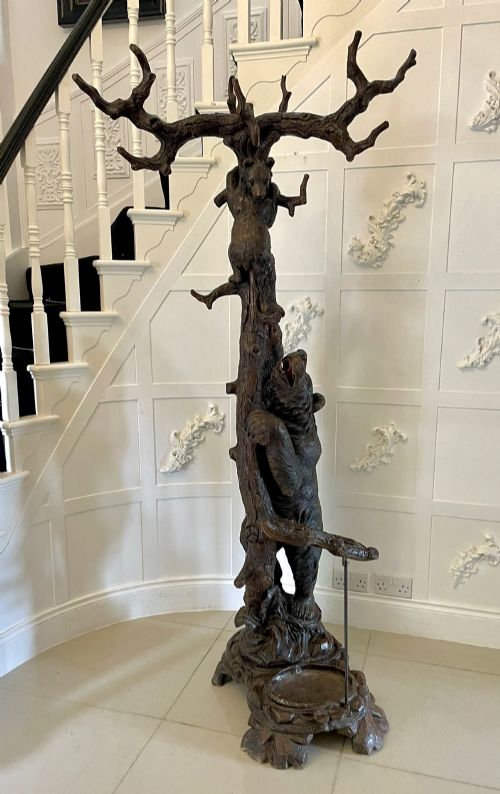
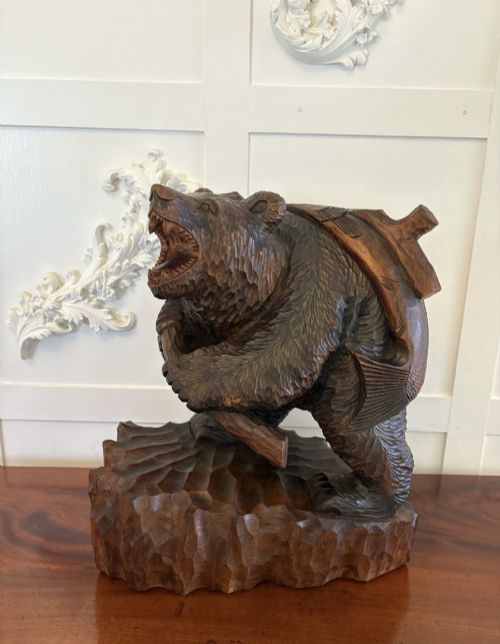
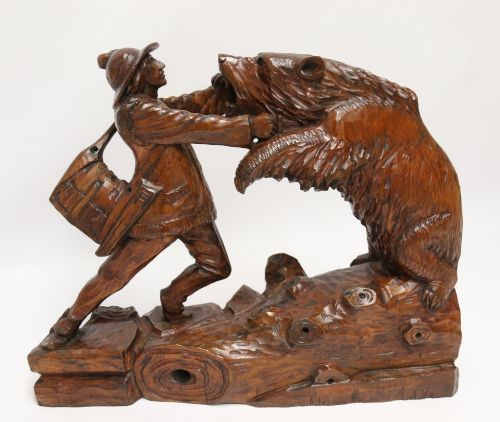
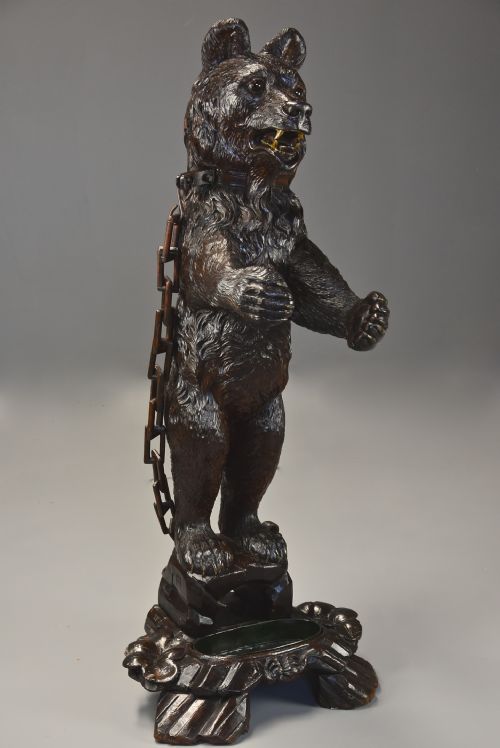
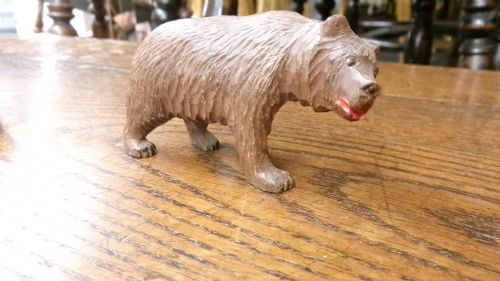
An antique bear sculpture encompasses figural works created across the nineteenth and early twentieth centuries in various regional traditions. These pieces range from small tabletop ornaments and inkstands to large functional hall stands and umbrella holders.
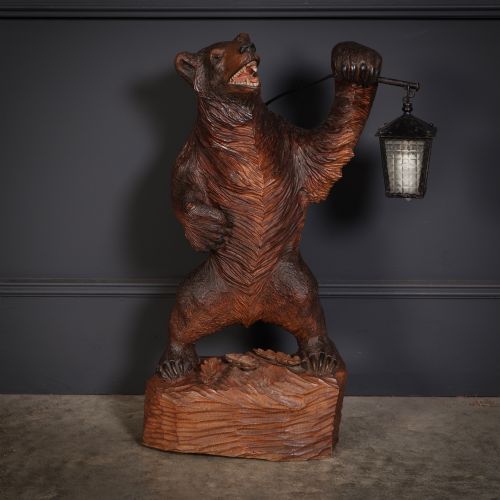
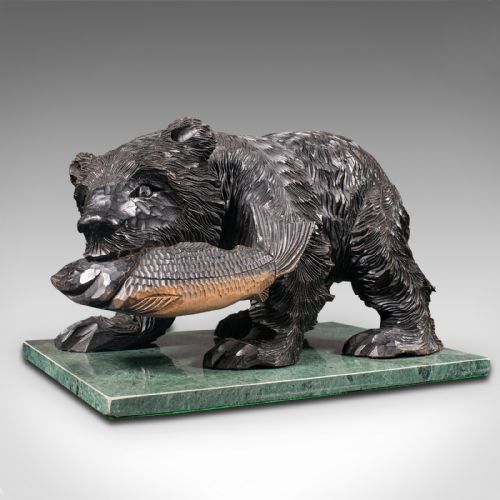
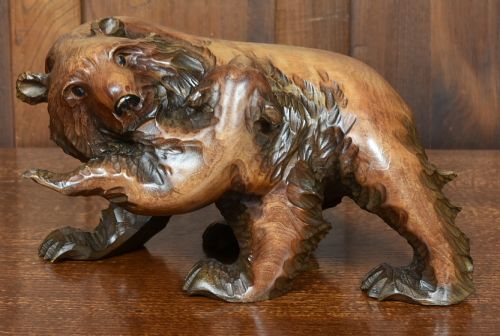
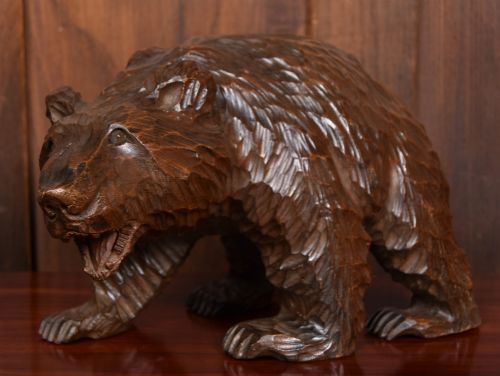
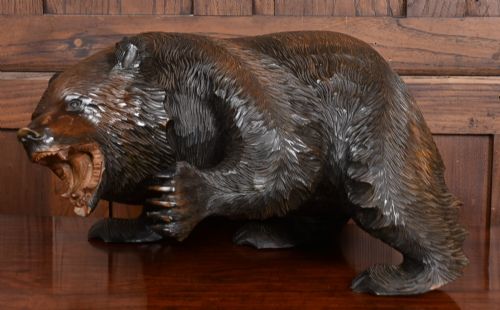
The most common examples encountered in this selection originate from the Black Forest carving tradition or Japanese folk art, specifically the Kibori Kuma style. European works frequently utilise linden wood or walnut, while Japanese pieces often employ cedar or bronze.
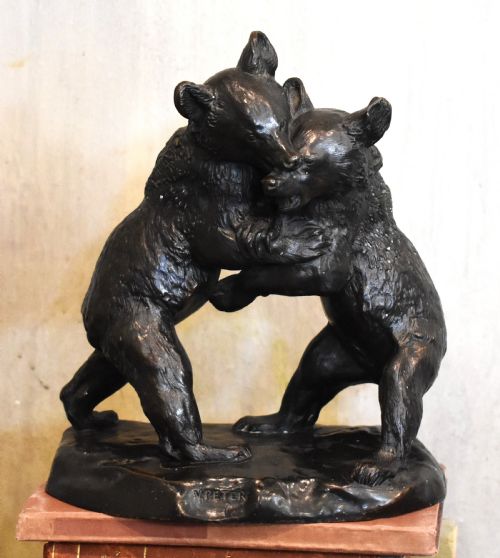
Forms vary widely from solitary standing figures and fish-carrying bears to complex animalier groupings and practical hall furniture. Sculptures appear as single figures, pairs, or miniature sets reflecting both naturalistic observation and stylistic interpretation.
How they were made
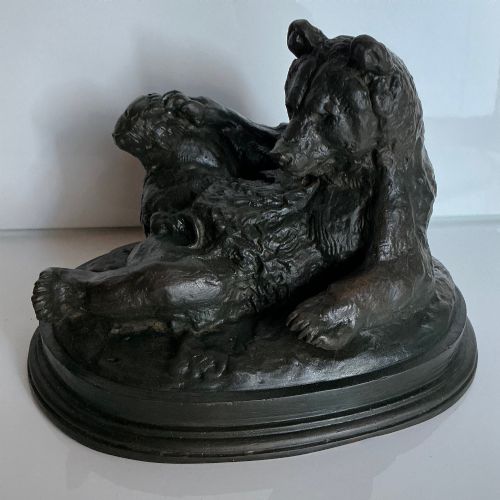
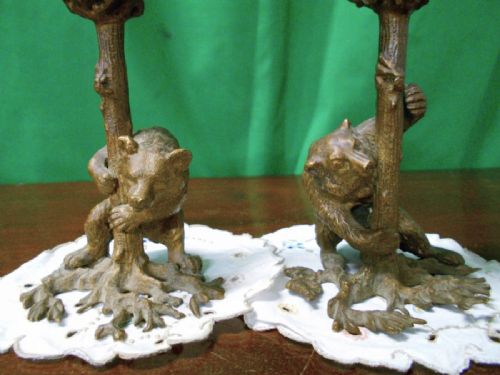
Metal versions utilised the lost-wax casting technique for bronze, allowing sculptors to capture fluid motion in animalier groupings and detailed okimono figures. Patination and staining were applied to metals and woods to achieve realistic surface tones.
Antique Bear Sculpture Retail Price Guide 2026
Typical asking prices for bear sculpture among the pieces listed under this phrase on Sellingantiques today, from the lower quarter to the upper quarter. They describe what is for sale here now, not the wider market.
Among the carved bears are industrious examples serving as tobacco boxes, inkstands, and dentists.
What varies in quality
Quality rests upon anatomical proportion, depth of undercut, and the expressiveness achieved in the carving or casting process. Superior examples display careful attention to fur texture and structural balance rather than purely mechanical finishing.
Scale and function also distinguish pieces, with large architectural hall stands and multi-figure groups representing more ambitious undertakings than simple tabletop ornaments.
Kaniya Kuniharu·Victor Peter·Christophe Fratin
The Antique Bear Sculpture Glossary
- Black Forest
- A regional carving style originating in Switzerland and Germany, known for highly detailed wooden animal figures and rustic furniture. These works frequently depict bears engaged in human activities or natural poses.
- Kibori Kuma
- A traditional style of Japanese wood carving depicting bears, originating in Hokkaido. Carvers used hand tools to create textured fur effects, often showing the animal holding a fish.
- Animalier
- A nineteenth-century artistic movement focused on the realistic depiction of animals. Sculptors working in this style produced dynamic bronzes of wildlife and domestic creatures.
- Okimono
- A Japanese decorative object designed for display on a shelf or in a tokonoma alcove. These sculptures are typically small in scale and rendered in bronze or wood.
- Linden wood
- A pale, fine-grained timber favoured by European woodcarvers for its uniform texture and ease of shaping. It allows for intricate undercutting without splintering.
Antique Bear Sculpture: Frequently Asked Questions
How do I distinguish Black Forest carvings from Japanese pieces?
Black Forest carvings are typically executed in European timbers like linden wood and walnut, often featuring rustic motifs, oak leaves, or functional elements like umbrella stands. Japanese works, particularly Kibori Kuma, utilise local woods and distinct carving rhythms that reflect Hokkaido traditions.
Subject matter also offers clues, as Japanese pieces frequently show the bear with a salmon, while European works encompass a broader range of domestic accessories and seated poses.
What rooms suit an antique bear sculpture?
Smaller wooden figures and bronze okimono suit desktop placement, bookshelves, or side tables where details can be closely observed. Larger functional pieces like hall stands and umbrella holders serve as focal points in entrance hallways.
Matching the scale of the sculpture to the surrounding furniture ensures the piece integrates naturally into the interior without overwhelming the space.
How were bronze bear sculptures finished?
Bronze sculptures were cast using traditional methods and then treated with chemical patinas to produce dark brown, green, or gilt surfaces. These finishes protected the metal while accentuating muscle contours and fur texture.
Over time, handling and exposure developed a natural surface sheen that distinguishes older metalwork from modern reproductions.
Why do some bears hold fish?
The motif of a bear carrying a fish derives directly from Japanese folk art traditions in Hokkaido, where bears were observed catching salmon. Carvers adopted this imagery to create dynamic compositions that emphasised the strength of the animal.
This specific pose became a defining characteristic of the Kibori Kuma tradition found in late nineteenth and early twentieth-century works.