

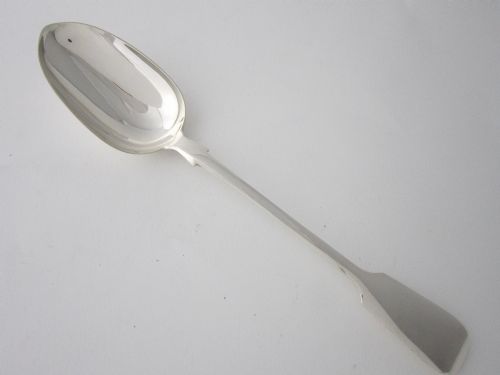
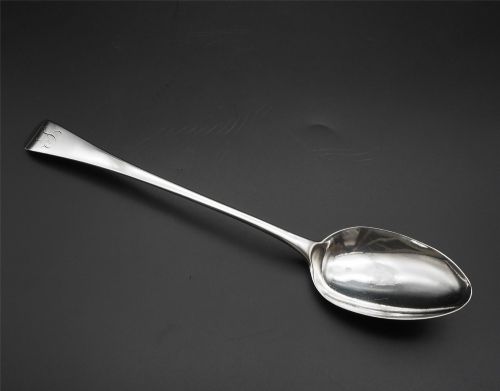
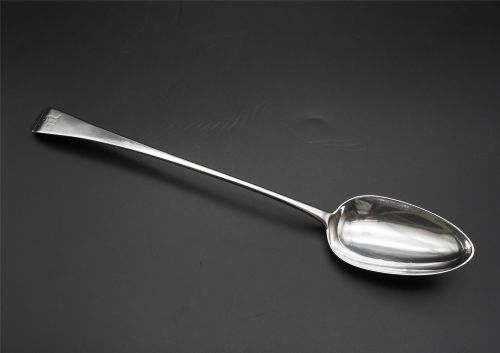
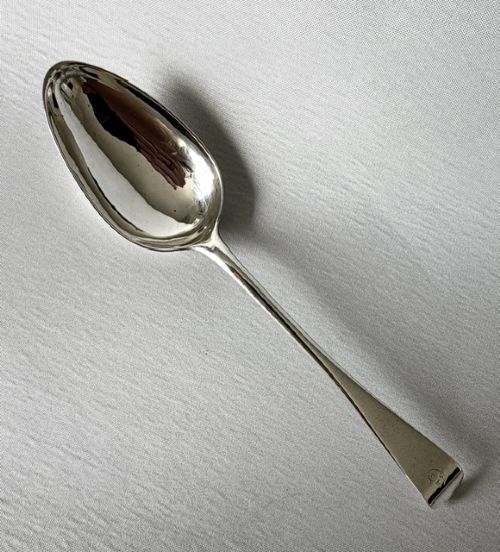


Antique Basting Spoon
When you handle an antique basting spoon, you hold an extended length of silver or pewter once designed to tend joints of meat over an open hearth.
Antique Basting Spoon
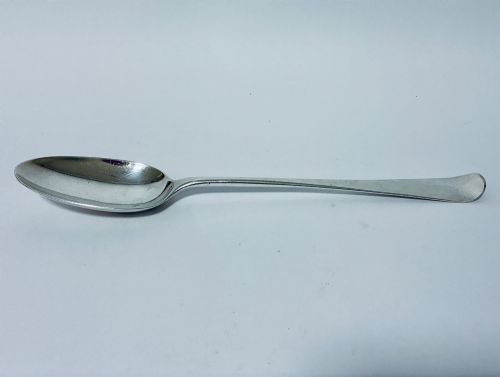
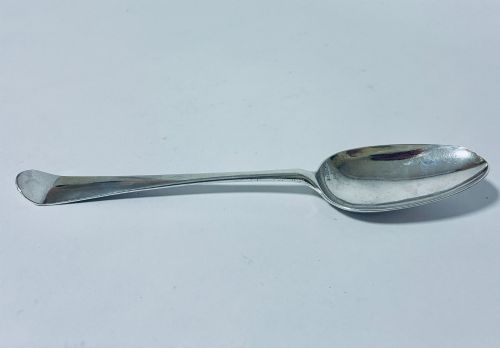
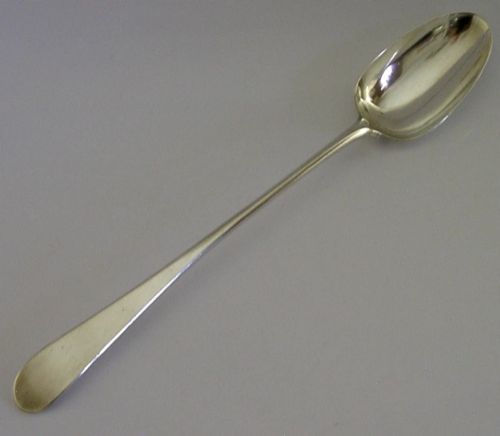
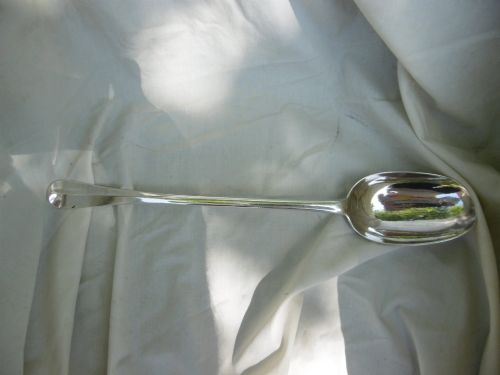
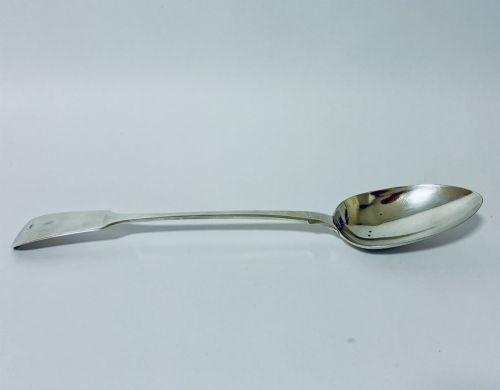
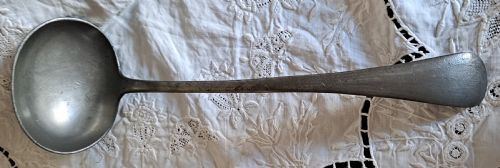
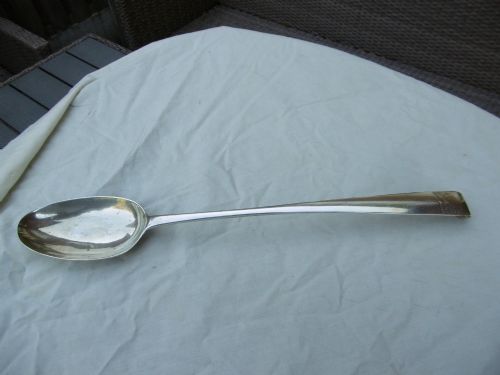
An antique basting spoon is a large utensil, frequently measuring over thirty centimetres, fashioned to scoop and pour pan juices during roasting. You will encounter silver examples predominantly from the Georgian and Victorian periods, alongside occasional pewter and beechwood variants.
The heavy silver variants commonly bear the hallmarks of London, Dublin, Edinburgh or various provincial assay offices, documenting a regional trade in domestic silver. Makers produced these implements under names such as hash spoons, gravy spoons or stuffing spoons, reflecting their heavy utility in large households.
Metals and Construction
Silversmiths constructed these utensils primarily from sterling silver or higher-purity Britannia silver, hammering ingots into robust handles and bowls designed to withstand intense kitchen heat. Many examples display the crisp lines of Old English or Fiddle patterns stamped into the stem.
Pewterers cast alternative specimens in moulds, utilising tin alloys that offered a utilitarian finish for domestic hearths, while occasional pieces utilise beechwood or hardwood carved from a single block for kitchen service.
Antique Basting Spoon Retail Price Guide 2026
Typical asking prices for basting spoon among the pieces listed under this phrase on Sellingantiques today, from the lower quarter to the upper quarter. They describe what is for sale here now, not the wider market.
Several pieces preserve private family crests depicting wolves and lambs, suggesting these heavy iron-poking tools once dined in very grand company.
Gradations in Manufacture
The measure of quality in these utensils lies in the gauge of the metal and the integrity of the original hallmarks stamped into the reverse of the stem. A heavier weight provides structural rigidity along the elongated stem, preventing flex when lifting dense quantities of liquid.
Desirability rises with the presence of finely engraved armorial crests, maker stamps from notable workshops, and specialised forms such as straining bowls or hook-end handles designed to rest on the edge of a vessel.
Andrew Archer·John Yates·John Craig·John Locker·John Wilks·Robert Gordon·Alexander Henderson
The Antique Basting Spoon Glossary
- Britannia standard
- A higher fineness of silver containing ninety-five point eight percent pure silver, legally required in Britain between 1697 and 1720. This standard denotes early Georgian manufacture on silver items.
- Hash spoon
- A large serving implement designed for portioning thick stews and hashes at the dining table. These utensils match the substantial length and capacity of standard basting pieces.
- Fiddle pattern
- A nineteenth-century handle design featuring a distinctive broadening near the terminal that resembles the body of a stringed instrument. This style dominated Victorian cutlery production.
- Assay office
- An official body responsible for testing the purity of precious metals and stamping them with requisite hallmarks. Marks from regional offices like York, Inverness or Dublin add local context.
- Rat tail
- A prominent ridge extending down the back of the bowl from the base of the handle to strengthen the joint. This structural feature is common on early eighteenth-century silver.
Antique Basting Spoon: Frequently Asked Questions
What is the difference between a basting spoon and a gravy spoon?
Basting spoons were traditionally utilised in the kitchen or at the hearth to ladle hot fats and juices over roasting meat. Gravy spoons generally emerged later for table service, though the terms often overlap in period records due to their similar proportions.
Both forms share an elongated stem that kept the user's hand away from the heat source. Collectors find that older examples tend toward heavier gauges to endure rigorous hearth use.
Why do some basting spoons have holes in the bowl?
Examples featuring pierced partitions function as straining spoons designed to separate solid ingredients from pan juices or sauces before serving. These scarce variations allowed cooks to ladle clear liquids directly onto roasted joints.
The piercing patterns range from simple drilled holes to intricate geometric slots. Such modifications typically indicate high-status kitchen equipment.
How can I date an unmarked wooden or pewter basting spoon?
Dating unmarked wooden or pewter utensils relies entirely on tool marks, timber choice, and the evolution of handle profiles. Pewter items often bear touchmarks on the reverse that connect to specific guild records and makers.
Hardwood pieces display hand-carved facets rather than machine turning. Comparing the proportions to hallmarked silver counterparts helps narrow the period of manufacture.
How do I display a large antique basting spoon?
Due to their substantial length, these utensils suit wall-mounted display racks or flat cabinet trays lined with conservation-grade fabric. Proper support along the entire stem prevents warping over time.
Silver examples require minimal polishing to maintain their hallmarks and highlights. Storing them away from high-moisture environments protects both the metal and any organic materials.