
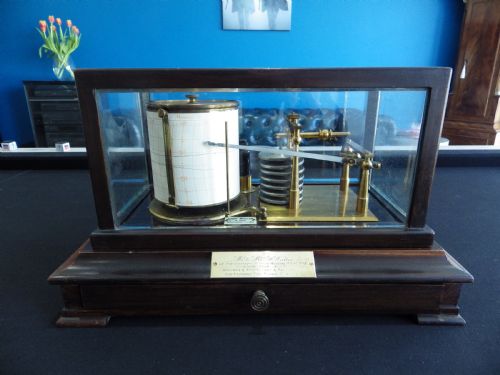


Antique Barometer Chart Recorder
These antique barometer chart recorders, known as barographs, trace continuous air pressure changes on paper drums to give you a complete meteorological history.
Antique Barometer Chart Recorder
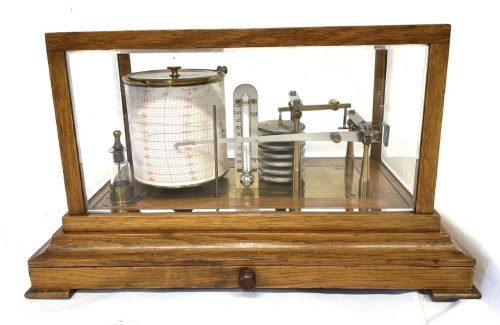
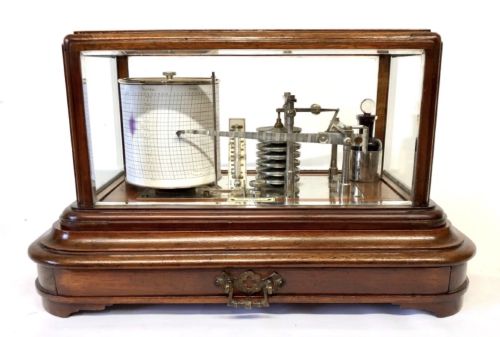
An antique barometer chart recorder typically takes the form of a barograph housed in a glazed timber case, designed to sit on a desk or hang on a wall. You encounter these scientific instruments spanning periods from the Victorian era through to the 1940s, with Edwardian and 1920s examples appearing frequently.
The primary function of these pieces involves recording atmospheric pressure automatically onto a rotating paper chart secured to a drum. Most configurations incorporate a small drawer beneath the mechanism to store spare weekly charts and ink bottles.
Makers housed these mechanical recorders in timber enclosures, most commonly utilising mahogany or oak, fitted with bevelled glass panels to protect the delicate barometer linkages inside. Some specimens combine the recording drum with an ancillary thermometer or a standard barometer dial.
Materials and Construction
Makers constructed the outer cabinets using dense hardwoods like mahogany and oak, occasionally featuring walnut or inlaid mahogany details in Art Nouveau styles. These timber cases rely on five glass panels to permit all-round viewing of the movement while keeping dust away from the mechanism.
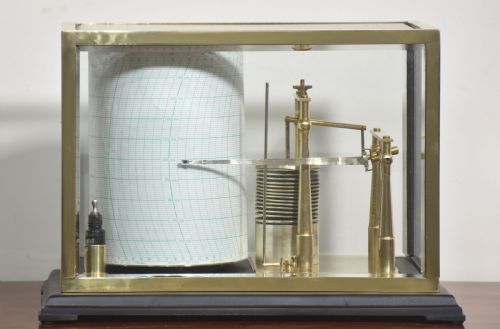
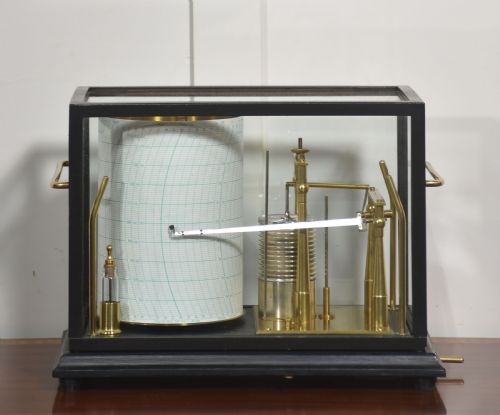
The internal barometer mechanism uses brass linkages connected to sealed metal vacuum chambers that expand or contract with air pressure changes. A metal arm holding an ink nib traces these movements onto a paper chart mounted on a clockwork-driven drum.
The documented periods span from the late Victorian era through the Edwardian years and into the interwar period of the 1930s and 1940s.
Assessing Quality and Execution
Quality in these instruments rests upon the precision of the mechanical movement and the reputation of the maker supplying the dial or case. Pieces originating from established scientific workshops display finer tolerances in their brass levers and more robust clockwork drums.
The cabinetry also dictates the standing of the piece, with heavier bevelled glass, cleanly fitted chart drawers, and carefully selected timber veneers separating standard production models from superior examples.
Short and Mason·Negretti and Zambra·Casella London·Jules Richard·R Fuess
The Antique Barometer Chart Recorder Glossary
- Barograph
- A recording barometer that uses a pen and rotating drum to chart atmospheric pressure over time. This instrument provides a continuous graphical record rather than a single current reading.
- Aneroid
- Operating without liquid, utilising a flexible metal bellows that expands or contracts with changes in air pressure. This technology allowed barographs to become portable desktop devices.
- Chart drawer
- A small compartment built into the wooden base of the instrument to hold spare recording sheets and ink. This feature keeps maintenance supplies integrated directly with the barometer.
- Bevelled glass
- Glass panes with polished, angled edges fitted into the cabinet doors and top. This treatment adds a refined finish to the timber and brass housing.
Antique Barometer Chart Recorder: Frequently Asked Questions
How do I change the chart paper?
You lift the hinged brass or glass cover, gently lift the pen arm away from the drum, and slide the paper chart off the rotating cylinder. A fresh weekly chart is then wrapped around and secured before refilling the small ink nib.
Ensuring the clockwork drum is wound keeps the cylinder rotating at the correct speed to match the printed time divisions on the paper.
How were these instruments used historically?
Maritime captains, estate managers, and meteorologists relied on these devices to track approaching storms by observing the curve traced on the paper. The continuous record helped predict weather shifts long before electronic forecasting existed.
Owners typically placed them in studies, offices, or hallways where guests could observe the mechanical progression of local atmospheric pressure.
How do I date an oak or mahogany barograph?
Dating relies on a combination of cabinet style, such as Art Nouveau inlays or Edwardian proportions, alongside signatures or trade labels on the metal bedplate. The presence of specific maker names often narrows down the production decade.
Examining the type of glass, brass thickness, and drawer construction also provides reliable clues to the manufacturing period.
Do these barographs still function today?
Many surviving examples retain working clockwork movements and accurate barometer diaphragms that respond to current air pressure. Regular servicing by a specialist ensures the delicate mechanical linkages move freely.
Even when used primarily for display, keeping the brass clean and the glass intact preserves the historical integrity of the scientific instrument.