


Recording Barograph Drawer
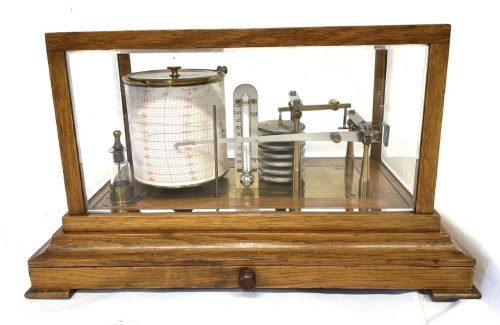
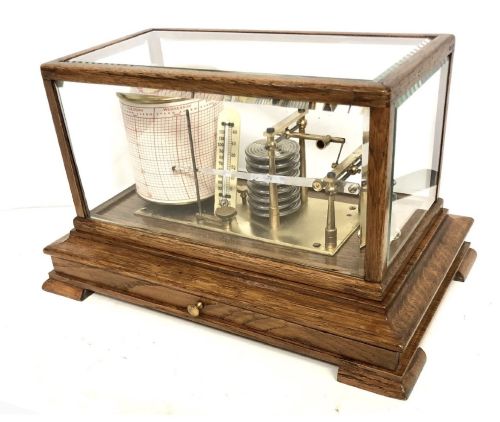
A recording barograph drawer sits beneath a precision meteorological instrument, housing spare paper charts and the ink bottle in a tidy, purposeful fashion.
Recording Barograph Drawer
When you search for a recording barograph drawer, you are looking at scientific instruments designed to record atmospheric pressure continuously over a week. These devices combine brass mechanisms and glass covers with dedicated storage compartments set directly into the wooden bases.
The version you are most likely to meet on this page is housed in an oak or mahogany case featuring bevelled glass panels. These examples date predominantly from the Victorian and Edwardian periods, frequently including supplementary barometers or thermometers alongside the main drum.
How they were made
Cabinetmakers constructed the housing using solid oak, mahogany, and walnut, often joining the timber with neat mitres and dovetails to support the heavy glass-and-brass instrument above. A lower pull-out drawer was integrated directly into the wooden base to keep recording supplies close to hand.
The internal recording movement relies on brass and steel levers connected to stacked aneroid vacuum chambers that track barometric changes. Bevelled glass panels are set into frames to allow clear viewing of the rotating drum without exposing the delicate linkages to dust.
Current listings feature oak, mahogany, and walnut cases fitted with brass movements and glass covers.
What varies in quality
The distinction between standard examples and finer pieces lies in the crispness of the maker's signature engraved on the brass bedplate and the quality of the timber selection. Heavier cabinet construction and substantial bevelled glass panes elevate the overall presence of the instrument.
Makers such as Short & Mason or Negretti & Zambra often indicate a higher tier of mechanical precision in the movement. The integration of the chart drawer itself shows varying degrees of care, from simple side-hung runners to neatly dovetailed compartments.
Short & Mason·Casella London·Baines Harrogate·Negretti & Zambra·Harrods of London
The Recording Barograph Drawer Glossary
- Barograph
- A self-recording barometer that traces atmospheric pressure onto a rotating paper chart. It uses an aneroid mechanism to drive an inked nib across the cylinder.
- Chart drawer
- A small compartment built into the wooden base of the instrument. This pull-out space stores spare weekly recording papers and spare ink bottles.
- Aneroid
- Operating without liquid. These sealed metal chambers expand and contract with changes in air pressure.
- Bevelled glass
- Glass panes with angled edges cut around the perimeter. This treatment adds depth and refracts light across the brass frame.
Recording Barograph Drawer: Frequently Asked Questions
What is inside the recording barograph drawer?
The drawer typically contains spare weekly paper charts and small glass bottles of recording ink. Keeping these supplies inside the base ensures they remain paired with the instrument.
Historically, the compartment kept the station tidy by gathering all necessary maintenance items directly beneath the recording drum.
How do I operate a barograph?
You fit a fresh paper chart around the brass drum and wind the internal clockwork mechanism using a small key. The inked arm then rests lightly against the paper to trace the pressure line.
Changing the paper weekly requires careful handling of the nib to avoid spilling ink or bending the delicate brass arm.
How do I date a wooden barograph case?
Victorian examples generally feature heavier mouldings and rich mahogany or dark oak timber. Edwardian and later pieces tend toward lighter oak cases and simpler inlaid mahogany designs.
Makers' signatures engraved on the brass bedplate also help narrow the production decade when compared against known trade periods.
Where should I place a barograph at home?
Position the instrument on a stable, level surface away from direct sunlight, radiators, and heavy vibrations. Changes in room temperature can affect the metal mechanisms inside the case.
A study, hallway, or library table provides a suitable environment where the movement can be observed without interference.