



Antique Barley Twist Bed
These antique barley twist bed examples bring robust timber turning and stately proportions to a bedroom, offering a focal point grounded in centuries of craftsmanship.
Antique Barley Twist Bed
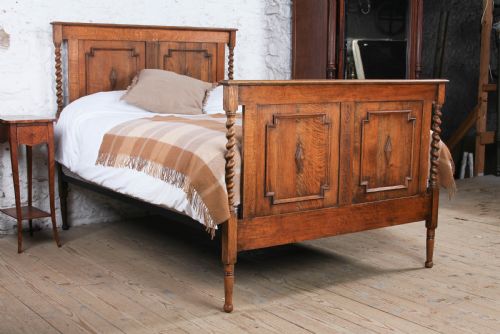
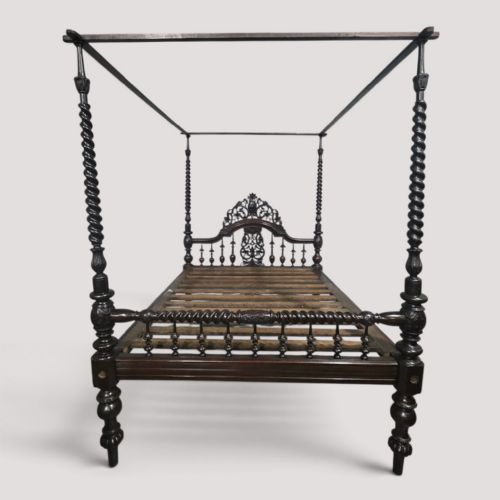
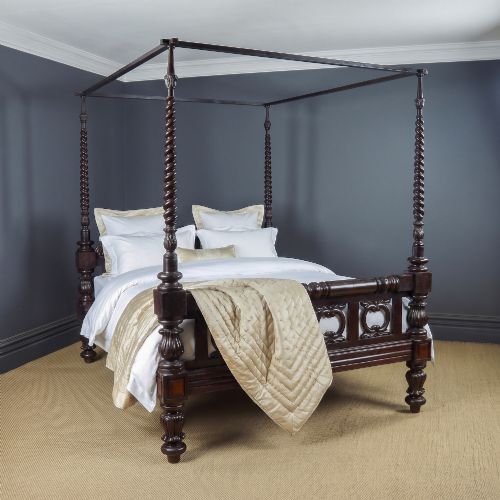
An antique barley twist bed delivers substantial presence through spiral turned woodwork, drawing on styles ranging from English Baroque revivals to Victorian interpretations. Buyers navigating this selection encounter full size bedsteads, grand four poster frames, and associated structural elements like individual carved posts.
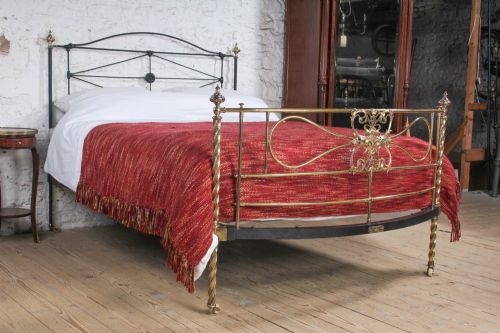
The material palette spans durable native timbers alongside exotic imports, reflecting the geographical reach of nineteenth and early twentieth century cabinet making. Oak and mahogany dominate the offerings, occasionally joined by rosewood or iron and brass combinations.
Regional variations introduce distinct stylistic details, from Portuguese Baroque revival influences to Anglo-Indian colonial designs. These pieces range from restrained Edwardian interpretations to heavily carved French Breton and William IV formats.
Construction and materials
Makers utilised dense timbers such as oak, mahogany, and rosewood, shaping the primary structural components to support intricate spiral turning. The helical carving requires precise hand work to maintain consistent rhythm and depth along the length of a post or bed frame.
Alternative constructions integrate iron and brass elements, pairing metal tubing with decorative cast components to achieve rigid support alongside ornate visual detail. Joinery methods rely on traditional pegged or bolted joints designed to withstand the weight and tension of substantial mattress platforms.
Antique Barley Twist Bed Retail Price Guide 2026
Typical asking prices for barley twist bed among the pieces listed under this phrase on Sellingantiques today, from the lower quarter to the upper quarter. They describe what is for sale here now, not the wider market.
Some adventurous sleepers discover that antique barley twist posts double remarkably well as impromptu scratching posts for very tall, ambitious house cats.
Evaluating quality and execution
The definition in the spiral carving dictates the visual merit of the piece, separating crisp, deeply undercut twists from softer, mechanically rounded alternatives. Superior examples display consistent symmetry and proportion across every turned member, maintaining harmony between headboards, footboards, and side rails.
Timber selection and surface preservation further differentiate the range, with well figured grain and sympathetic patina marking superior cabinet work. Original proportions and intact structural joinery ensure that the piece retains both its historic integrity and daily utility.
The Antique Barley Twist Bed Glossary
- Barley twist
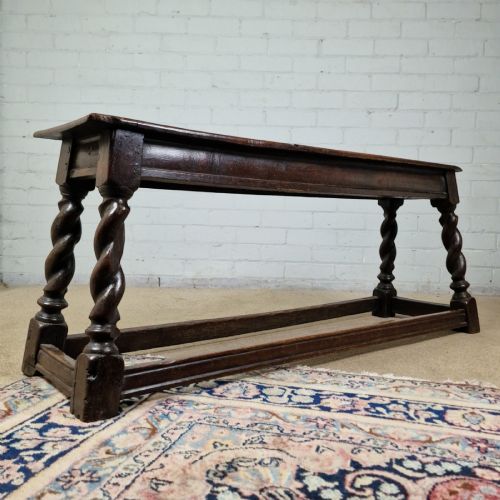
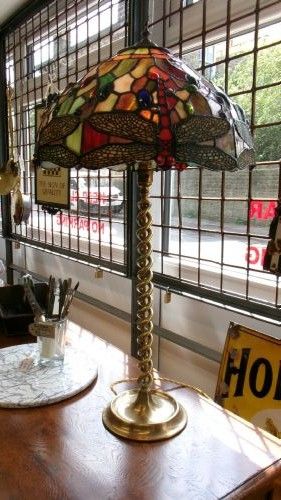
- A spiral turned decorative motif resembling a twisted rope or barley sugar stick. This classical turning style gained popularity during the seventeenth century and saw major revivals in Victorian and Edwardian furniture.
- Four poster bed
- A bed featuring four vertical columns that support an upper canopy or tester frame. These grand frames often showcase elaborate carvings or spiral turnings along the main posts.
- Bedstead
- The complete framework of a bed, including headboard, footboard, and side rails, designed to support a mattress base. This term historically distinguishes the structural housing from the loose bedding.
- Anglo-Indian
- Furniture made in the Indian subcontinent during the British colonial period, often combining local dense hardwoods with European forms. These pieces frequently incorporate deep relief carving and exotic timber varieties.
- William IV design
- A transitional furniture style bridging Regency and early Victorian aesthetics, characterised by heavy proportions and bold classical motifs. Pieces from this era often utilise rich mahogany with substantial turned elements.
Antique Barley Twist Bed: Frequently Asked Questions
How do I fit a modern mattress?
Many historic frames were built to dimensions that differ from modern standard mattress sizes. Adapting the interior supports or commissioning a bespoke mattress base allows these older bedsteads to accommodate contemporary comfort requirements.
Working with a specialist restorer ensures that any modifications to the internal rails remain reversible and protect the structural integrity of the historic timber.
Are these beds easy to assemble?
Most antique wooden and metal frames utilise traditional bolt systems or interlocking joinery designed for straightforward dismantling and transport. Keeping the original metal bolts and threaded receivers well lubricated prevents binding during assembly.
Enlisting two people for the setup process ensures that heavy headboards and long side rails remain properly aligned without straining the antique joints.
How should I care for the timber?
Routine maintenance involves dusting with a dry, soft cloth and avoiding silicone based polishes that can build up over the historic finish. Applying a microcrystalline wax periodically helps nourish the dry hardwood and protects the surface from atmospheric moisture.
Placing the bedstead away from direct heat sources and strong sunlight prevents the timber from shrinking, warping, or developing splits in the grain.
Can I mix these with modern decor?
The rich tones and sculptural turning of these frames allow them to anchor contemporary minimalist interiors or complement more traditional room schemes. Pairing the substantial timber with neutral linens and simple lighting highlights the craftsmanship of the spiral turned posts.
Allowing the bed to serve as the primary focal point in the room balances its heavy architectural presence with cleaner surrounding elements.