


Antique Austrian Porcelain
Antique austrian porcelain brings together ornate nineteenth-century craftsmanship, classical hand-painted scenes, and fluid art nouveau styling.
Antique Austrian Porcelain
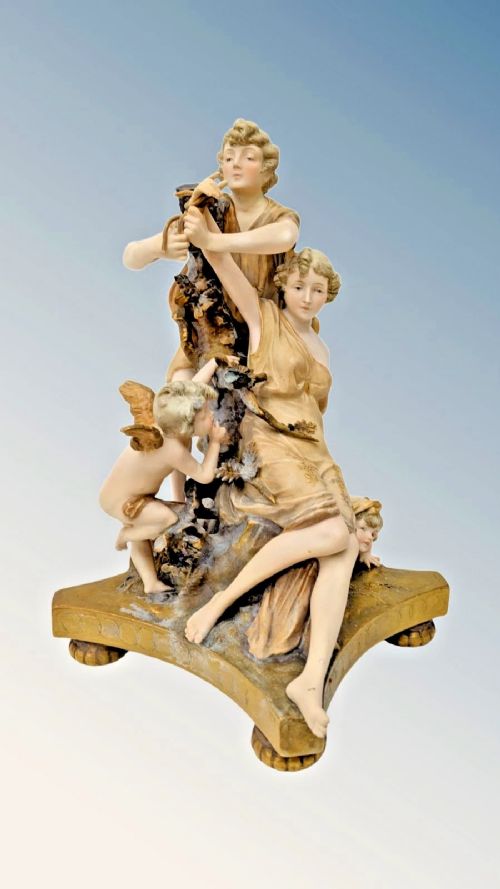
Antique austrian porcelain encompasses diverse decorative objects from the nineteenth and early twentieth centuries, ranging from cabinet plates to monumental lidded urns and vases. The selection focuses heavily on rich Vienna style pieces alongside figural groups and vessels from makers such as Ernst Wahliss.
Buyers encounter everything from cabinet plates depicting classical mythological scenes to sculptural busts, ewers, and garniture sets. These items reflect prevailing tastes across the nineteenth century, moving from neoclassical revivals towards organic art nouveau designs.
Materials and Technique
Makers shaped refined ceramic bodies and applied smooth glazes before executing detailed hand-painted figurative compositions. Enamel pigments provided rich coloration for mythological and allegorical subjects rendered across plates, chargers, and vases.
Gilding and gold leaf highlights accented cobalt blue grounds and raised surface details, completing pieces through careful kiln firing. Terracotta and earthenware also appear alongside traditional porcelain in sculptural figures and spill vases.
Listings feature porcelain, enamel, gold leaf, and terracotta across nineteenth-century neoclassical and art nouveau styles.
Qualities of Execution
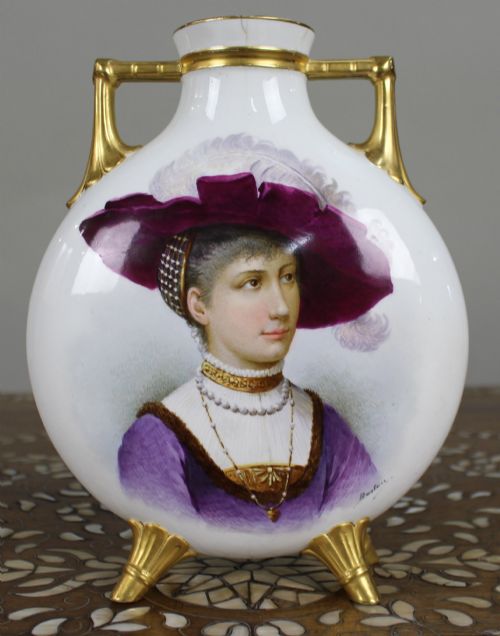
Execution depends heavily on the precision of the hand-painted artistry, where signed portraits and complex narrative scenes command greater attention than standard floral patterns. The crispness of the porcelain moulding and the richness of the gilding separate standard production from finer exhibition pieces.
The sophistication of the form, whether a fluid art nouveau bust or a heavy classical lidded urn, dictates the overall character of the work. Superior examples demonstrate exceptional balance between sculptural form and intricate surface decoration.
Ernst Wahliss·Royal Vienna·Alexandra Porcelain Works
The Antique Austrian Porcelain Glossary
- Cabinet plate
- A decorative ceramic plate intended for display on a wall or within a cabinet rather than for dining. These often feature elaborate hand-painted historical or mythological subjects.
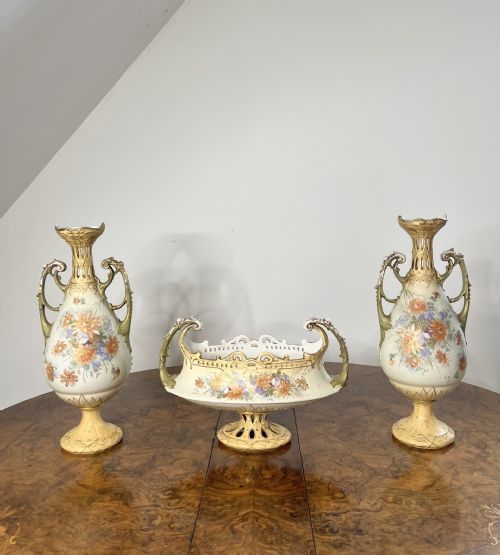
- Garniture set
- A matching group of three or more vases or urns designed to be displayed together on a mantelpiece or sideboard. They typically comprise a central lidded vessel flanked by smaller matching pieces.
- Moon flask
- A flattened circular flask with a short neck and two small handles, often supported on an oval base. This form provides a broad flat surface ideal for painted figural scenes.
- Ewer
- A large jug with a wide spout and an ornate handle, historically used for pouring water but valued here purely for its sculptural form. Fine examples feature gilded mounts and classical painted panels.
- Charger
- A large ornamental decorative plate or dish meant to sit flat on a surface or hang as a focal point. They frequently showcase intricate historical or religious narratives.
Antique Austrian Porcelain: Frequently Asked Questions
What is Royal Vienna porcelain?
Royal Vienna porcelain refers to high-quality wares produced in the Vienna style, often featuring rich cobalt blue grounds, extensive gilding, and finely painted mythological scenes.
Many pieces bearing this designation date from the nineteenth century and reflect classical revival aesthetics.
How should I clean antique porcelain?
Dust these items gently with a soft dry brush and avoid submerging pieces with delicate gilding or hand-painted enamel in water.
Harsh cleaning agents will damage fragile gold leaf and surface decoration over time.
Are these pieces marked?
Many nineteenth-century items carry factory or decorator marks on the underside, though identification often relies on stylistic traits and signature details.
Artists frequently signed detailed portrait plates and mythological chargers near the edge of the painted scene.
What subjects appear on painted plates?
Popular themes include classical mythology, allegorical figures representing seasons or virtues, and historical narratives.
Artists drew inspiration from famous paintings and theatrical works of the period.