




Antique Art Pottery Jug
An antique art pottery jug brings tactile weight and layered glaze to a room, offering functional craft shaped across the nineteenth century and earlier.
Antique Art Pottery Jug
When searching for an antique art pottery jug, collectors encounter vessels designed for pouring, display, and daily utility. The selection spans robust salt glaze stonewares, slipware tavern pieces, and delicate earthenware ewers from Victorian and Edwardian workshops.
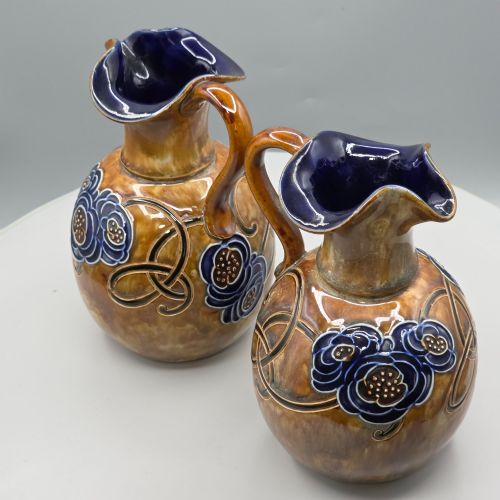
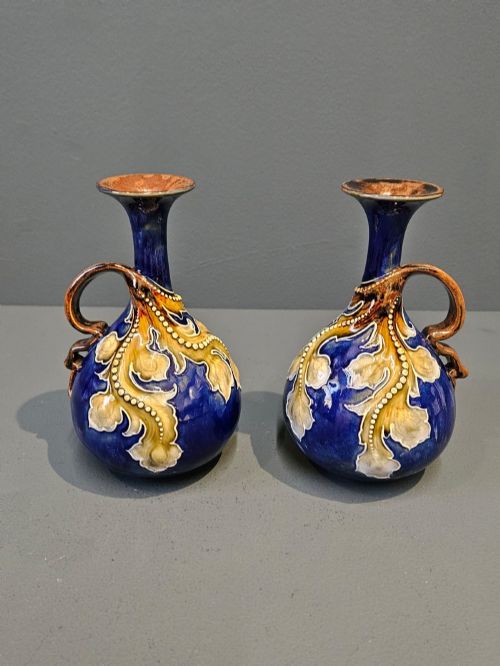
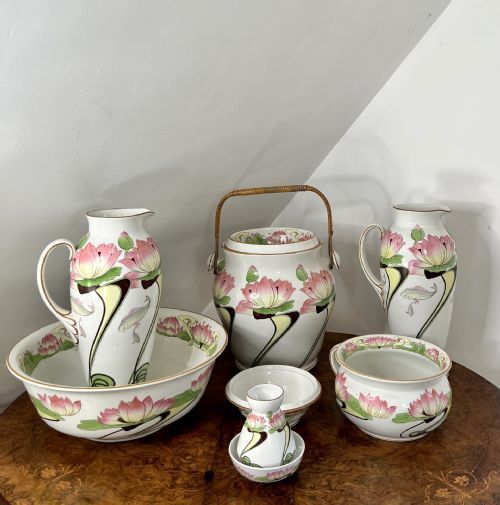
The most frequent examples on this page date from the late nineteenth and early twentieth centuries, particularly British studio pottery and utilitarian salt glaze vessels. These range from domestic creamers and water ewers to decorative Art Nouveau exhibition pieces.
Earlier roots appear in seventeenth-century slipware and eighteenth-century pearlware, showing how utility shifted into ornamental studio design. Each piece reflects the dominant ceramic technology and aesthetic movement of its specific decade.
How they were made
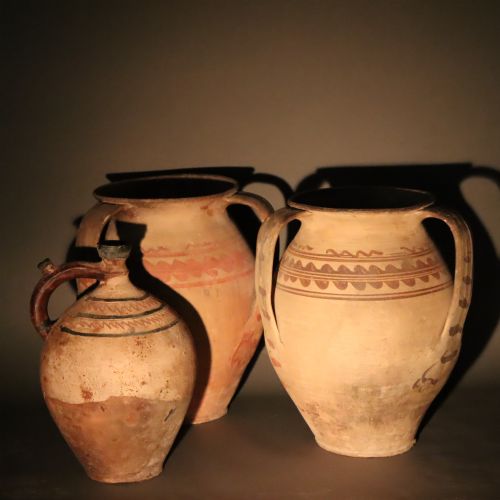
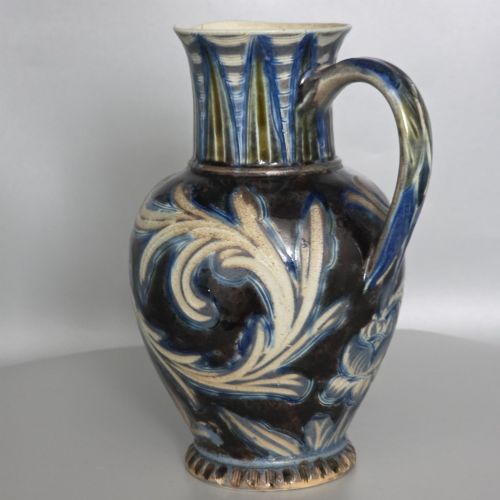
Potters shaped these jugs using earthenware, terracotta, and dense stoneware bodies, often throwing the clay on a wheel before applying handles and spouts by hand. Surface decoration relied heavily on salt glaze, lead glaze, and painted slips.
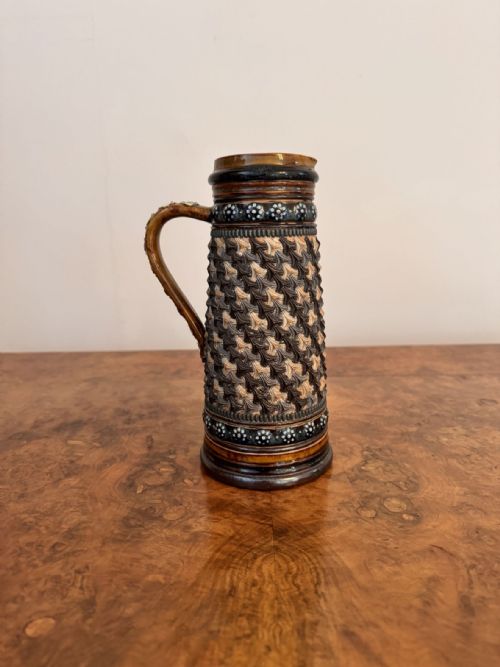
Makers achieved distinctive textures through specialised firing techniques in kilns fired by coal or wood. Salt glaze was introduced by throwing salt into the hot kiln to create an orange-peel texture, while slipware involved trailing liquid clay over a contrasting body before glazing.
Antique Art Pottery Jug Retail Price Guide 2026
Typical asking prices for art pottery jug among the pieces listed under this phrase on Sellingantiques today, from the lower quarter to the upper quarter. They describe what is for sale here now, not the wider market.
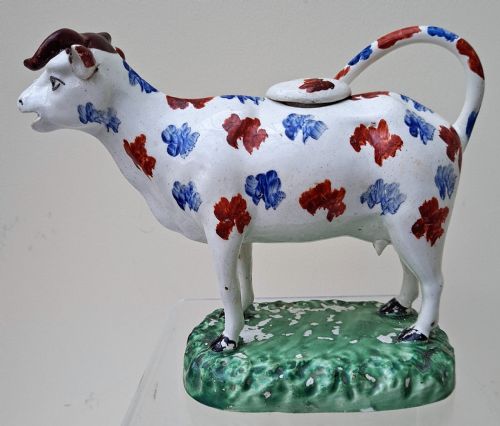
Cow creamers pour milk directly from the bovine mouth, charming dairy tables since Georgian times.
What varies in quality
Quality in these jugs rests on the crispness of the modelled detail, the control of the glaze reaction during firing, and the balance of the form. Superior pieces show confident throwing with walls that are thin yet robust, while lesser examples can feel heavy and clumsy in the hand.
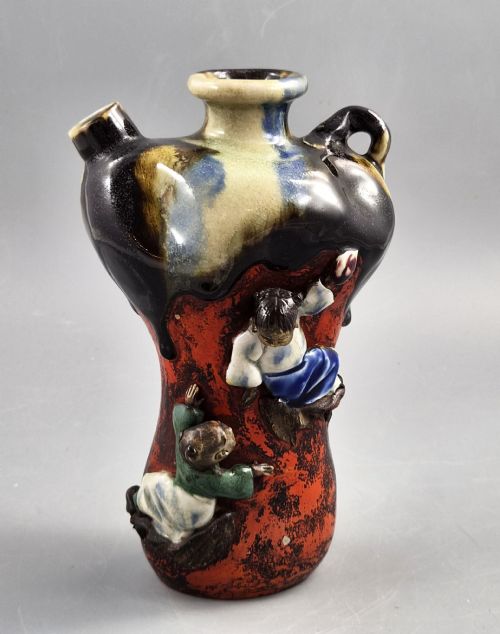
The sophistication of the surface decoration separates standard production ware from masterworks. Hand-painted slip, intricate incised Art Nouveau foliage, and complex metallic oxide glazes demand high technical skill from the potter.
Doulton Lambeth·Royal Doulton·Sir Edmund Elton·Minton
The Antique Art Pottery Jug Glossary
- Slipware
- Pottery decorated with slip, a liquid clay mixture, applied to the wet or leather-hard body before firing. This technique creates raised patterns and rustic finishes.
- Salt glaze
- A ceramic glaze made by throwing common salt into the kiln at high temperatures, producing a durable, pitted texture resembling orange peel.
- Earthenware
- Porous pottery fired at lower temperatures, requiring a glaze to become impermeable to liquids. It forms the body of many traditional dairy and tavern jugs.
- Stoneware
- A dense, vitrified ceramic fired at high temperatures until the clay body becomes non-porous and vitreous. It resists acids and hard knocks.
- Ewer
- A large jug with a wide spout and a flared base, traditionally used for pouring water at a washstand or table.
Antique Art Pottery Jug: Frequently Asked Questions
How do I date an old jug?
Dating relies on stylistic clues, clay bodies, and manufacturing marks stamped or incised into the base. Art Nouveau motifs and specific glaze recipes often point directly to the late nineteenth or early twentieth century.
Earlier centuries reveal themselves through heavy lead glazes, hand-thrown imperfections, and vernacular shapes typical of seventeenth-century slipware or eighteenth-century pearlware production.
Can I use these jugs for water?
While many stoneware and glazed ceramic jugs remain completely watertight, collectors generally avoid using antique vessels for daily service. Thermal shock or accidental knocks can cause irreversible damage to fragile historic material.
Vitréous stoneware jugs handle liquids better than porous earthenware pieces, but displaying them dry protects their glazes and structural integrity over time.
What is a Toby jug?
A Toby jug is a traditional pottery jug shaped as a full-seated figure, usually an eighteenth-century gentleman holding a mug of beer and a pipe. They are glazed in bright colours over earthenware or pearlware bodies.
These pieces combined household utility with satirical folk art, becoming popular decorative items across British taverns and domestic parlours.