






Antique Arita Ware
Antique arita ware brings Japanese porcelain craftsmanship into the home, offering collectors decorative plates, bowls and chargers shaped by centuries of tradition.
Antique Arita Ware
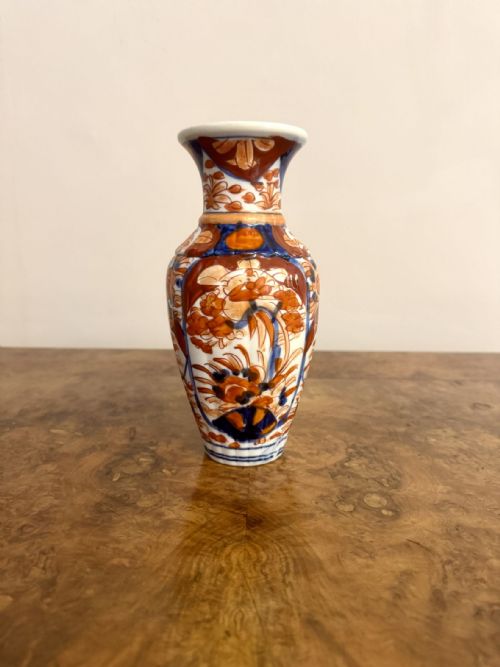
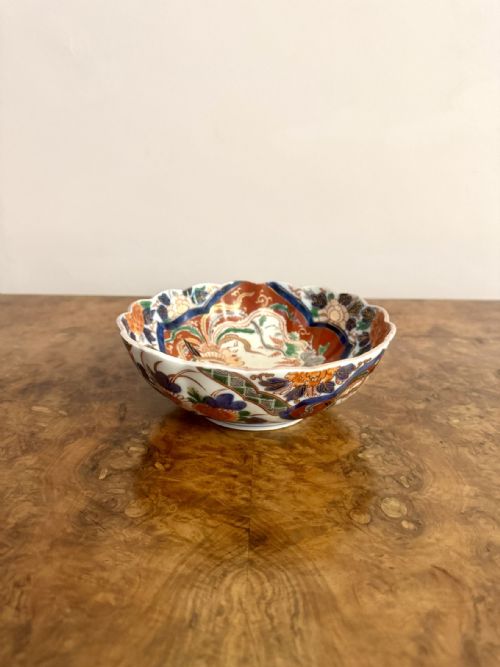
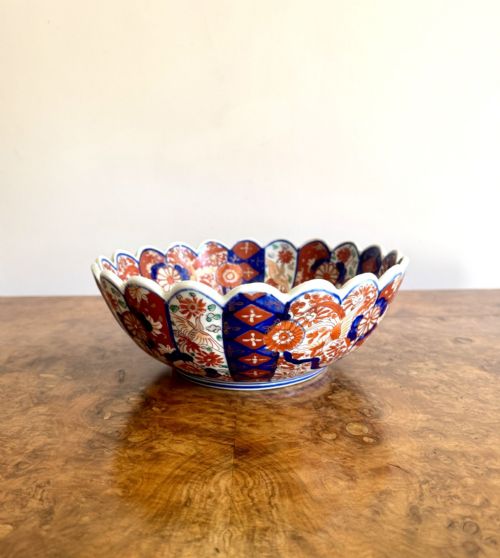
Antique arita ware encompasses a rich variety of porcelain items produced in Japan, spanning the 17th, 18th, 19th and early 20th centuries. Buyers searching this phrase encounter numerous forms, including large chargers, scalloped edge bowls, bottle vases, jardinieres and figural pieces.
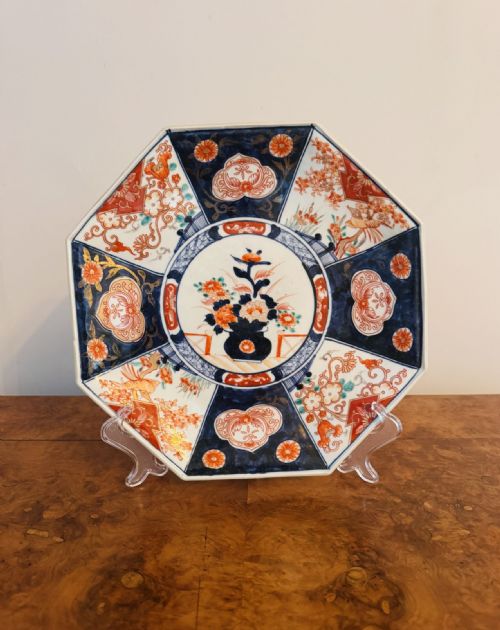
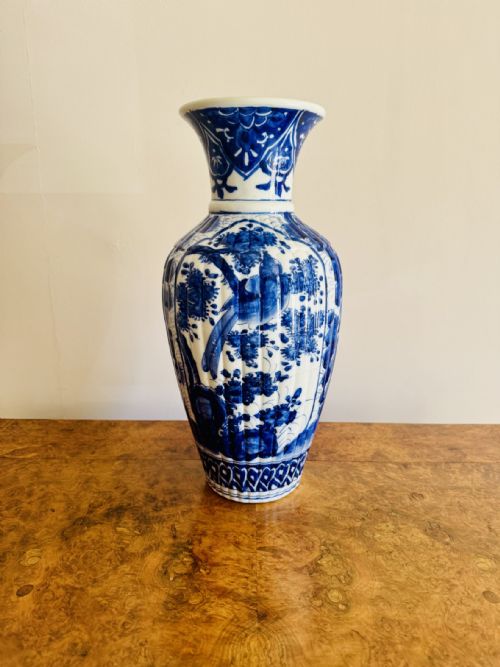
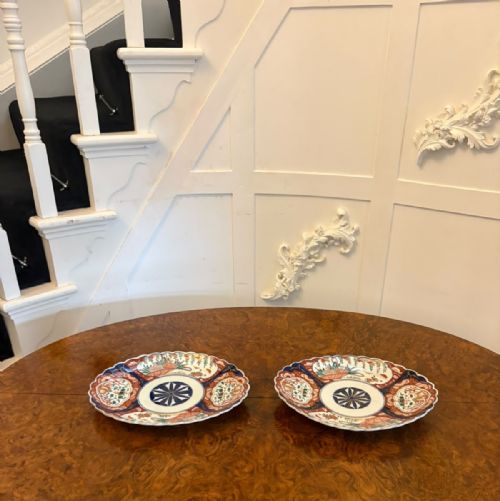
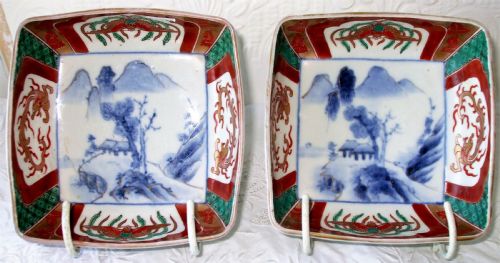
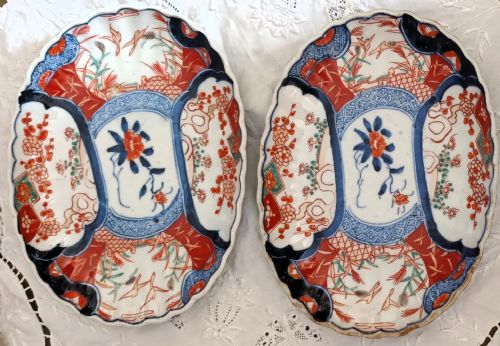
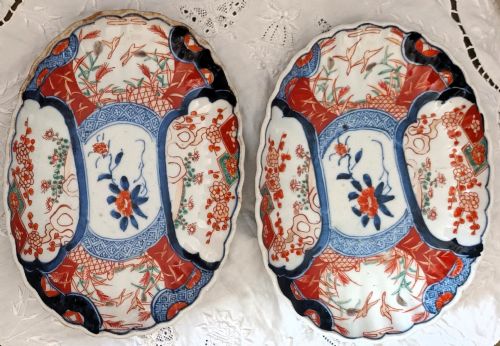
The pieces appearing on this page demonstrate distinct stylistic influences from the Edo and Meiji periods, alongside Japanese Imari designs. Common objects range from matched pairs of oval dishes to garnitures of three shaped vases, reflecting the diverse output of Japanese kilns.
Materials and methods
The foundation of antique arita ware is ceramic porcelain, shaped into functional and decorative objects such as clam shell dishes, fan shaped plates and hexagonal bowls. Artisans applied glaze to the porcelain body to create a smooth, protective surface.
Decoration relied heavily on enamel, gold leaf, and gilt to produce intricate floral, bird and figurative patterns. Hand painted designs in the Imari palette define many of the vessels, complemented by gold gilt highlights.
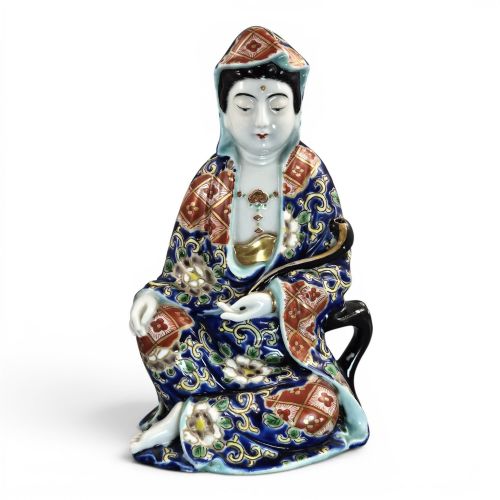
A porcelain figure depicts Jigoku Dayu, the legendary hell courtesan, proving kilns created stories alongside bowls and vases.
Assessing quality
Quality in antique arita ware rests on the precision of the hand painted decoration and the crispness of the porcelain form. Pieces with complex floral and bird designs or unusual shapes like fan plates and hexagonal bowls often display higher artistic ambition.
The application of enamel and gold leaf varies across items, distinguishing standard production from exceptional examples. Garnitures and large chargers demand greater technical skill from the maker, resulting in a stronger visual impact.
The Antique Arita Ware Glossary
- Imari
- A style of Japanese porcelain decorated in underglaze blue, iron red, and gold. This palette originated in the Edo period and remains closely associated with Arita production.
- Edo Period
- A historical division of Japan lasting from 1603 to 1868. Works from this era often exhibit traditional forms such as clam shell dishes and bottle vases.
- Meiji Period
- The era in Japanese history spanning from 1868 to 1912. Many decorative plates and bowls available to collectors date from this time of prolific export.
- Charger
- A large decorative plate intended for display rather than dining. These substantial pieces highlight detailed hand painted motifs.
- Garniture
- A set of three or more matching vases designed to be displayed together on a mantelpiece or cabinet. These coordinated sets show unified decorative schemes.
Antique Arita Ware: Frequently Asked Questions
What is antique arita ware?
Antique arita ware refers to Japanese porcelain produced in and around the town of Arita. The tradition spans multiple centuries and includes decorative vessels and tableware.
Items range from everyday dishes to elaborate garnitures decorated with distinct colour palettes.
How do I identify Edo period pieces?
Edo period pieces date between 1603 and 1868 and often feature traditional forms like bottle vases and clam shell dishes. These early examples showcase foundational techniques of Japanese porcelain production.
Examining the glaze and hand painted motifs helps distinguish these earlier works from later Meiji period items.
What is Japanese Imari?
Japanese Imari is a decorative style utilising contrasting colours like underglaze blue, iron red, and gold leaf. It became a signature aesthetic for Arita porcelain exported to the West.
This palette appears across numerous bowls, plates, and chargers found in historical collections.
How should I display a charger?
Large chargers are designed primarily for visual display on walls or sturdy stands. Their broad surfaces allow the hand painted floral and bird designs to be appreciated fully.
Placing them away from direct foot traffic ensures the enamel and gold gilt remain protected.