






Antique Arak Rug
These antique Arak rugs bring substantial Persian character into a room through generous scale and robust traditional weaving.
Antique Arak Rug
When you search for an antique Arak rug, you are looking at resilient Persian carpets and runners originating from the central region of Arak, including major production centres like Mahal, Sultanabad, and Sarouk. These pieces arrive in various formats, from room-sized carpets down to long runners designed for hallways and country houses.
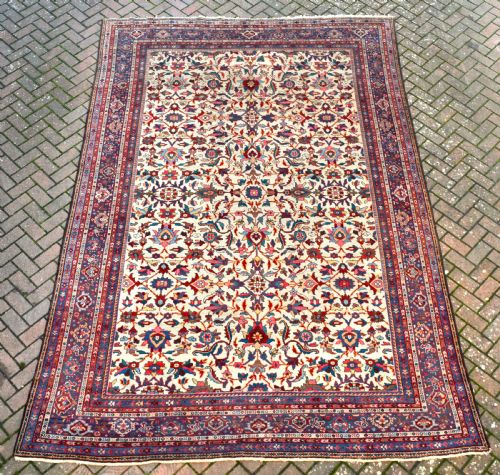
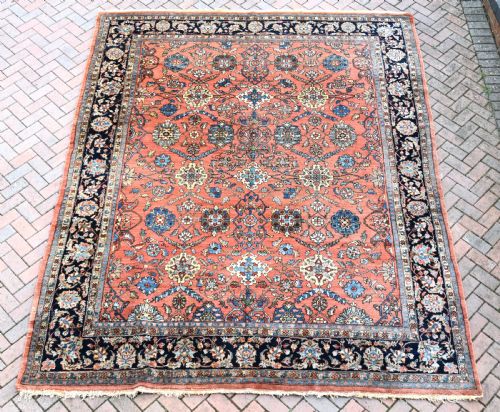
The pieces you meet on this page lean heavily towards Mahal and Sarouk weaving traditions, frequently displaying large-scale floral motifs, all-over shrub designs, or traditional central medallions. They date predominantly from the Victorian era up through the early decades of the twentieth century, bringing considerable presence to domestic floors.
How they were made
These carpets are constructed with wool piles knotted onto sturdy cotton foundations, providing the structural resilience necessary for heavy domestic use over generations. The weavers utilised durable natural materials that absorb dye deeply, resulting in rich colour palettes that age gracefully with time and wear.
Production methods in the Arak region combined village and workshop traditions, allowing weavers to produce both fine room-sized carpets and coarser country house runners. This technical foundation explains why surviving examples retain their structural integrity despite decades of foot traffic.
Antique Arak Rug Retail Price Guide 2026
Typical asking prices for arak rug among the pieces listed under this phrase on Sellingantiques today, from the lower quarter to the upper quarter. They describe what is for sale here now, not the wider market.
What varies in quality
Quality in these rugs is defined by the density of the knotting and the fineness of the wool used in the pile, which dictates how sharply the design renders. Superior examples maintain crisp botanical outlines and balanced proportions across large surface areas.
The handling of the palette also separates regional pieces, with finer dyes and more harmonious secondary shades marking out the upper tier of production. Wear patterns similarly influence overall character, distinguishing gently faded surfaces from heavier distress.
The Antique Arak Rug Glossary
- Mahal
- A type of Persian carpet originating from the Arak region, known for robust village weaves and bold floral patterns. These carpets often feature open fields and spacious medallion designs.
- Sarouk
- A refined Persian rug style produced in the Arak area, characterised by dense floral sprays and dense wool piles. They are typically woven on cotton foundations with tight knot counts.
- Sultanabad
- An earlier designation often applied to large-scale decorative carpets woven in the Arak district before the twentieth century. They are prized for their grand proportions and large palmette motifs.
- Mina Khani
- A traditional repeating geometric and floral grid pattern found across Persian carpets. This design connects flowers and rosettes with delicate trellis lines.
- Lilihan
- A village-produced Persian rug from the Arak region, known for sturdy construction and heavy wool utilisation. These pieces frequently employ deep rose grounds and all-over floral sprays.
Antique Arak Rug: Frequently Asked Questions
Where were these rugs made?
These carpets and runners were woven in the central Persian district of Arak, encompassing surrounding villages and towns such as Mahal and Sarouk. Production centres in this region supplied durable floor coverings for both domestic use and export.
Weaving traditions here drew on local wool supplies and established regional design repertoires, creating carpets known for their substantial scale and resilient cotton foundations.
How do I clean an antique rug?
Gentle surface vacuuming without a beater bar removes loose dirt from the wool pile without damaging the antique cotton foundation threads. Professional specialist cleaning remains essential for deep washing to protect natural dyes.
Avoid household detergents or excessive moisture, which can cause dye bleed or weaken the aged fibres across the rug.
Can these carpets handle hallway traffic?
Many of these pieces were built as runners or heavy country house carpets specifically to withstand daily movement. Their dense wool piles and sturdy cotton foundations absorb foot traffic effectively.
Placing a quality underlay beneath the rug prevents slipping and reduces friction against the floorboards, extending the lifespan of the textile.
How do I date an Arak carpet?
Dating relies on examining structural characteristics, wool texture, and design conventions associated with specific periods like the Victorian era or the early twentieth century. Regional dyeing methods also shift across decades, offering clues to age.
Comparing knot density and palette composition against documented pieces helps narrow down the timeframe of production.