



Antique Arabic Table
An antique arabic table brings intricate brass work, geometric inlay, and regional revival styles straight into your home.
Antique Arabic Table
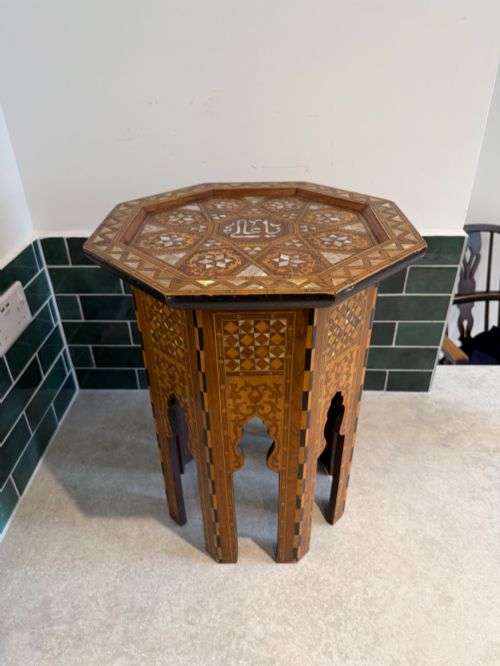
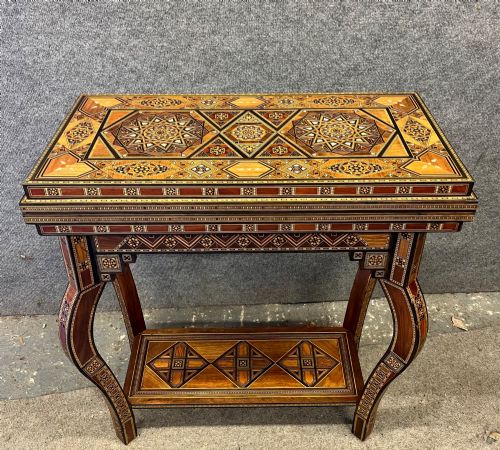
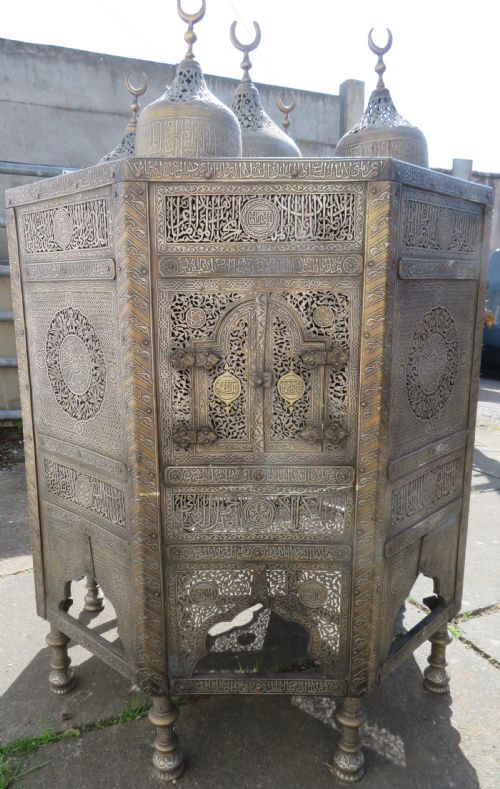
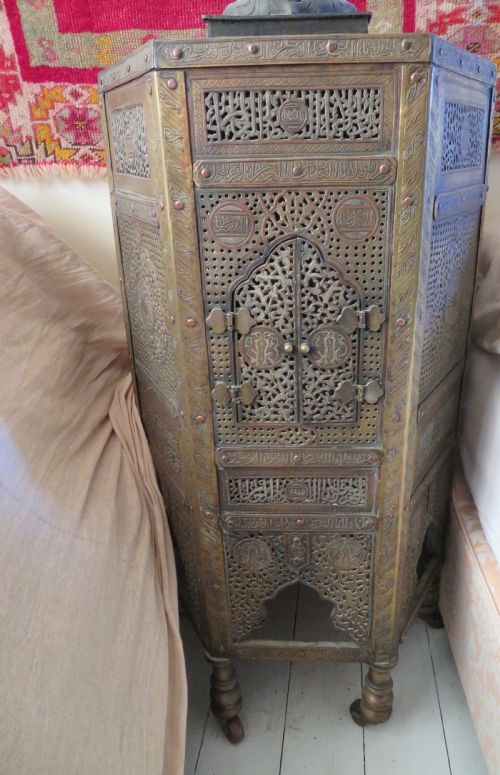
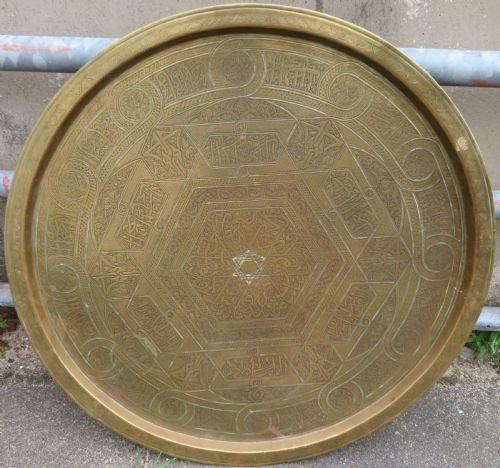
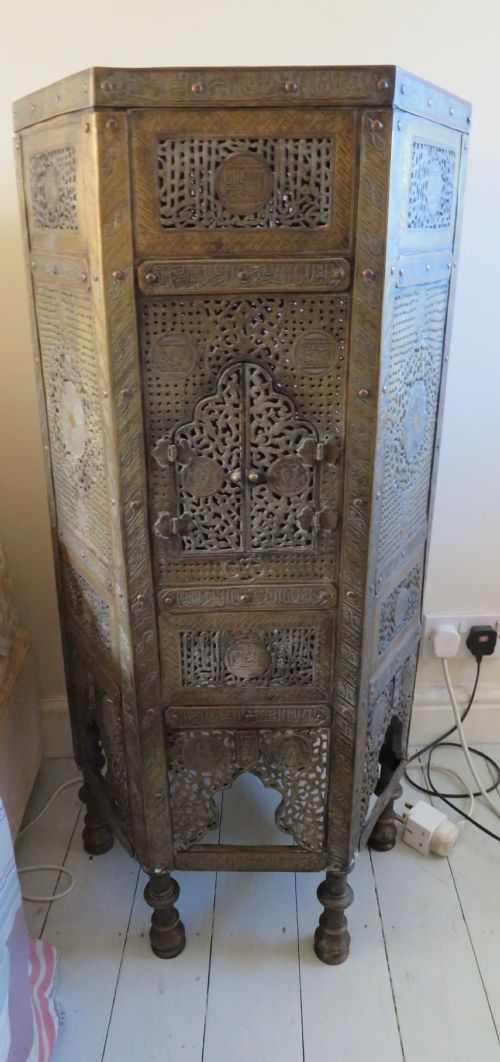
When you search for an antique arabic table, you encounter an array of richly decorated occasional furniture, games tables, and kursi stands spanning the late nineteenth century into the nineteen-thirties. The most common versions on this page are hexagonal occasional tables and brass-topped folding stands known as kursi, often associated with Cairoware production.
Moorish revival and Mamluk revival styles dominate the selection, bringing heavy geometric influence and engraved metalwork into domestic settings. These pieces range from compact side tables to large decorative trays and dedicated Quran stands adapted for modern display.
Origins stretch across Middle Eastern and North African craft traditions, though European interpretations also emerge through nineteenth-century French decorative objects. Buyers find everything from simple inlaid walnut frames to elaborate white-metal and copper-inlaid brass surfaces.
Materials and construction
Construction relies heavily on dense hardwoods such as walnut and ebony, forming structural frames for hexagonal tables, games boards, and folding kursi bases. These wooden carcasses provide stability for complex surface ornamentation.
Surface decoration combines extensive metalwork with organic inlays, utilising brass, copper, silver inlay, and white metal alongside mother-of-pearl and bone. Artisans engraved elaborate Islamic motifs directly into brass trays and table tops, frequently employing openwork techniques.
Inlay work involves precise fitting of bone, mother-of-pearl, and contrasting woods into geometric patterns across table tops and sides. Metal elements are often inlaid into darker brass or copper grounds to create high-contrast visual depth.
Antique Arabic Table Retail Price Guide 2026
Typical asking prices for arabic table among the pieces listed under this phrase on Sellingantiques today, from the lower quarter to the upper quarter. They describe what is for sale here now, not the wider market.
Listings feature items spanning the 1880s to the 1930s, incorporating walnut, ebony, brass, copper, mother-of-pearl, and bone.
Assessing quality and execution
Quality rests primarily on the crispness of the metal engraving and the precision of the geometric inlay work. Finer pieces demonstrate tight joints in the wood and securely seated bone or mother-of-pearl elements that sit flush with the surrounding surface.
The complexity of the metalwork distinguishes standard production from exceptional examples, with multi-metal inlays involving silver, gold, copper, and white metal showing superior craftsmanship. Openwork cutting in brass and white-metal elements requires steady control to maintain clean geometric lines.
The Antique Arabic Table Glossary
- Kursi
- A low folding table or stand, often hexagonal, traditionally used to support books such as the Quran or serve as an occasional table. These pieces frequently feature intricate openwork and metal inlay.
- Cairoware
- A term for nineteenth and early twentieth-century metalwork originating in Cairo, typically consisting of brass engraved with Islamic motifs and inlaid with silver, copper, or gold.
- Mamluk Revival
- A decorative style inspired by the art and architecture of the Mamluk Sultanate, characterised by dense geometric patterns and elaborate metal vessel forms.
- Moorish Revival
- An architectural and decorative style drawing on North African and Spanish Islamic traditions, notable in furniture through horseshoe arches and complex geometric woodwork.
- Inlay
- A technique where pieces of contrasting material such as bone, mother-of-pearl, or precious metals are set into depressions within a solid wooden or metal base to form patterns.
Antique Arabic Table: Frequently Asked Questions
What is a kursi table?
A kursi is a traditional low table or stand, typically hexagonal in shape, designed to fold or support sacred texts and decorative objects. They form a significant portion of Arabic and Islamic metal-inlaid furniture.
In modern interiors, these stands function effectively as occasional tables or display surfaces for plants and lamps, bringing distinct geometric patterns to a room.
How do I identify Cairoware?
Cairoware pieces are identified by their engraved brass construction, often featuring heavy silver, copper, or white-metal inlay depicting Arabic calligraphy and geometric scrollwork. These items span late nineteenth-century and early twentieth-century production.
Many examples take the form of large trays, hexagonal tables, or Quran stands produced in Egyptian workshops for both local use and the export market.
Where were these tables made?
Production centres include Cairo, Damascus, and broader Ottoman Syrian regions, alongside Moorish workshops influenced by North African and Spanish Islamic design traditions. European makers also produced revival pieces during the nineteenth century.
Materials and construction techniques often reflect the specific regional workshop traditions, ranging from Damascan games tables to Egyptian brass-topped folding stands.
How do I care for inlaid wood?
Inlaid wooden furniture requires a stable indoor climate away from direct heat sources and strong sunlight to prevent the wood from shrinking and loosening the bone or mother-of-pearl elements. Dusting with a soft, dry cloth maintains the surface finish.
Avoid using liquid polishes on inlaid or metal-mounted surfaces, as moisture can seep beneath bone and metal inlays and cause lifting over time.