

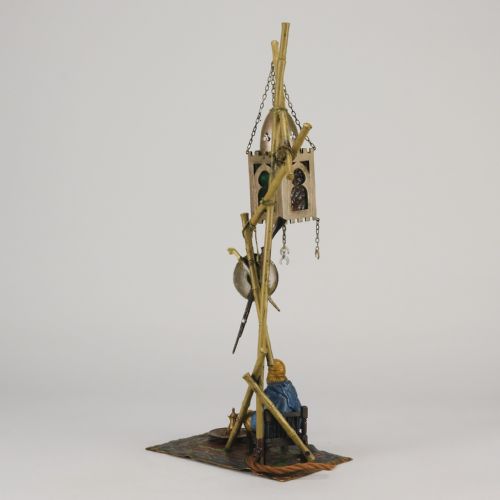


Antique Arab Figure
An antique arab figure brings the romanticism of nineteenth-century Orientalism directly onto your mantelpiece through finely cast metal and painted ceramic.
Antique Arab Figure
An antique arab figure captures nineteenth-century cultural fascination through sculptural depictions of merchants, water carriers, and horsemen. These works emerge primarily from the nineteenth century and the early twentieth century, spanning dates such as eighteen-eighty, nineteen-hundred, and nineteen-ten.
The objects take diverse sculptural forms, appearing as standalone figurines, table lamps, mantel clocks, and animalier studies of mares, stallions, and camels. Collectors encounter subjects ranging from sword merchants and falconers to seated lamp figures and serving ladies.
Originating largely within European artistic traditions of Orientalism and Victorian Orientalism, these sculptures reflect Western interpretations of Eastern subjects. The pieces on this page demonstrate the period's preoccupation with narrative detail and exoticism.
Materials and Techniques
Makers shaped these subjects predominantly in bronze, utilising both traditional casting and the specialised technique of cold-painted bronze where colour is applied to the metal surface. Additional materials include porcelain, glass, marble, enamel, and gold leaf, occasionally combined within a single composition.
Surface decoration relies heavily on polychrome paintwork and cold-painting methods to render patterned garments and facial expressions with high fidelity. Sculptors also employed patination to achieve varied tones on the metallic surfaces before final mounting on marble or clock bases.
Antique Arab Figure Retail Price Guide 2026
Typical asking prices for arab figure among the pieces listed under this phrase on Sellingantiques today, from the lower quarter to the upper quarter. They describe what is for sale here now, not the wider market.
A camel or a falconer makes an exceptionally polite desk companion for checking post.
Evaluating the Work
The nuance of the modelling, particularly in complex figural groups involving animals or multiple figures, separates standard production from exceptional studio output. Original mounting on marble bases and complete functional elements such as lamp fittings or clock movements further elevate a piece.
Franz Bergman·P. J. Mene·Arthur Waagen·Hadley Worcester·Louis Hottoot
The Antique Arab Figure Glossary
- Cold-Painted Bronze
- A technique where bronze sculptures are painted with polychrome oil or enamel colours after casting, rather than patinated with heat and chemicals. This method allows for vibrant detail on garments and skin.
- Orientalism
- An artistic movement and aesthetic style spanning the nineteenth and early twentieth centuries that depicted themes and subjects from Middle Eastern and North African cultures. European artists interpreted these scenes through Western eyes.
- Animalier
- A nineteenth-century sculptural genre dedicated to the realistic and dynamic portrayal of animals, frequently horses or camels. Masters of this style often integrated human figures into their compositions.
- Patination
- The natural or chemical process that alters the surface colour of bronze over time or through studio treatment. It provides depth and shadow to the underlying metal sculpture.
Antique Arab Figure: Frequently Asked Questions
What materials make up these figures?
The listings show pieces constructed primarily from cast bronze, frequently finished with cold-painted pigments. Other materials include porcelain, marble, glass, enamel, and gold leaf.
Artists combined these elements to render detailed clothing, bases, and decorative accessories on the sculptures.
How do I identify a Bergman piece?
Franz Bergman figures typically feature cold-painted bronze construction with distinctive colour palettes and characterful subject matter such as merchants or tent scenes. Many carry the foundry marks associated with his Austrian workshops.
Examining the precision of the casting and the preservation of the polychrome paint helps confirm attribution.
Where should I place a lamp figure?
Seated arab lamps function well on side tables or desks where their illumination highlights the painted metallic details. Ensure the surrounding space accommodates the specific height of the sculpture and its integrated lighting elements.
Keep these pieces away from direct heat sources to protect the delicate cold-painted surfaces.
How do animalier sculptures differ from portraits?
Animalier works focus on the anatomy and movement of creatures like mares, stallions, and camels, often integrating human riders or handlers into the scene. Standard figural sculptures concentrate entirely on human subjects such as water carriers, falconers, or merchants.
Both categories share the nineteenth-century Orientalist aesthetic seen across the listings.