




Antique Apothecary Glassware
Antique apothecary glassware brings functional medical history into the room, offering heavy glass bottles and jars shaped by Victorian, Edwardian, and Georgian utility.
Antique Apothecary Glassware
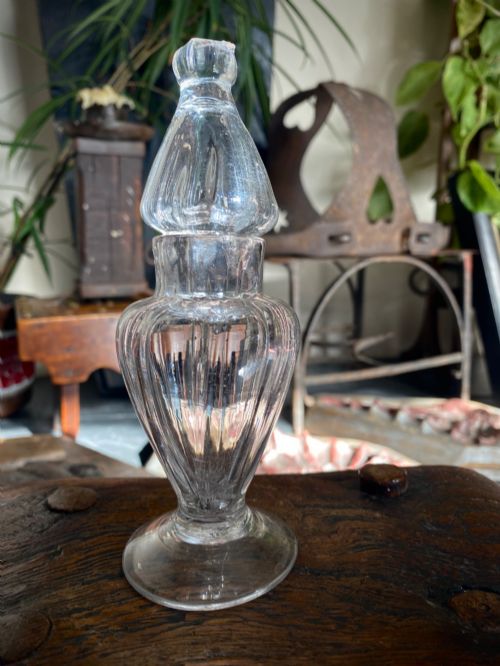
When you search for antique apothecary glassware, you encounter utilitarian vessels created for chemists, pharmacies, and medical dispensaries across the nineteenth and early twentieth centuries. These pieces span Georgian tincture bottles, Victorian medicine measures, Edwardian cut glass jars, and large carboys from nineteen hundred.
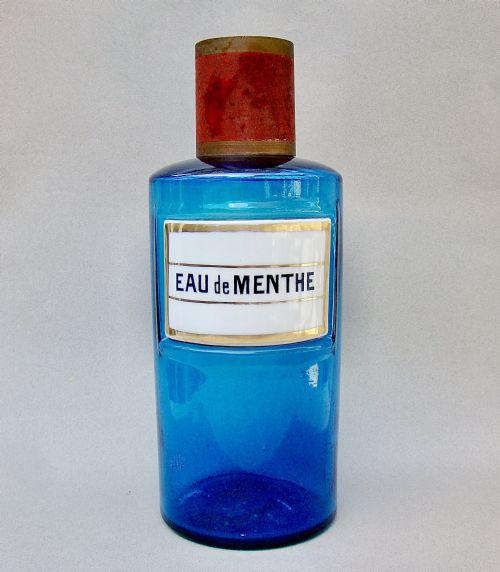
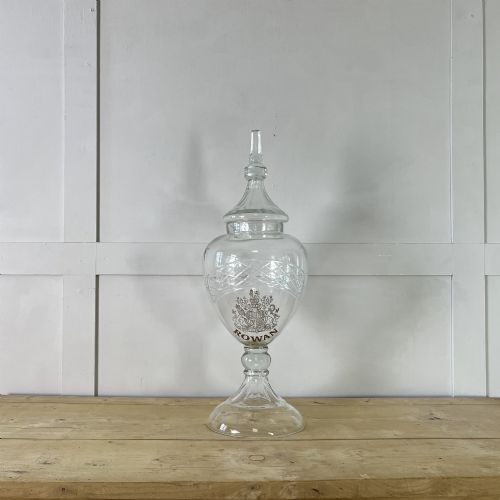
The objects on this page range from small individual pharmacy bottles to large display jars, green glass pickling jars, and covered gelatine containers. Most examples reflect standard Victorian and Edwardian apothecary production, alongside French provincial forms and mid nineteenth century glass.
Collectors seek these items for their robust forms, tactile surfaces, and functional histories rooted in historical medicine and shop display. Each piece preserves the practical design demands of historical dispensaries.
How they were made
Makers utilised clear glass, green glass, and cranberry glass, shaping vessels through traditional blowing and moulding techniques suited to pharmacy use. Certain pieces incorporate cut glass detailing, enamel work, gold leaf, and applied paper labels.
Production methods prioritized chemical resistance and durability, resulting in thick walls and substantial bases designed to withstand daily dispensary handling. Covers and stoppers were ground to fit specific necks securely.
Antique Apothecary Glassware Retail Price Guide 2026
Typical asking prices for apothecary glassware among the pieces listed under this phrase on Sellingantiques today, from the lower quarter to the upper quarter. They describe what is for sale here now, not the wider market.
Some glass jars managed to survive a century of chemical storage without losing their paper labels.
What varies in quality
Quality rests upon the clarity and weight of the glass, the precision of cut or moulded details, and the survival of original stoppers and paper labels. Finer examples display superior metal or enamel accents and well balanced proportions.
The presence of matching sets, such as pairs of tincture bottles or groups of medicine measures, elevates the integrity of a collection. Condition and clarity distinguish standard utilitarian containers from exceptional display pieces.
The Antique Apothecary Glassware Glossary
- Carboy
- A large globular glass bottle used in laboratories and pharmacies for holding liquids. These substantial vessels often sat in windows or on counters.
- Tincture bottle
- A stoppered glass vessel designed to hold alcoholic solutions of medicinal substances. They typically feature narrow necks and flat bases.
- Medicine measure
- A small graduated glass vessel used for dosing liquid remedies accurately. These portable items date frequently to the Victorian era.
- Mary Gregory jar
- A glass container decorated with white enamel silhouettes of figures in landscapes. This distinct Victorian technique adds pictorial detail to glassware.
- Bocal
- A traditional French glass jar used for preservation and storage. These green glass vessels appear in provincial apothecary and pantry contexts.
Antique Apothecary Glassware: Frequently Asked Questions
What were apothecary bottles used for?
Chemists utilised these glass vessels to store dry drugs, liquid tinctures, powders, and chemical compounds safely in pharmacies and dispensaries.
Their heavy walls protected sensitive contents from light and moisture while maintaining a clean, sanitary container for daily medical use.
How do I date antique apothecary glass?
Dating relies on observing manufacturing marks, glass colour, pontil scars on the base, and the overall style associated with Georgian, Victorian, or Edwardian periods.
Form changes also help determine age, as earlier Georgian pieces differ noticeably in weight and silhouette from twentieth century carboys.
Are original glass stoppers important?
Original stoppers maintain the complete aesthetic and functional integrity of apothecary bottles and jars. Finding matching ground glass stoppers adds considerably to the authenticity of the piece.
Many surviving bottles retain their stoppers because they were custom ground to fit each specific neck during manufacture.
How should I display apothecary glassware?
These glass pieces suit placement near natural light sources, such as windowsills or open shelving, where light passes through the clear, green, or cranberry glass.
Grouping jars by size or period creates an effective display that highlights the varied forms of historical pharmacy equipment.