


Antique Apothecary Box
An antique apothecary box is a portable chest for medicines and remedies, prized by collectors for its compact craftsmanship and fitted interiors.
What these pieces are
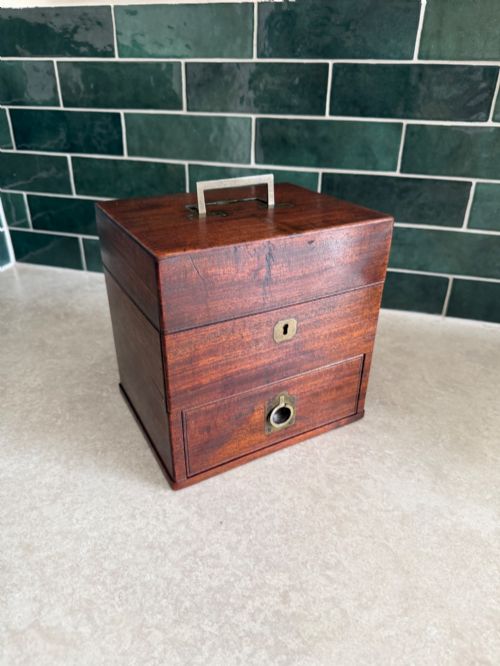
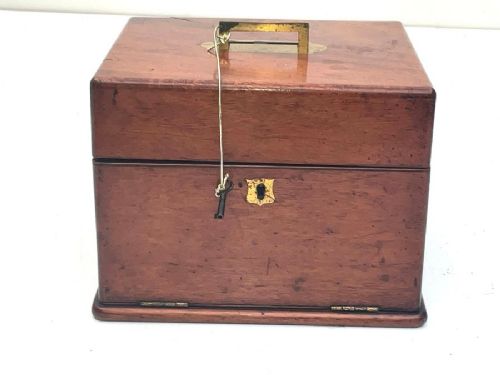
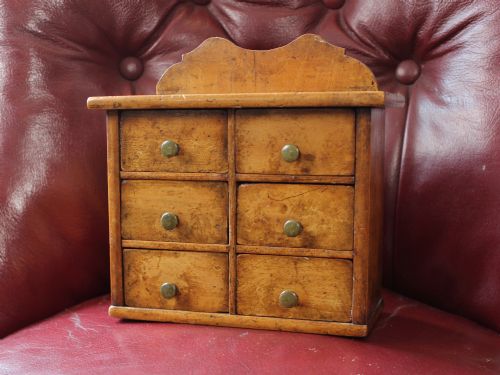
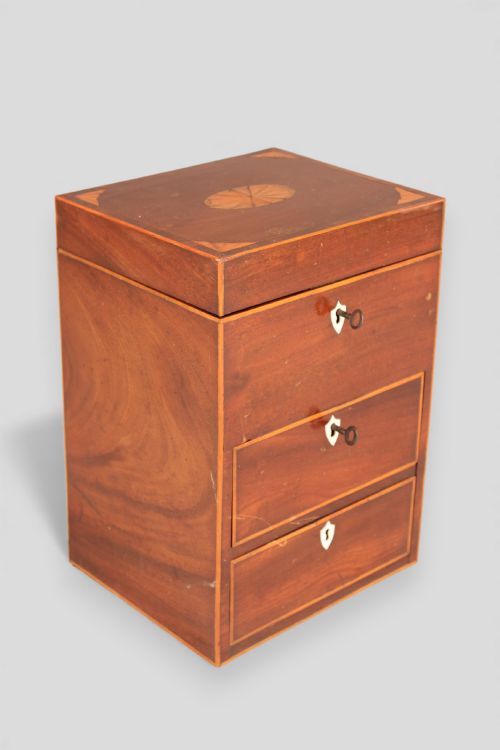
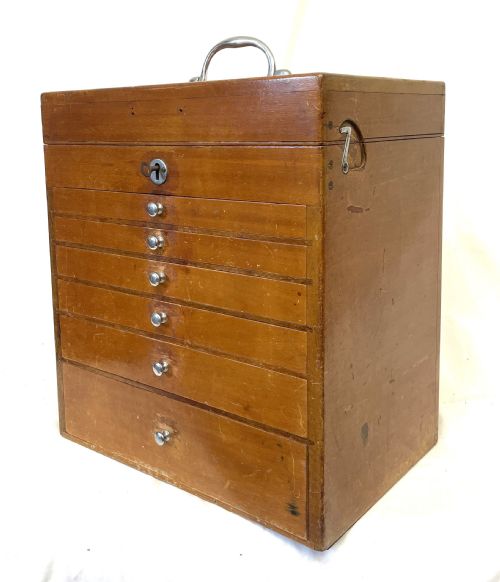
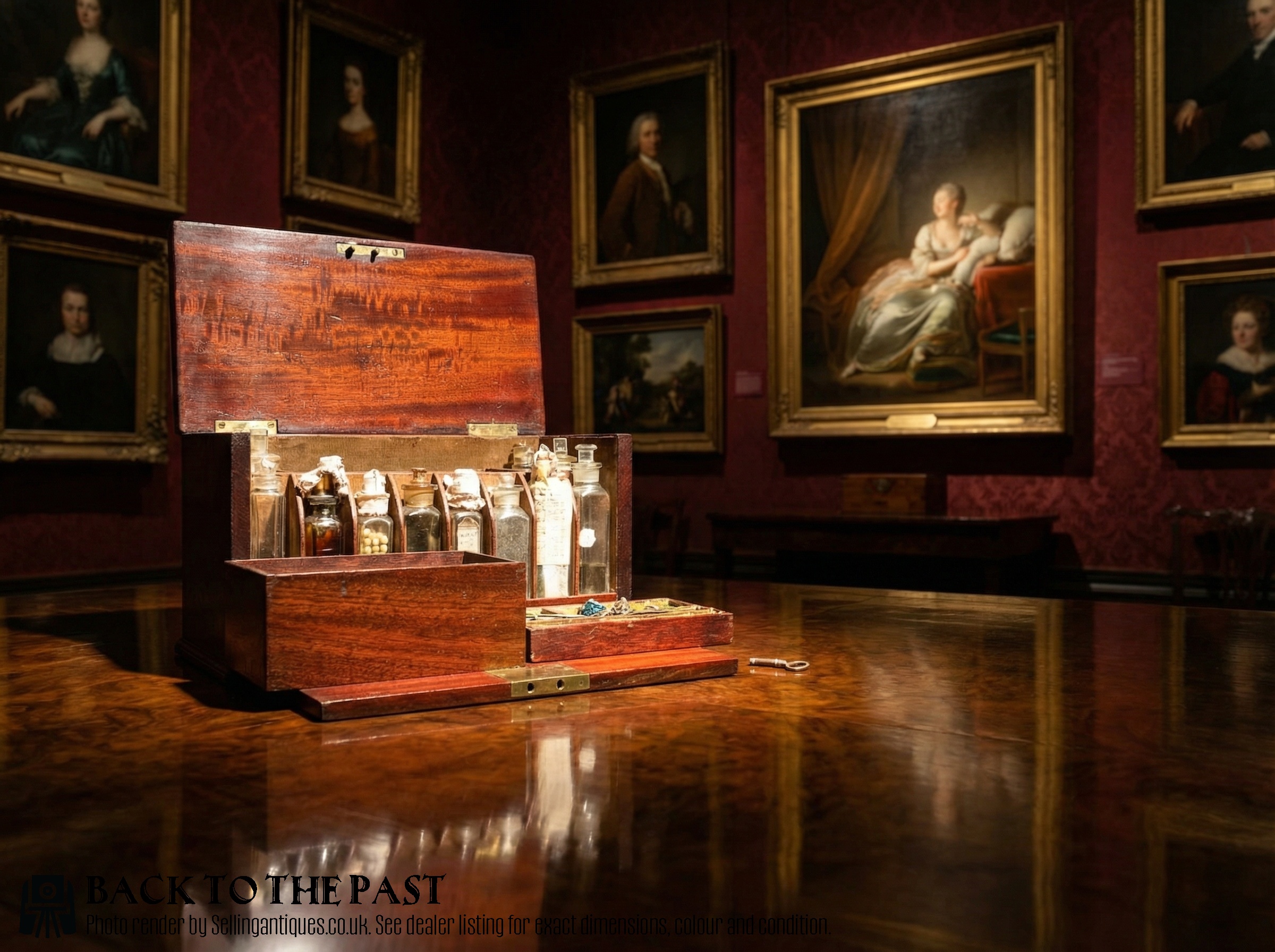
When you search for an antique apothecary box, you encounter portable wooden chests designed to hold medical supplies, bottles, and measuring equipment securely. These pieces range from small medical carrying chests dated to nineteen-twenty down to Regency mahogany fitted apothecary boxes and Victorian specimens.
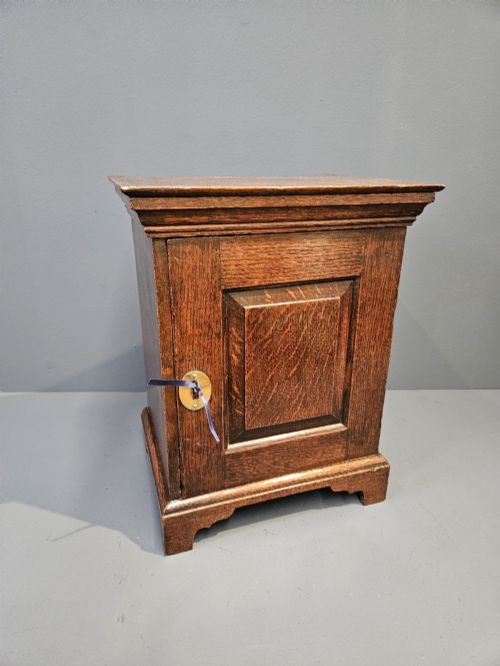
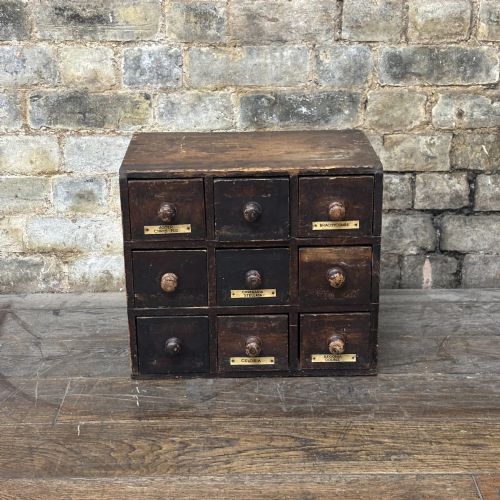
The most common formats on this page are compact wooden boxes and cabinets from the nineteenth century, including folk art painted bentwood storage boxes and veterinary cabinets. Interiors often retain compartments for glass bottles, measures, and scales.
Origins span nineteenth-century English workshops utilising domestic timbers alongside specialised domestic and travel containers. Buyers find variations from simple pine and oak storage boxes to refined mahogany and walnut apothecary chests.
How they were made
Construction relies on traditional cabinet timbers such as mahogany, walnut, rosewood, oak, pine, and boxwood, assembled with durable joinery suitable for travel. Exterior surfaces feature polished wood or hand-painted finishes, sometimes enhanced with brass hinges, carrying handles, and locking plates.
Internal fittings involve precision-turned treen components, including pill rounders, double-ended measures, and glass bottles held within dedicated slots. Leather and steel elements appear in specific dispensary and postal scale configurations.
Retail Price Guide 2026
Typical UK retail prices for apothecary box, calculated from the Sellingantiques database of over a million retail prices indexed since 2003. This retail price guide relies exclusively on Sellingantiques data; no external sources or auction records are used, so the figures do not describe the wider market.
Several boxes still contain their tiny boxwood pill rounders, ready for shaping a dose of medieval-sounding remedies.
What varies in quality
Quality separates simple utility containers from refined, fully appointed medicine chests through the selection of timber and the complexity of the interior layout. Finer examples utilise dense hardwoods like mahogany and walnut paired with robust brass hardware.
The survival of original internal fittings, such as marked glass bottles, boxwood measures, and pill rounders, distinguishes superior examples from boxes that have lost their contents. Precision in the carpentry and the integration of locking mechanisms further define the upper tier.
The Antique Apothecary Box Glossary
- Regency
- A British design period spanning the early nineteenth century. Furniture from this era is characterised by restrained classical elegance and fine mahogany construction.
- Victorian
- The period covering the reign of Queen Victoria during the nineteenth century. Pieces from this era display diverse revival styles and industrial manufacturing improvements.
- Pill rounder
- A wooden tool used to shape medicinal pills by hand. They are typically turned from boxwood and stored within nineteenth-century medical boxes.
- Fitted box
- A container featuring internal partitions, slots, or drawers designed for specific items. Apothecary chests use fitted interiors to secure glass bottles and scales during travel.
Frequently Asked Questions
What did they use an apothecary box for?
These boxes served as portable pharmacies for doctors, veterinarians, and households. They transported liquid medicines, pills, and measuring instruments safely.
Physicians carried them on house calls, while homeopaths kept them for family use. The fitted compartments kept fragile glass bottles from breaking during transport.
How do I date an antique apothecary box?
Dating relies on timber choices, brass hardware styles, and internal construction methods. Regency boxes display clean classical lines, while Victorian examples often feature more complex internal layouts.
Makers' labels, where present, provide precise chronological markers. The presence of original glass bottles and treen measures also helps establish the period.
Are original glass bottles common in these boxes?
Original bottles are found in some surviving examples, though many boxes lost their glass contents over decades of use. Finding a box with its matching bottles increases its completeness.
When bottles survive, they often feature ground stoppers and fit snugly into dedicated wooden partitions. Some retain paper labels from nineteenth-century chemists.
How should I clean a wooden apothecary box?
Maintenance requires gentle dusting and occasional application of appropriate furniture wax to nourish the timber. Harsh chemical cleaners must be avoided to protect the historic finish.
Brass hardware can be left with its natural patina or polished lightly with a soft cloth. Protecting the wood from direct sunlight and damp conditions preserves the structure.