



Antique Aneroid Clock
An antique aneroid clock brings together precise atmospheric measurement and timekeeping in cases of carved oak, walnut, and brass.
Antique Aneroid Clock
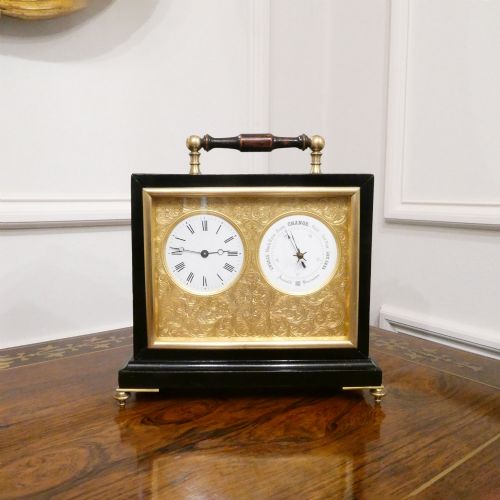
The antique aneroid clock merges mechanical timekeeping with the aneroid barometer, recording changing weather alongside the hour. These combined instruments appear in domestic spaces from the Victorian and Edwardian eras, spanning wall-hanging banjo forms, mantel pieces, and desk compendiums.
Most examples encountered here date from the nineteenth and early twentieth centuries, reflecting the period's preference for multifaceted domestic objects. Pieces range from architectural oak cases and Black Forest carvings to elaborate silver gilt desk stations and Dutch Art Nouveau designs.
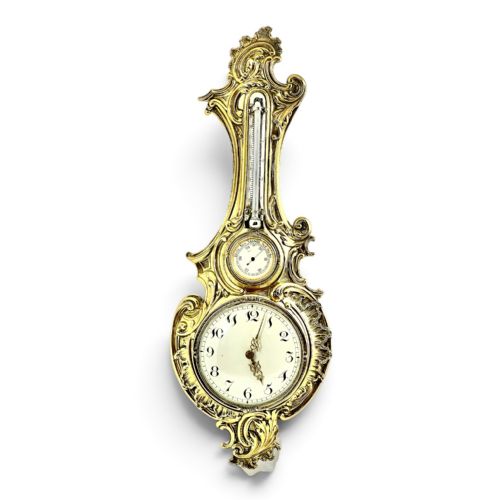
Makers housed these movements in varied housings, including wall clocks with thermometers, bulkhead pairs, and combined clock and barometer stations. The format serves both practical utility and decorative function within the period interior.
Materials and construction methods
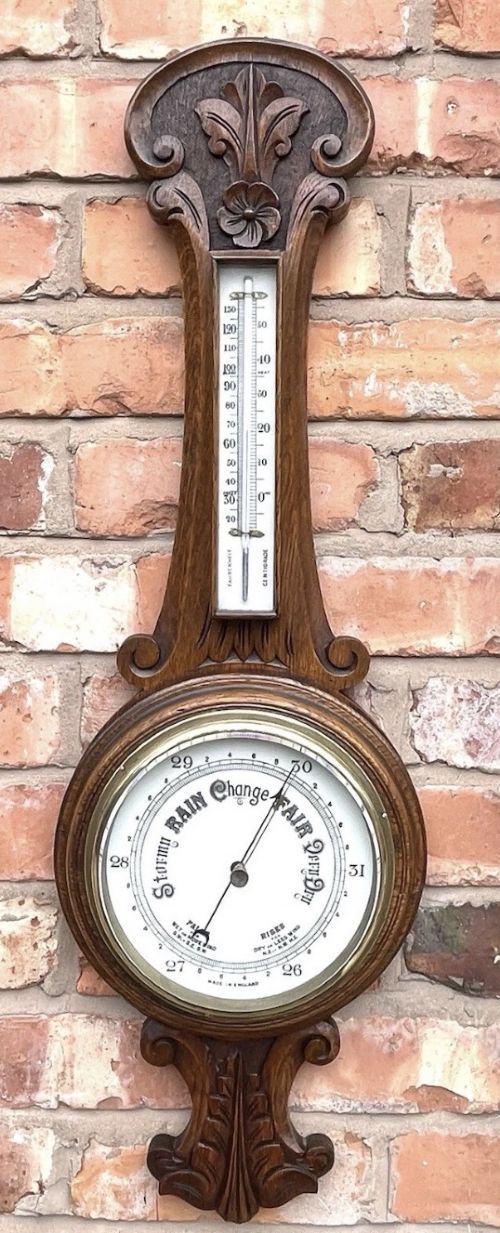
Cases rely heavily on solid and veneered hardwoods, notably carved oak and walnut, alongside ebonised wood and cast brass. Skilled cabinetmakers shaped the timber into architectural pediments, banjo profiles, and intricate Black Forest motifs, housing the delicate internal aneroid mechanisms safely behind bevelled glass.
Dials employ porcelain, ceramic, or silvered bronze, featuring distinct enamel numerals and hand-painted or engraved graduations. Metal components incorporate brass, silver gilt, and chrome, often paired with exposed thermometer scales and skeletonised internal views.
Antique Aneroid Clock Retail Price Guide 2026
Typical asking prices for aneroid clock among the pieces listed under this phrase on Sellingantiques today, from the lower quarter to the upper quarter. They describe what is for sale here now, not the wider market.
Current listings feature aneroid clocks spanning the Victorian and Edwardian periods, constructed from carved oak, walnut, brass, and glass.
Distinguishing quality in manufacture
Quality rests in the crispness of the wood carving, the weight and finish of the brass or bronze fittings, and the integration of multiple instruments within a single housing. Superior pieces exhibit deeply carved oak or walnut foliage, clean ceramic dials with legible enamel, and robust mechanical assemblies.
The sophistication of the combined functions dictates the standing of an object, moving from simple mantel timepieces to elaborate desk compendiums and matched bulkhead pairs. Maker execution, such as precision work by established houses, separates standard production items from exceptional commissions.
Negretti & Zambra
The Antique Aneroid Clock Glossary
- Aneroid barometer
- An instrument measuring atmospheric pressure without liquid, using a flexible metal box that expands or contracts as pressure shifts.
- Banjo barometer
- A wall-mounted barometer housed in a case shaped like a banjo, frequently incorporating a thermometer and hygrometer alongside the main dial.
- Desk compendium
- A multi-functional desk object combining a clock, barometer, and thermometer in a single coordinated housing.
- Silver gilt
- Silver covered with a thin layer of gold, providing a rich metallic finish seen on high-status Victorian desk stations.
- Skeletonised
- A design exposing the internal mechanical movement of the clock or barometer through a clear glass aperture.
- Bulkhead clock
- A marine-style clock or barometer designed to be mounted directly to the wall of a ship cabin or room.
Antique Aneroid Clock: Frequently Asked Questions
What is an aneroid clock?
An aneroid clock is a domestic instrument that combines a time-keeping clock movement with an aneroid barometer, which measures air pressure without using liquid mercury.
These pieces often include a thermometer as well, presenting multiple meteorological and timekeeping functions within a single decorative wooden or brass case.
Where were these clocks placed?
These instruments were designed for prominent display in domestic and professional interiors, appearing on parlour mantelpieces, library walls, and executive desks.
Wall-hanging banjo versions suited hallways and entrance spaces, while compact desk compendiums and architectural oak clocks occupied studies and drawing rooms.
How do I date an antique aneroid clock?
Dating relies on the stylistic clues of the case, the materials utilised, and the typography of the dial face. Victorian pieces frequently feature heavy carved oak or walnut foliage, whereas Edwardian and later examples introduce cleaner lines and Art Nouveau influences.
Makers' signatures, registration marks, and accompanying thermometer styles also help narrow the period of manufacture.
Do these clocks still function?
Many surviving examples retain their mechanical capability, though the barometer and clock mechanisms may require professional adjustment or servicing to record pressure and time accurately.
The delicate aneroid chambers and gear trains benefit from careful handling and stable environmental conditions within the home.