


Antique Amethyst Silver Jewellery
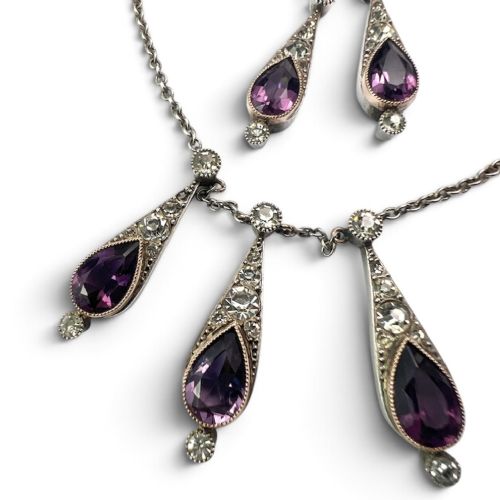
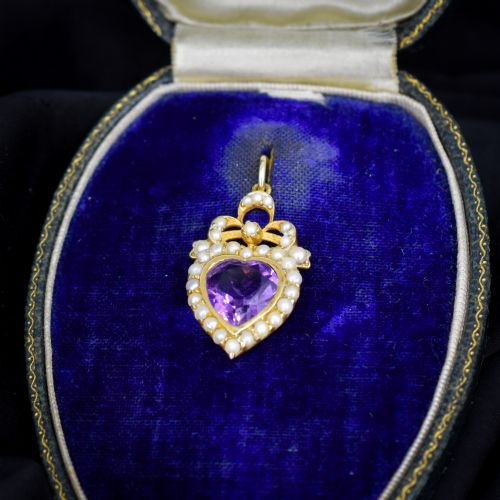
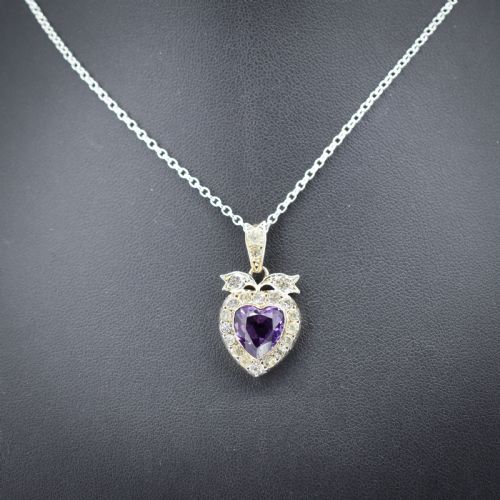
These pieces of antique amethyst silver jewellery combine violet quartz with precious metal, offering buyers wearable history from the Georgian era to the Art Deco period.
Antique Amethyst Silver Jewellery
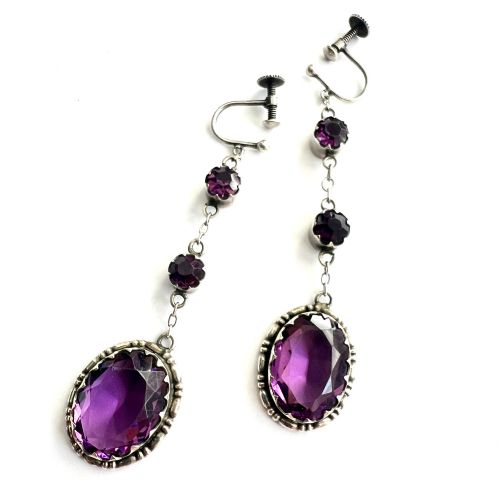
The selection ranges from simple cross pendants and screwback earrings to elaborate Arts and Crafts festoon necklaces and matching sets. Pieces frequently incorporate silver settings alongside purple quartz, paste glass, pearls and enamel.
Most items on this page originate from the Victorian and Edwardian periods, or the 1920s Art Deco and Arts and Crafts movements. The inventory reflects a long tradition of setting violet quartz in silver for personal adornment.
What varies in quality
The sophistication of the metalwork and the depth of the amethyst colour determine the standing of each piece. Elaborate enamel work or matched stone sets distinguish finer examples from simpler mounted designs.
The integrity of the original setting and the condition of supplementary gems like pearls or paste glass influence the overall standard. Early hand-wrought details in Arts and Crafts or Art Nouveau items separate workshop output from standard production.
Materials appearing across the inventory include silver, gold, sterling silver, amethyst, pearl, paste glass, glass, enamel, chalcedony, coral, moonstone, rose diamond and ruby.
Eduard Loss·Georg Jensen
The Antique Amethyst Silver Jewellery Glossary
- Paste glass
- A heavy, high-refractive glass cut and polished to imitate gemstones like amethyst or diamond. It appears frequently in Georgian and Art Deco jewellery.
- Plique-à-jour
- An enamelling technique where enamel is applied within a cellular metal framework without a backing, creating a translucent, stained-glass effect. This method is characteristic of Art Nouveau design.
- Festoon necklace
- A necklace featuring a draped chain or garland of swags suspended around the neck, often set with stones and drops. These pieces were popular during the Arts and Crafts era.
- Silver gilt
- Silver that has been coated with a thin layer of gold on its surface. This technique combines the lustre of gold with a silver base.
- Screwback
- A mechanical earring fitting that uses a threaded post and a small screw to secure the earring without pierced lobes. These are common in twentieth-century non-pierced designs.
Antique Amethyst Silver Jewellery: Frequently Asked Questions
How do I clean antique silver jewellery?
Use a soft microfibre cloth to gently wipe silver surfaces and remove surface tarnishing. Avoid harsh chemical dips, as these can damage softer stones like pearls or dissolve foil backings behind amethysts.
Store pieces individually in soft pouches to prevent scratching between wearings. Keep antique items away from ultrasonic cleaners and prolonged moisture exposure.
Are these amethysts natural?
Many items feature natural quartz amethysts, though Georgian and Art Deco pieces occasionally incorporate coloured paste glass substitutes. Natural stones display internal growth characteristics under magnification.
Examining the setting from the reverse helps determine whether foils were placed behind the stone to enhance colour. Dealers describe these variations directly in the item titles.
How do I identify a Georgian piece?
Georgian items often utilise closed-back settings where metal encases the rear of the stone, frequently concealing coloured foil. Hand-cut stones in these early pieces tend to have irregular facets compared to later machine-cut gems.
Mountings from this era reflect hand fabrication techniques rather than mass production. Look for heavy patination and construction methods typical of the eighteenth and early nineteenth centuries.
Can I wear these pieces daily?
Most antique jewellery withstands careful regular wear provided it receives appropriate treatment. Delicate items like festoon necklaces or plique-à-jour enamel pendants require extra caution during daily activities.
Remove jewellery before swimming, exercising or applying cosmetics. Storing items securely when not being worn preserves their structural integrity.