



Antique Altar Prickets
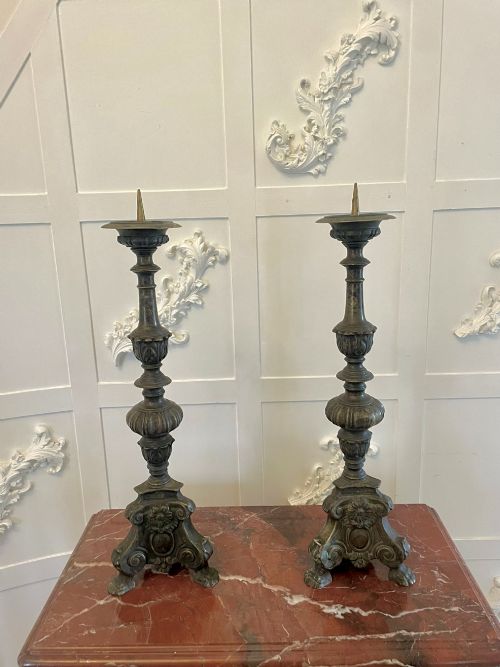
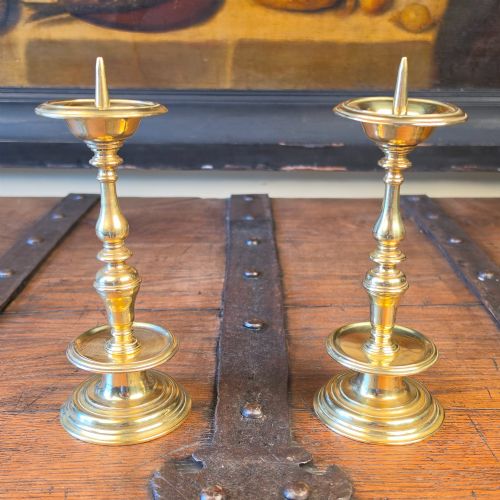
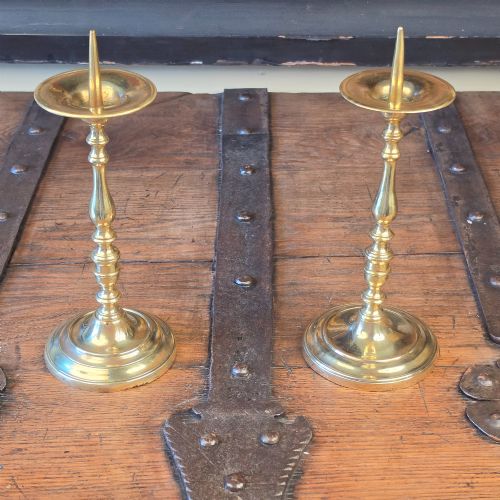
These antique altar prickets bring centuries of ecclesiastical presence into a room, offering the distinct vertical form of a spike candlestick.
Antique Altar Prickets
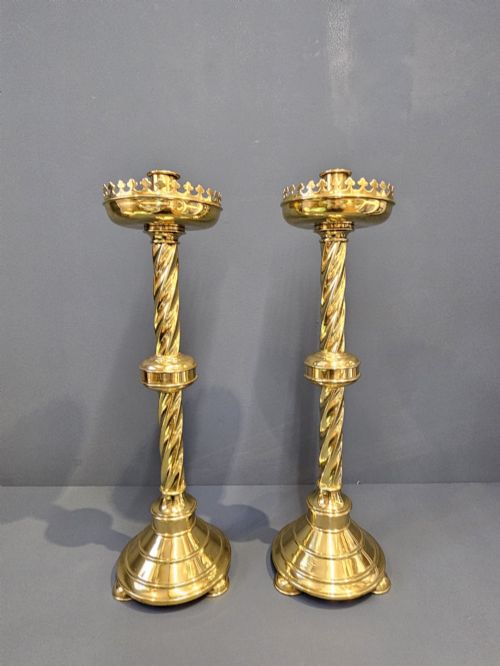
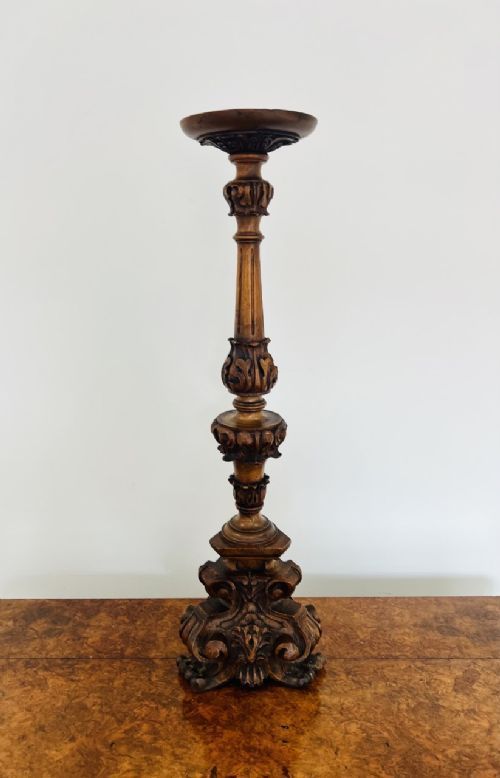
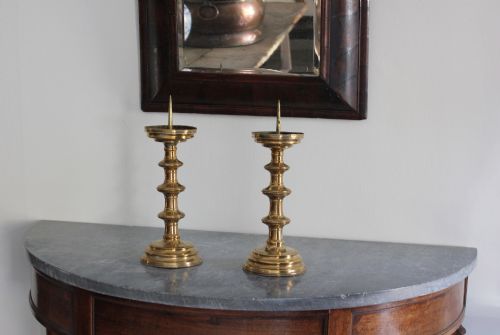
When you search for antique altar prickets, you encounter ecclesiastical metalwork and carved wooden items designed to support large candles on tables or floors. The examples seen on this page span the 17th century through to the early 20th century, drawing heavily on Italian Baroque, Gothic Revival, and Amsterdam School aesthetics.
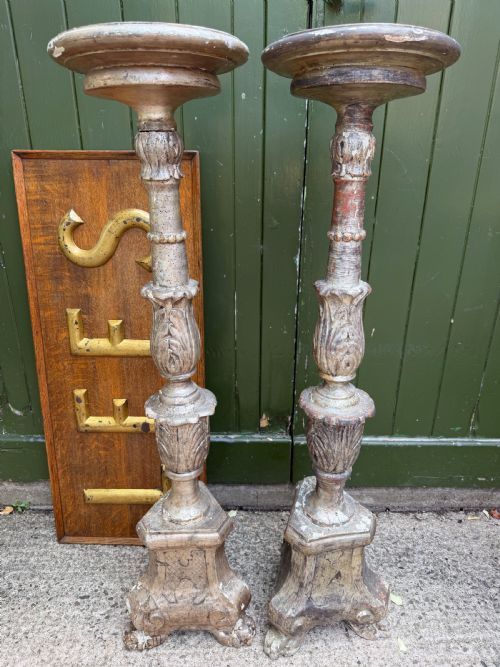
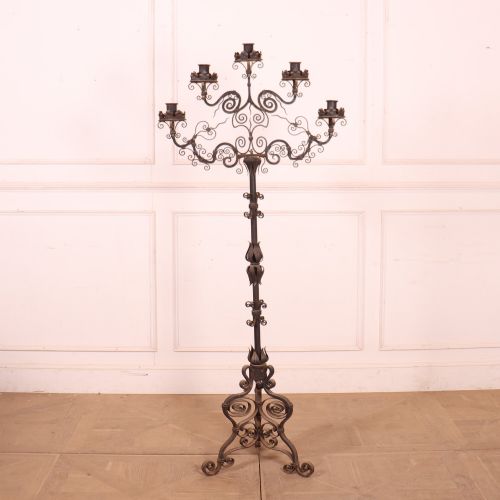
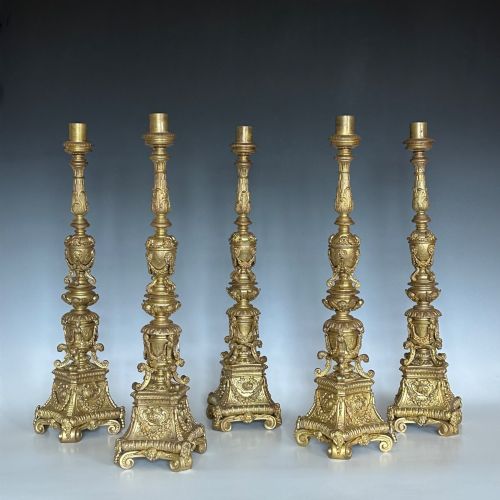
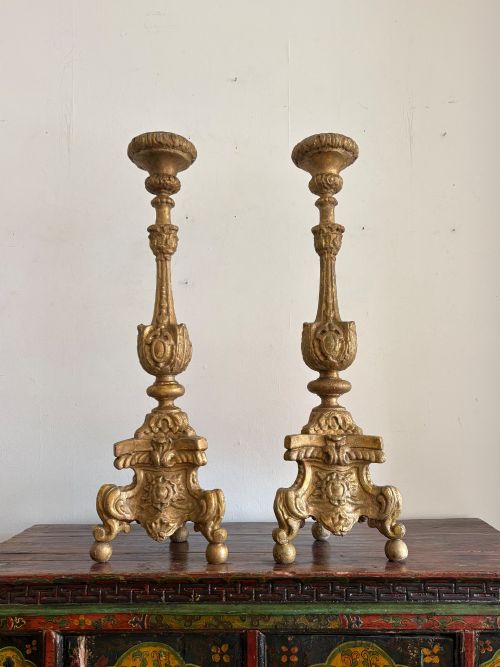
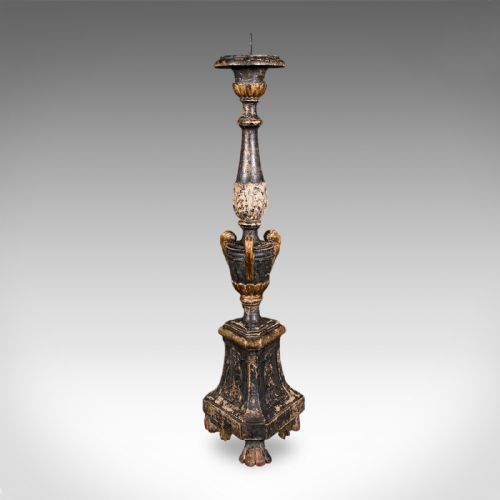
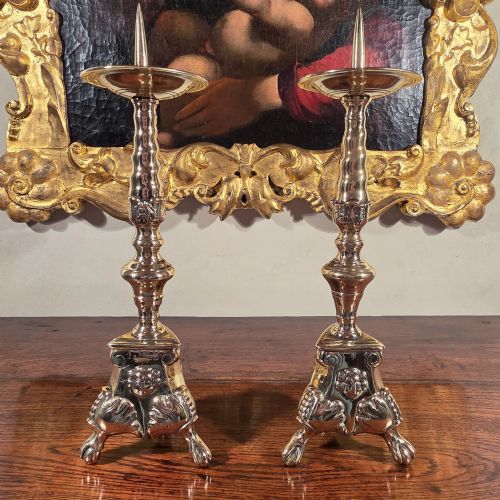
Brass and giltwood dominate the selection, appearing either as heavy church candlesticks or as tall floor-standing torcheres. Many items originating from Italy and France reflect centuries of liturgical use, while others demonstrate later 19th-century revivals of earlier forms.
Buyers frequently find pairs of heavy brass or bronze sticks alongside carved wooden pieces finished with silver leaf, gold leaf, or polychrome. Certain pieces show later adaptations into table lamps, retaining their original proportions while accommodating modern wiring.
Materials and construction
Makers shaped heavy metals through casting and turning, utilising brass, bronze, and copper to create durable shafts and wide drip pans. Iron also appears in structural elements, particularly within Amsterdam School designs from around 1900.
Wooden items rely on carved pine, walnut, or pinewood, often finished with gesso before the application of gold leaf, silver leaf, or painted pigments. These applied surfaces provide the characteristic metallic sheen seen on Italian and French examples.
Listings feature periods ranging from the 17th century to the 1920s, constructed primarily from brass, carved wood, and giltwood.
Assessing quality and manufacture
The distinction between standard items and superior examples lies in the crispness of the casting and the depth of the hand-carved detail. Heavy, substantial metalwork and deeply chiselled wooden acanthus leaves indicate careful workshop production.
Surface preservation dictates much of the character, distinguishing between original patinated finishes and later alterations. The integration of the central spike to the drip pan reflects the structural integrity expected in period church furniture.
The Antique Altar Prickets Glossary
- Pricket
- A sharp metal spike set vertically on top of a candlestick to hold a candle in place. This form predates socket candlesticks.
- Torchere
- A tall stand or candlestick designed to hold a light source. These often stand on three or more feet.
- Giltwood
- Wood that has been coated with gold leaf or a gold-coloured metallic finish. It appears frequently on Italian Baroque items.
- Gesso
- A plaster-like mixture applied to wood surfaces as a base for paint or gilding. It allows for intricate moulded decoration.
- Ormolu
- Gilded bronze or brass used for decorative mounts and decorative objects. The technique involves applying a mercury-gold amalgam.
Antique Altar Prickets: Frequently Asked Questions
What is a pricket candlestick?
A pricket candlestick uses an upright metal spike instead of a hollow socket to secure the candle base. The bottom of the candle is pushed down onto this point to hold it upright.
This traditional design appears frequently in church and altar settings across the 17th, 18th, and 19th centuries.
How were these used originally?
These pieces stood upon church altars or floors to provide illumination during religious services and ceremonies. Their height allowed the light to carry across large sacred spaces.
Over time, many of these ecclesiastical items transitioned into domestic settings as decorative objects or table lamps.
Can I still burn candles on them?
Using traditional candles requires modern drip protection or candles specifically bored to fit the central spike securely. Many owners prefer to leave them unlit as sculptural decorative pieces.
Some examples have been converted to electricity, adding lamp fittings while preserving the original wooden or metal shaft.
How do I date an altar pricket?
Dating relies on examining the tool marks, material composition, and stylistic traits such as Baroque scrolling or Gothic Revival tracery. Metal casting methods and wood seasoning also offer clues to the period of manufacture.
Comparing the turned profiles and base construction with documented church furnishings helps narrow down the century.