


Antique Alpine Landscape Art
Antique alpine landscape art captures the drama of European mountain peaks and valleys, offering collectors historic views of the Alps in oil and watercolour.
Antique Alpine Landscape Art
When you search for antique alpine landscape art, you encounter regional views spanning the nineteenth century and early twentieth century. These works depict celebrated mountains, waterfalls, and castles across Switzerland, Austria, Germany, and Italy.
The selections on this page range from intimate watercolour paintings on paper to large oil paintings on canvas framed in wood and glass. You will also find monochrome topographical photographs documenting peak vistas from the period.
Romanticism and Victorian movements heavily influence these depictions, capturing snow-capped ranges, quiet lakes, and alpine passes. Painters and photographers of the era sought to record the immense scale and changing light of European highlands.
Materials and methods
Artists relied primarily on oil paint on canvas or watercolour applied to paper, utilising traditional pigments to render rugged terrain and atmospheric skies. Wood frames often house these works, sometimes protected behind glass.
Photographers of the period utilised monochrome techniques to capture crisp details of alpine views like the Eiger. Signed and dated works demonstrate the hand of individual painters working within European schools of art.
Listings feature paper, canvas, wood, glass, oil, and watercolour, representing 19th-century and early 20th-century European landscape art.
Factors of quality
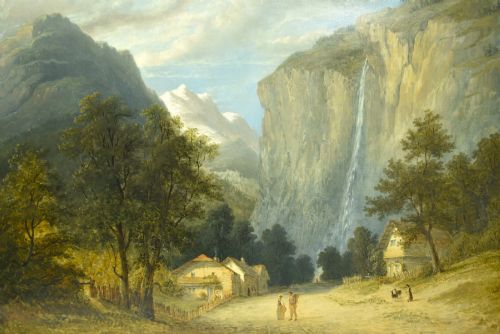
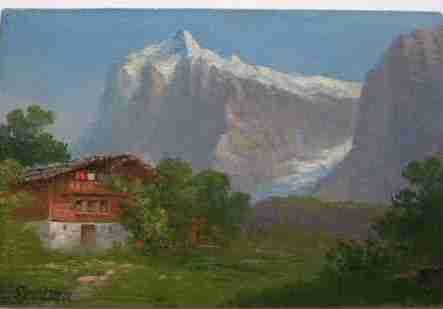
Quality rests upon the skill of the artist in conveying depth, light, and specific geography, such as the distinct contours of the Staubbach Falls or the Wetterhorn mountains. Stronger compositions command attention through confident handling of paint or watercolor wash.
The preservation of the paper, canvas, and original wood framing also distinguishes superior examples. Works bearing clear signatures or attributed to documented nineteenth-century schools offer greater historical clarity.
Karl Herrle·Noel Harry Leaver·A. Michaelis·Hubert Sattler
The Antique Alpine Landscape Art Glossary
- Watercolour painting
- A work created using water-soluble pigments on paper. This medium allows for delicate washes and translucent effects well suited to atmospheric mountain weather.
- Oil painting
- Artwork produced with pigments bound in a drying oil, typically displayed on canvas or panel. This medium provides rich texture and deep colour saturation.
- Romanticism
- An artistic movement emphasising emotion, individualism, and awe of nature. It heavily shapes nineteenth-century depictions of dramatic mountain peaks.
- Topographical photography
- Early photographic prints documenting specific locations and landscapes. These monochrome images served as accurate historical records of alpine topography.
Antique Alpine Landscape Art: Frequently Asked Questions
What periods do these alpine works represent?
The available pieces originate primarily from the nineteenth century and early twentieth century, spanning movements like Romanticism and Victorian art.
Dates range from mid-century studies to later works from the nineteen-thirties, capturing shifting artistic approaches to mountain scenery.
How should I display watercolour alpine paintings?
Watercolours on paper require protection behind glass and conservation framing to prevent fading from direct sunlight. Keeping them away from excessive humidity preserves the integrity of the paper.
Proper placement ensures these delicate nineteenth-century views remain stable for years to come.
Are these alpine scenes topographically accurate?
Many works record specific European locations, such as Lauterbrunnen, Grindelwald, and Bavarian castles. Artists often inscribed titles or locations directly onto the work or documentation.
This geographic specificity allows collectors to trace exact viewpoints depicted by nineteenth-century painters and photographers.
What is the difference between the oils and watercolours?
Oils are typically executed on canvas, offering heavier texture and larger scale for grand mountain vistas. Watercolours on paper provide a more intimate view of alpine streams and valleys.
Both mediums reflect the varied techniques utilised by European artists documenting the high peaks.