
Antique Albert Necklace
An antique albert necklace is a converted pocket watch chain worn around the neck, offering substantial links and original dog clips.
Antique Albert Necklace
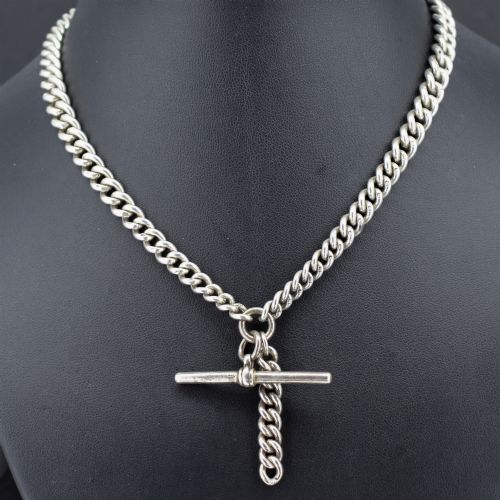
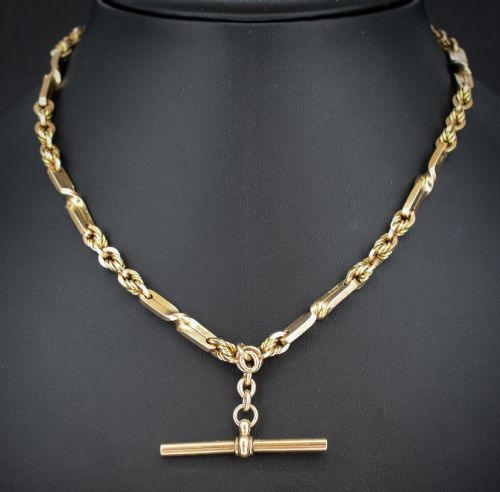
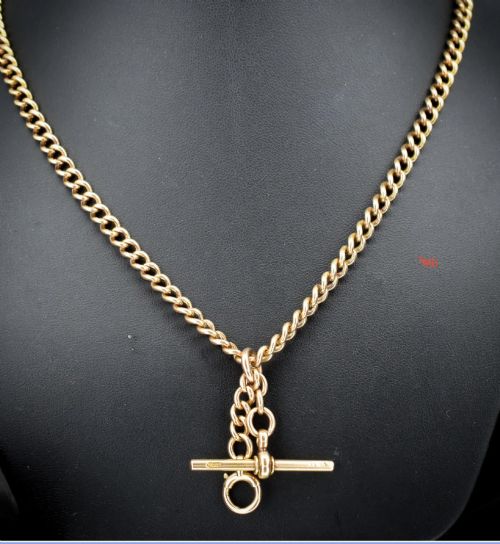
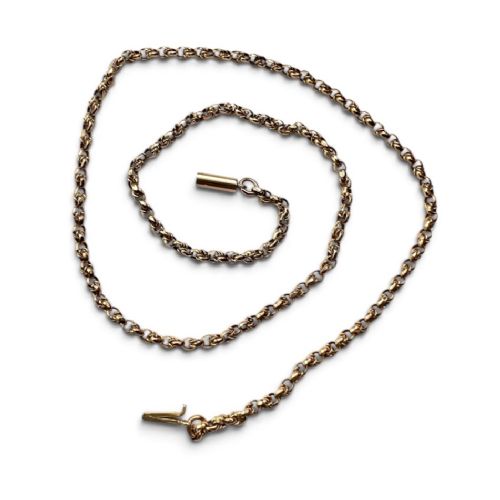
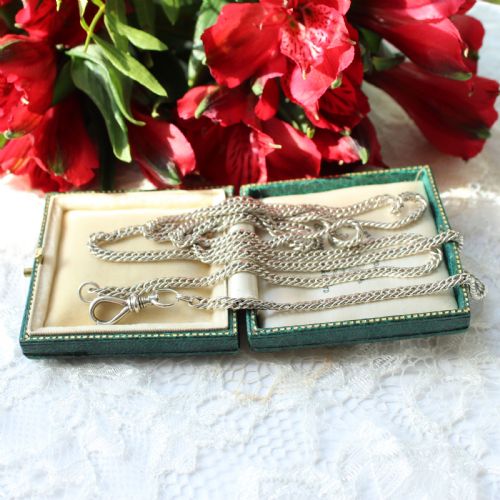
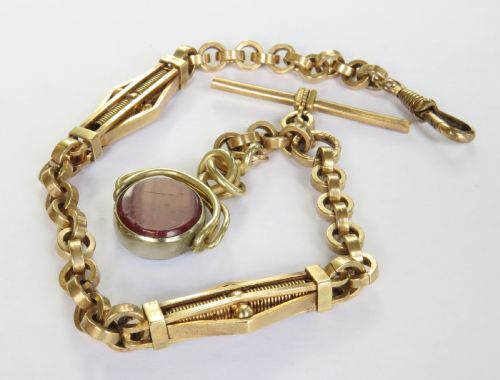
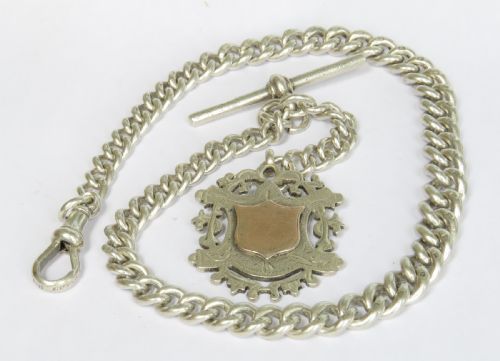
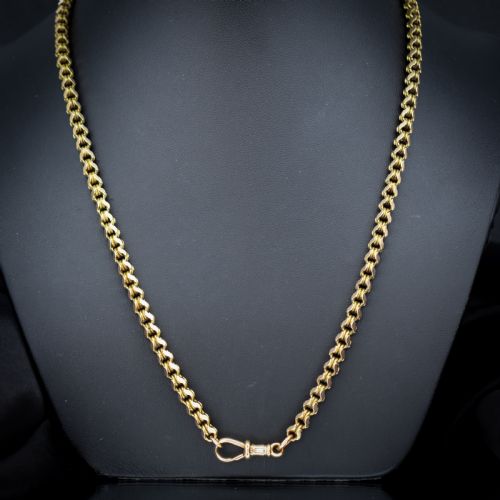
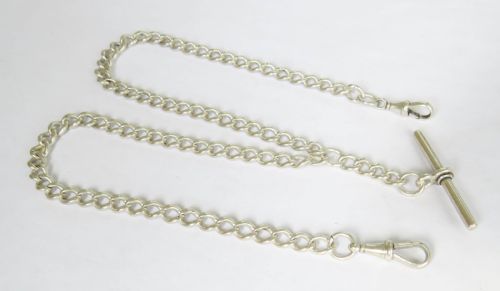
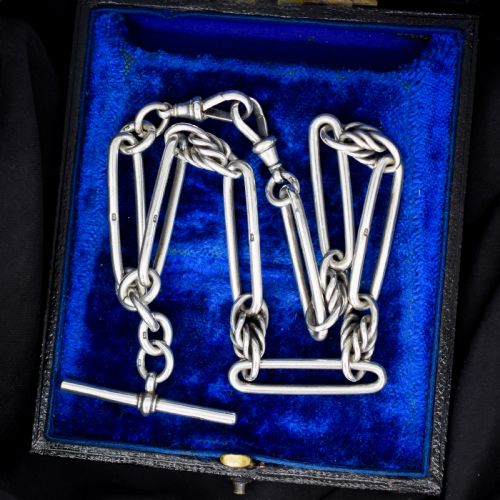
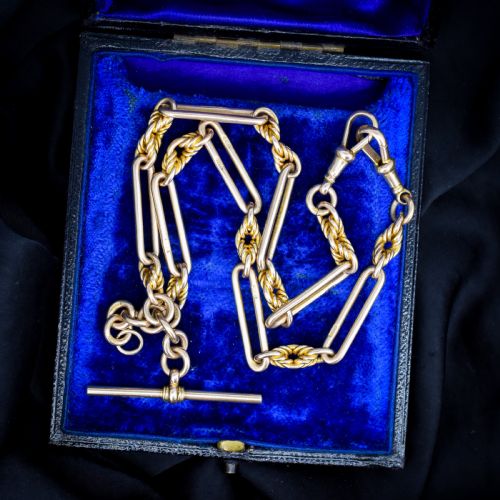
An antique albert necklace originates from nineteenth and early twentieth century watch chains designed to secure pocket timepieces to waistcoats. These pieces appear on this page as short neck chains or very long guard chains, often retaining their original dog clips, swivel fobs, and T-bars.
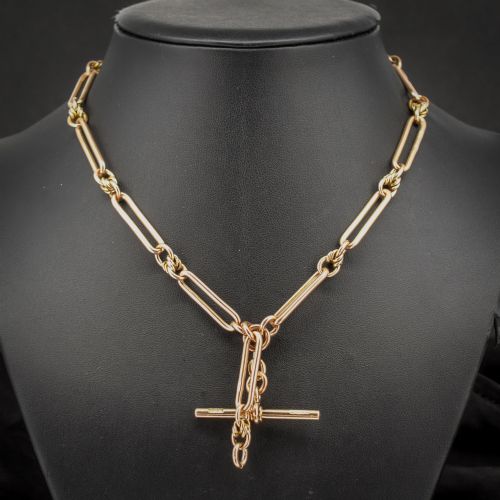
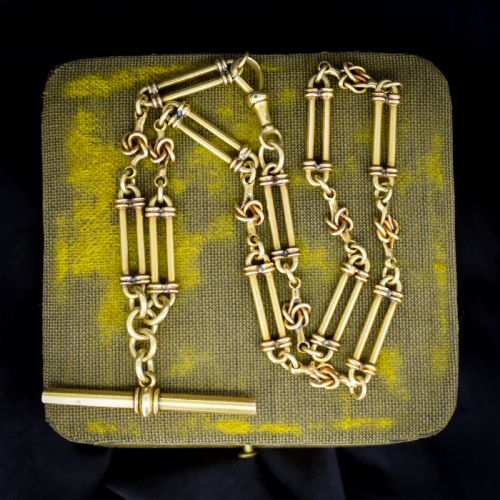
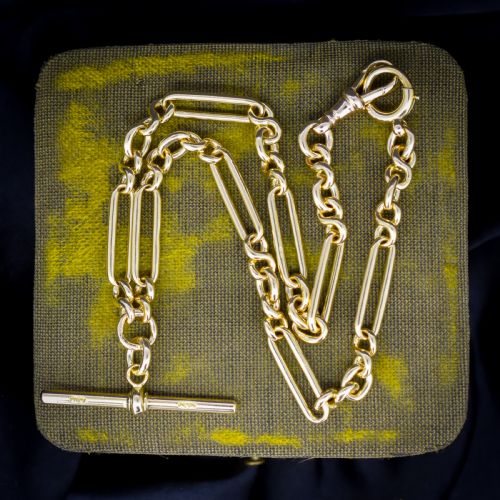
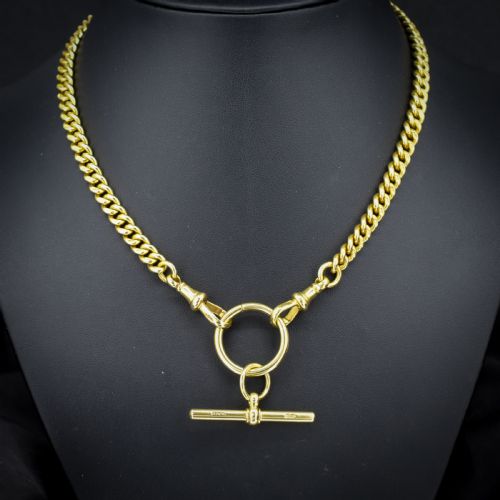
The forms span Victorian, Edwardian, and Art Deco periods, encompassing robust curb links, intricate trombone patterns, and love knot motifs. Shorter lengths sit near the collarbone while longer guard chains drape multiple times around the torso.
How They Were Made
Goldsmiths and silversmiths constructed these chains from solid or rolled precious metals, utilising alloys such as nine carat, fifteen carat, and eighteen carat gold alongside sterling silver. Many examples display hallmarks on individual links, denoting assay offices like Birmingham and Chester.
Links were hand-assembled in varied geometries including trombone, fetter, and uniform curb patterns, then fitted with secure spring-loaded dog clips and swivel attachments designed for daily utility.
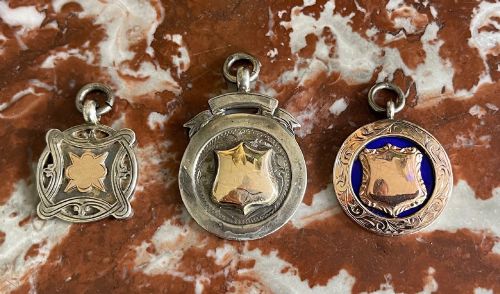
Several chains still anchor bloodstone swivel fobs and coin keys, ready for an era of waistcoats that has long since passed.
What Varies in Quality
Substance and completeness dictate the standing of a piece, separating substantial solid gold or heavy silver chains from lighter rolled metal alternatives. Graduated links require precise proportioning from centre to ends.
Original components preserve integrity, so pieces retaining matching hallmarked links, T-bars, and functional swivel fobs hold greater historical weight than altered configurations.
The Antique Albert Necklace Glossary
- Albert chain
- A heavy watch chain originally secured to a pocket watch, now frequently worn as a necklace. These pieces often incorporate dog clips and T-bars.
- Dog clip
- A spring-loaded fastener used to attach a watch or pendant. This snap hook mechanism forms a secure closure on albert chains.
- T-bar
- A short transverse bar attached to a chain. The bar slipped through a waistcoat buttonhole to anchor a pocket watch.
- Trombone link
- A link design featuring elongated rectangular sections interspersed with smaller circular or oval loops. This pattern provides distinct visual rhythm in Victorian and Edwardian jewellery.
- Guard chain
- An exceptionally long chain worn draped around the neck. These pieces allowed pocket watches to drop securely into deep pockets.
Antique Albert Necklace: Frequently Asked Questions
How do you wear an antique albert necklace?
These pieces function as necklaces by wrapping shorter lengths around the neck or doubling longer guard chains. The dog clips attach directly to jump rings, fobs, or other links to create versatile drops.
Original T-bars and swivel pendants hang loosely as decorative elements against the chest, echoing their nineteenth-century origins.
Are all links hallmarked on these chains?
Many British pieces feature individual hallmarks stamped on every link, particularly those originating from assay offices in Birmingham or Chester. Stamping confirms the specific gold or silver standard utilised by the maker.
Some lighter or continental pieces carry fewer marks, appearing only on the T-bar, dog clip, or an end ring.
What is the difference between an albert and a guard chain?
Standard albert chains measure shorter, typically sitting comfortably around the neckline between fourteen and eighteen inches. They often display graduated links and central T-bars.
Guard chains extend significantly further, sometimes reaching fifty-nine inches, designed to drape in long loops rather than circle the neck closely.
Can you attach pendants to a dog clip?
The spring-loaded dog clip at the end of the chain opens easily to receive extra charms, lockets, or swivel fobs. This mirrors how pocket watches and keys were originally suspended.
Swivel seals and bloodstone fobs often accompany these chains, offering ready-made focal points that hang from the primary clasp.