
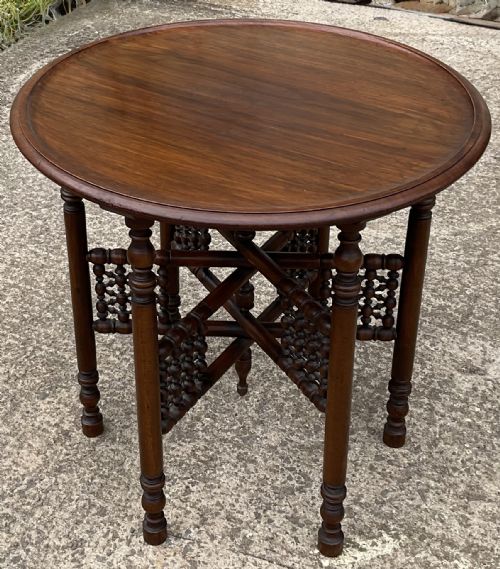


Anglo Indian Tray Table
An anglo indian tray table brings distinct hand-carved woodwork and intricate metalwork into a room, offering a functional surface with rich global character.
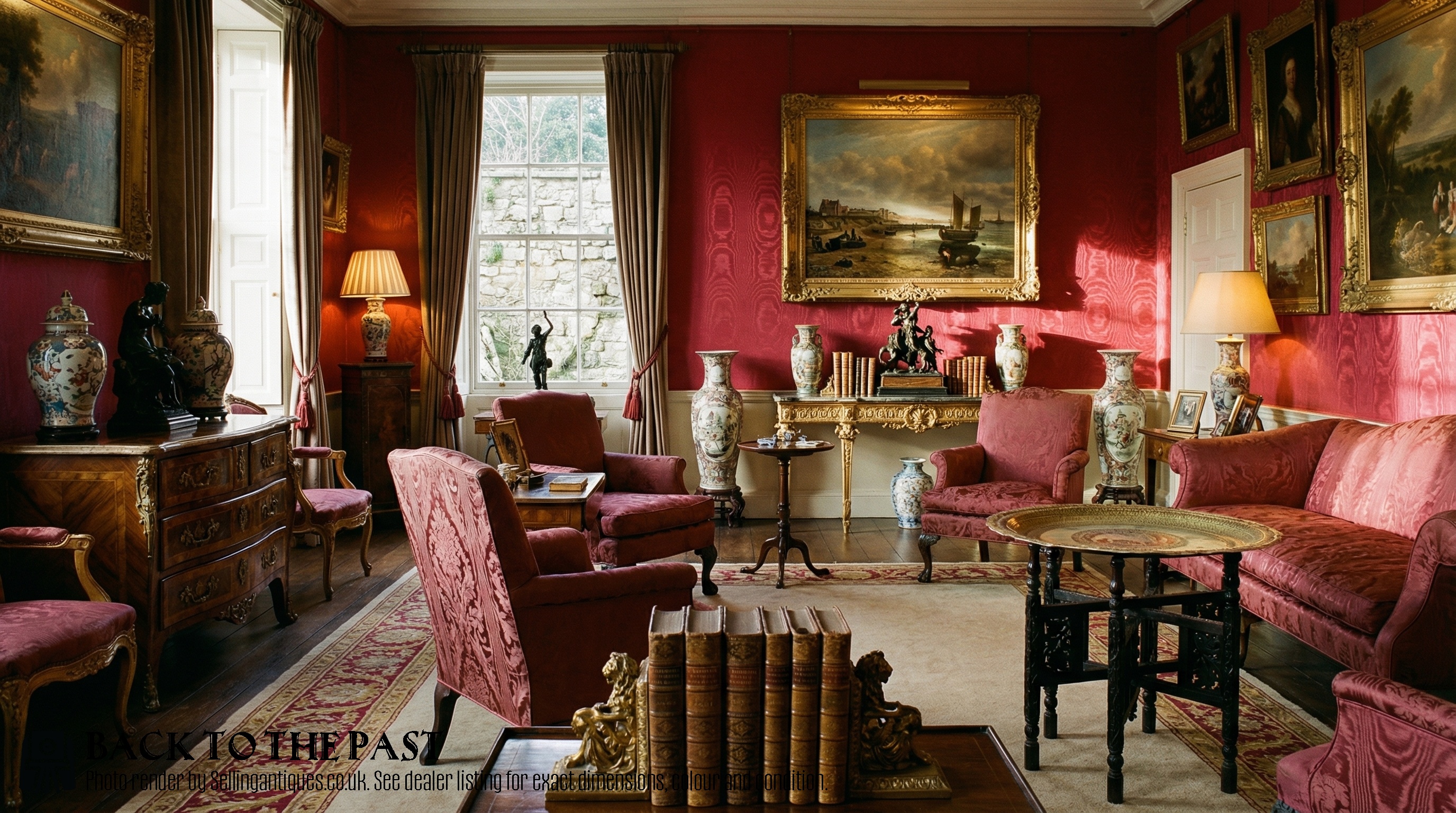
Anglo Indian Tray Table
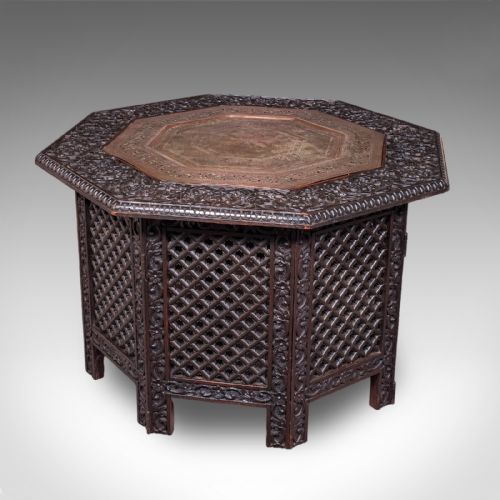
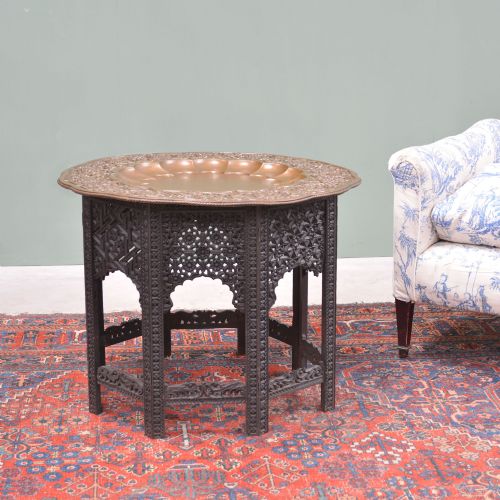
An anglo indian tray table combines a folding or static wooden stand with a removable top, serving as coffee tables, side tables, and occasional tables in domestic spaces. These pieces emerge in various forms across the Victorian period, through 1860, 1880, 1900, 1920, and 1930, reflecting the intersection of British colonial design and traditional local craftsmanship.
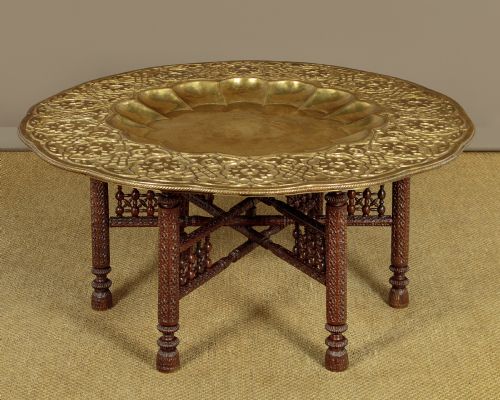
The most common formats on this page pair a heavily carved wooden base with a circular or octagonal metal tray top, often executed in brass or copper. Buyers frequently encounter foldable versions designed for easy storage, alongside occasional tables featuring inset trays and more elaborate elephant or zodiac motifs.
The stylistic influences span Anglo-Indian, Persian, and Kashmiri traditions, alongside occasional pieces referencing broader Middle Eastern or Mughal Empire aesthetics. This variety means a buyer might select a plain teak stand with a simple engraved brass top or a massive carved hardwood structure supporting a highly detailed pictorial tray.
Materials and Construction
The wooden components rely on dense timbers such as teak, mahogany, walnut, and general hardwoods, selected for their stability and capacity to hold intricate carved detail. Artisans carved these woods into collapsible folding stands, tripod bases, and octagonal frames using hand chisels and saws.
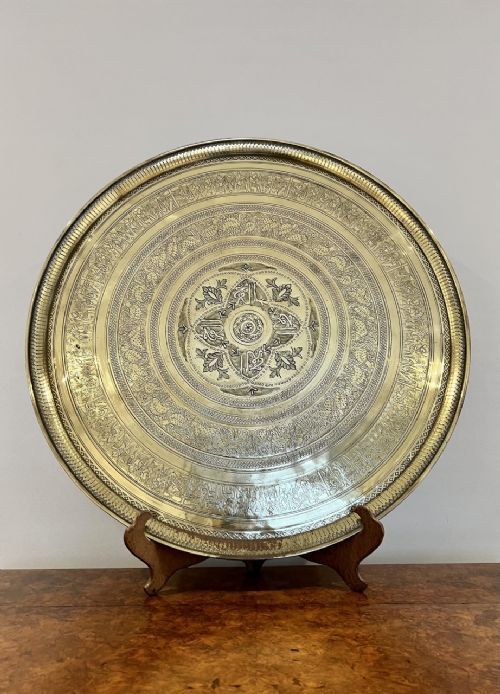
Metal tops utilise brass, copper, and mixed metal alloys, shaped into circular and octagonal formats designed to lift off the supporting base. Craftsmen applied engraving, piercing, and lacquering techniques to the metal surfaces, creating complex pictorial and geometric designs such as zodiac signs or floral motifs.
Materials recorded on this site include brass, copper, teak, mahogany, walnut, hardwood, and mixed metal.
Assessing Quality and Execution
Quality rests primarily on the depth and crispness of the hand-carving in the wood, where sharper relief and balanced symmetry distinguish finer work from simpler production. The joinery of the folding stands also dictates stability, with superior examples operating smoothly without excessive looseness in the hinges or legs.
On the metal side, heavier gauge brass or copper with deep, clean engraving commands greater appreciation than thin, lightly stamped sheets that bend easily. The integration between the removable tray and its wooden support also matters, with better tables offering a precise, secure fit.
The Anglo Indian Tray Table Glossary
- Tray top table
- A piece of furniture comprising a removable upper tray resting on a folding or rigid support frame. This design allowed the surface to double as a serving tray.
- Occasional table
- A small, movable table intended for specific, intermittent use rather than central placement in a room. These pieces function easily beside seating or in corners.
- Hoshiarpur
- A stylistic region in Punjab known for intricate woodwork involving precise carving and inlay. Tables from this tradition often feature dense botanical patterns.
- Chasing
- A metalworking technique where details are hammered into the front surface of brass or copper rather than cut away. This raises the design in relief.
- Octagonal shape
- A geometric form with eight sides, frequently utilised for the tops and bases of these tables. This shape allows for compact placement while providing ample surface area.
Anglo Indian Tray Table: Frequently Asked Questions
How were tray tables originally used?
These tables served primarily in domestic spaces for serving tea or refreshments, utilising the removable tray to transport items from kitchen to parlor before placing it back onto the folding stand.
Over time, they transitioned into permanent living room fixtures, functioning as side or coffee tables while retaining their dual-purpose portability.
Are the tray tops removable?
Most examples feature a tray top that lifts entirely off the wooden base, allowing the stand to fold flat for storage or transport.
Certain variations integrate the metal top more permanently into a wooden frame, though the lift-off design remains standard across the majority of pieces.
What woods were used for the bases?
Carved bases typically employ dense timbers such as teak, mahogany, walnut, or general hardwoods chosen for their durability under heavy hand-carving.
These woods often exhibit dark tones and natural grains that complement the warm metallic sheen of the brass or copper trays.
How do I care for brass tops?
Maintenance involves gentle dusting with a soft, dry cloth to prevent the accumulation of grit within the engraved recesses of the metal.
Avoid harsh chemical polishes that strip away natural ageing, as many collectors prefer the darker patinas accumulated over decades of use.
What styles influence these tables?
The aesthetic blends traditional British colonial furniture forms with indigenous craft techniques from India, Kashmir, and Persia.
This fusion produces distinct regional motifs, including geometric brass work, intricate floral wood carving, and occasional figural elements like elephants or zodiac symbols.