




Anglo Indian Teak Seating
Anglo indian teak seating brings colonial character and deep-carved craftsmanship directly into modern interiors.
Anglo Indian Teak Seating
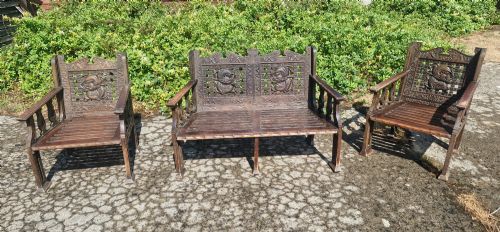
Anglo indian teak seating encompasses heavy hardwood armchairs, plantation chairs, window seats, and ornate benches produced during the nineteenth and early twentieth centuries. These pieces combine British colonial forms with traditional South Asian carving traditions, resulting in striking architectural furniture designed for tropical verandas and grand country houses alike.
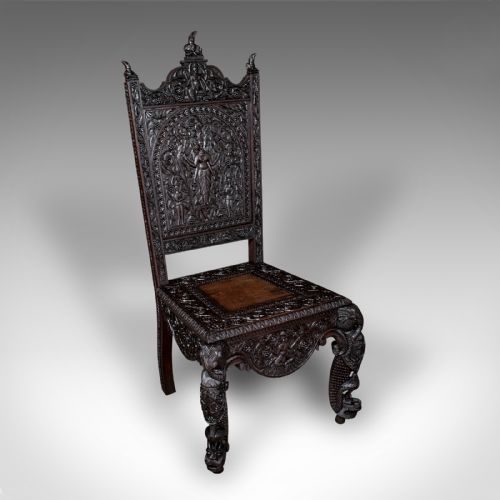
The selections on this page span from Victorian examples to Art Deco pieces, featuring woven cane seats, rush, and leather upholstery alongside intricate woodcarvings. Buyers encounter robust elbow chairs, folding chairs, and hall benches bearing elephant motifs and profuse floral ornamentation.
Originating across regions including Ceylon and Burma, this furniture reflects a distinct historical aesthetic where dense tropical hardwoods met European seating demands. Each piece serves as both a functional seat and a sculptural statement of colonial-era design.
Assessing Quality and Craft
Quality in these items rests upon the depth and precision of the hand carving and the integrity of the underlying hardwood frame. Pieces featuring crisp, deep relief work without superficial modern alterations demonstrate superior craftsmanship from their original period.
The condition of integrated materials such as cane seating, brass accents, and bone inlay significantly influences the overall character of the piece. Veranda chairs and plantation loungers with original mechanical adjustments or intact woven panels represent the higher end of surviving examples.
Current listings feature items from the Victorian era up to 1930, utilising teak, bone inlay, brass, and woven cane.
The Anglo Indian Teak Seating Glossary
- Teak
- A dense, durable tropical hardwood prized for its rich grain and resistance to environmental wear. It forms the primary structural foundation for most colonial furniture.
- Plantation Chair
- A traditional colonial armchair featuring an extended seat and adjustable or wide flat arms designed for reclining in warm climates. These often include woven cane panels.
- Cane
- Woven rattan material used to create breathable seating surfaces in chairs and benches. It provides both flexibility and ventilation.
- Moghul
- A style descriptor indicating ornate, traditional Indian design motifs inspired by imperial architecture and craftsmanship. It appears in deeply carved upholstery frames.
- Settle
- A wooden bench with a high back, solid arms, and often a storage compartment beneath the seat. Examples often incorporate decorative carving and brass work.
Anglo Indian Teak Seating: Frequently Asked Questions
What is a plantation chair?
A plantation chair is a traditional colonial seating form featuring wide, extended armrests designed for resting legs upon. These chairs were built for verandas to maximise comfort and airflow.
They frequently incorporate adjustable backs or deep seats carved from heavy tropical hardwoods.
How do I care for teak furniture?
Teak requires minimal maintenance due to its natural oil content, which protects the timber from drying out. Dust regularly with a soft cloth and avoid placing pieces near direct heat sources.
Conditioning can be applied sparingly to maintain the rich tone of the hardwood without masking the carved details.
Are these chairs comfortable for daily use?
Many of these pieces offer generous proportions and ergonomic reclining designs intended for relaxation. Veranda chairs and elbow chairs provide sturdy support, though cushion additions are common for modern living.
Original cane or leather seats should be assessed for tension and weight capacity before daily sitting.
How do I date an Anglo-Indian chair?
Dating relies on stylistic markers, construction techniques, and the specific colonial era reflected in the carving. Victorian examples often display heavier ornamentation, while later twentieth-century pieces adopt cleaner transitional lines.
Examination of the timber ageing and joinery methods helps confirm the production period.