



Anglo Indian Colonial Seating
Anglo indian colonial seating comprises heavy hardwood chairs, benches and suites shaped by centuries of cross-cultural trade and cabinetmaking.
Anglo Indian Colonial Seating
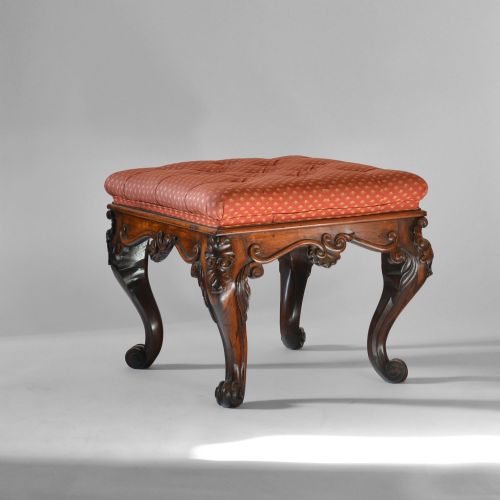
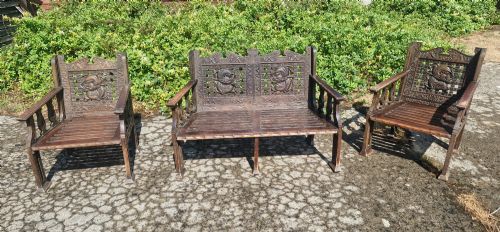
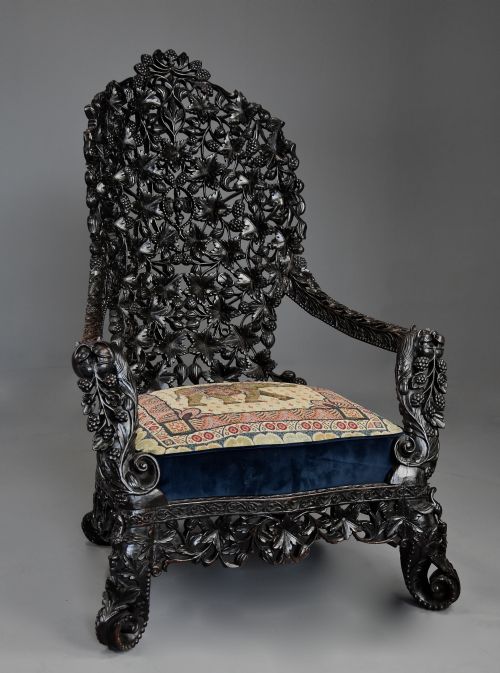
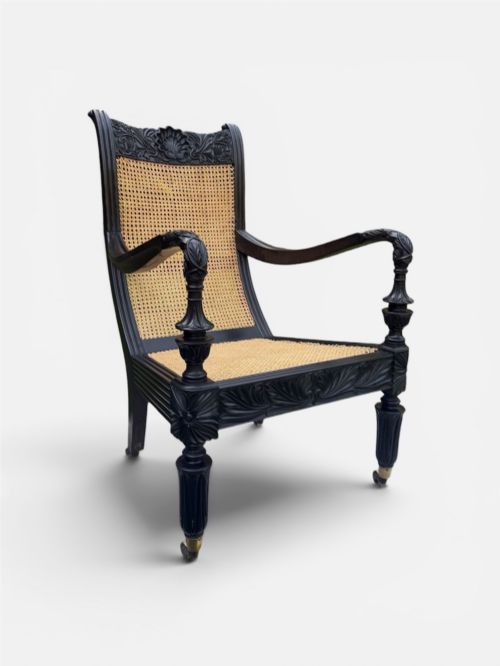
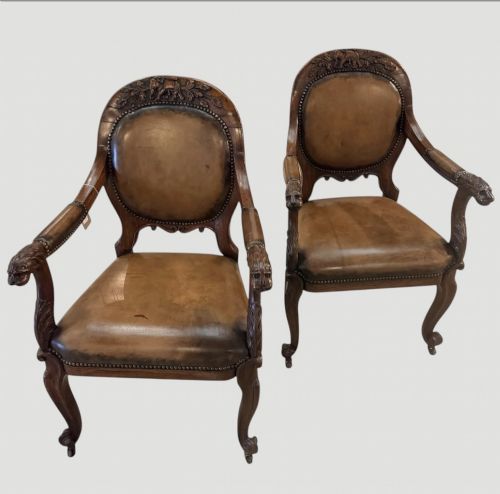
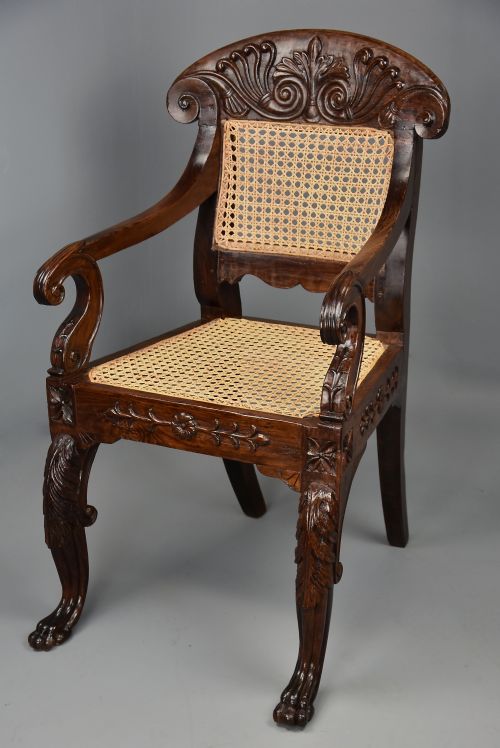
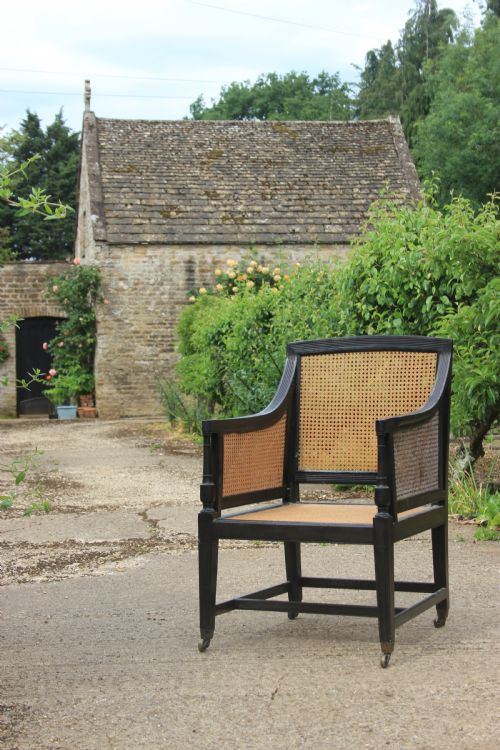
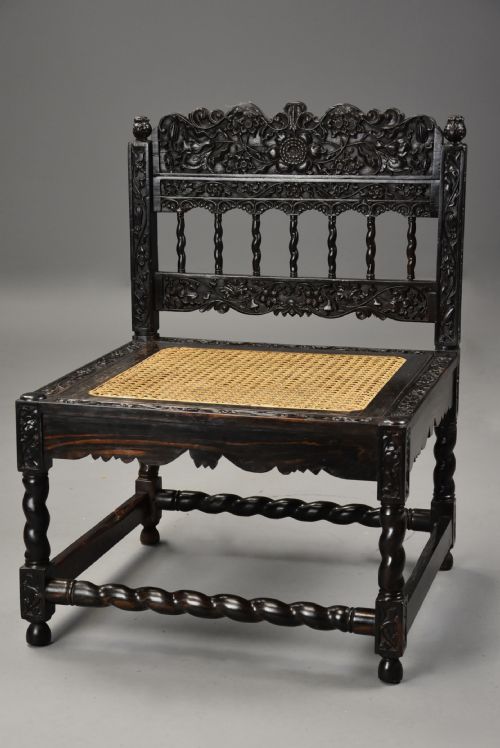
Anglo indian colonial seating spans armchairs, side chairs, dining sets, benches and reclining plantation forms produced across the subcontinent and surrounding regions during the British occupation and earlier trading periods. Buyers encounter pieces ranging from formal Regency-influenced library chairs in rosewood to heavy carved ebony low chairs and cane-seated veranda furniture.
The objects reflect distinct regional workshops and stylistic shifts from the seventeenth century through to the art deco era. Solid ebony, padouk, teak and satinwood frame work often displays intricate botanical or figural carving alongside European structural proportions.
How they were made
Cabinetmakers utilised dense native tropical timbers such as ebony, rosewood, padouk, satinwood and teak, which allowed for exceptionally deep and crisp hand-carving. Frames frequently incorporate woven cane panels, rush seating or leather upholstery to suit warm climates.
Many examples combine traditional indigenous joinery with English chair forms from the Regency and Victorian periods, sometimes enhanced with brass inlay or decorative brass hardware.
Elephants occasionally support the framework, appearing carved into bench rails and solid wood study figures.
What varies in quality
The crispness and depth of the hand-carving define the upper tier of these pieces, distinguishing fluid, deeply undercut foliage from shallower or more rigid work. The choice and density of the primary timber also dictate standard, with solid ebony and figured rosewood commanding greater presence than mixed secondary hardwoods.
Structural integrity relies on the preservation of the dense timbers and original joinery, while the survival of intact early canework or original leather adds significantly to the integrity of the piece.
The Anglo Indian Colonial Seating Glossary
- Bergere
- An enclosed armchair with a wooden frame and cane back and sides. This form appears frequently in colonial contexts utilising durable tropical woods.
- Cane
- Woven rattan peel used for seats and back panels. It provided cool seating in tropical climates.
- Padouk
- A heavy, durable tropical hardwood with a reddish hue used extensively in colonial cabinetmaking. It takes a fine finish and holds intricate carving well.
- Plantation chair
- A reclining armchair featuring wide, extended arms designed for resting legs. These pieces typically incorporate teak or leather.
- Regency
- An English design style spanning the early nineteenth century characterised by classical lines. Anglo-Indian makers frequently adapted these proportions for local hardwoods.
Anglo Indian Colonial Seating: Frequently Asked Questions
What is a plantation chair?
A plantation chair is a specialised reclining form featuring extended flat arms designed for resting legs and feet. These seats were built for comfort in warm verandah settings.
They often appear in teak or hardwood, sometimes fitted with leather or cane inserts to maintain airflow.
How do I identify ebony furniture?
Solid ebony furniture is exceptionally heavy and dense, featuring a very dark, fine-grained surface that takes a deep natural polish. Makers utilised this material for high-status seating.
Many examples display intricate hand-carved floral or figural motifs particular to regional Indian workshops.
Where were these chairs made?
These pieces were produced across various regions of the Indian subcontinent, Ceylon, and Burma under colonial administration. Workshops blended local woodworking traditions with European furniture forms.
Specific centres included the Coromandel Coast and Ceylon, each yielding distinct timber choices and carving styles.
Can I use these chairs daily?
These hardwood chairs are structurally robust and suited for regular use in contemporary interiors. Their dense timbers make them durable additions to studies, dining rooms and halls.
Care should be taken to support original cane or leather components and maintain stable humidity.