

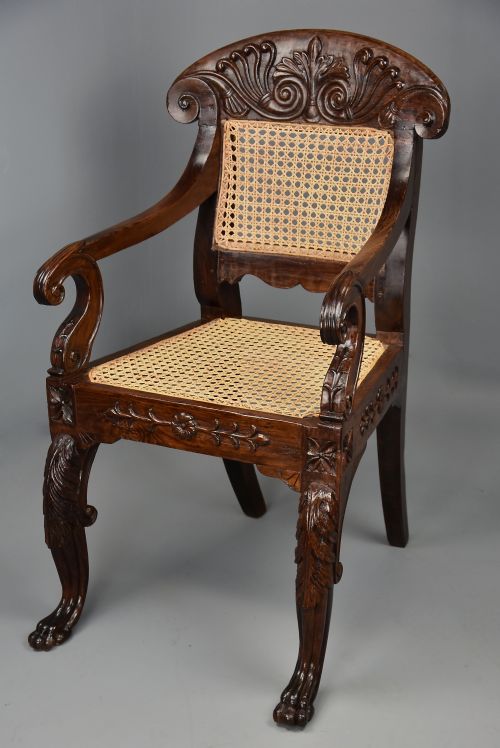


Colonial Cane Armchair
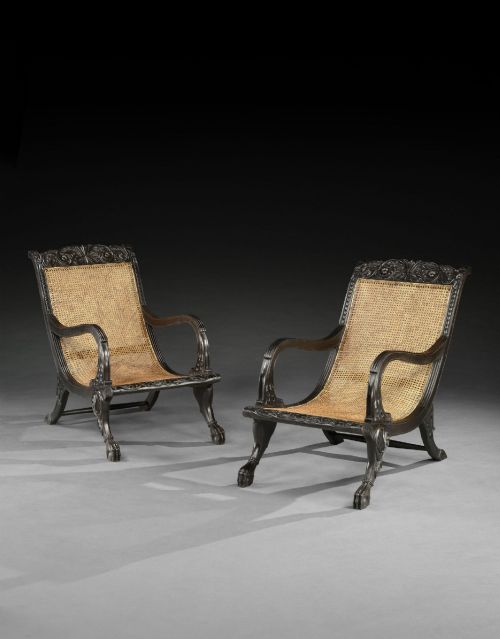
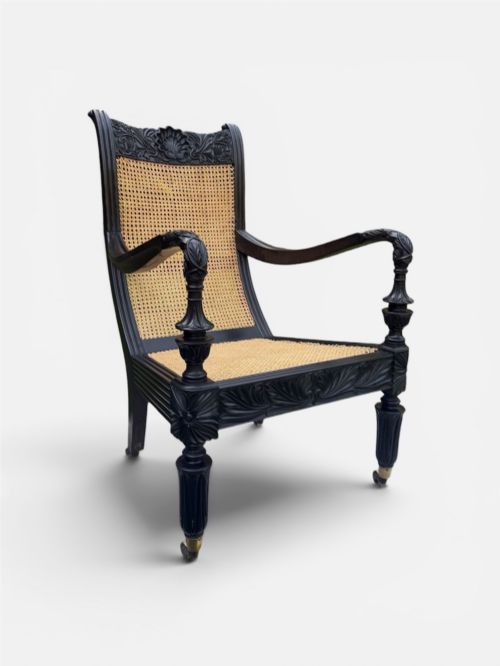
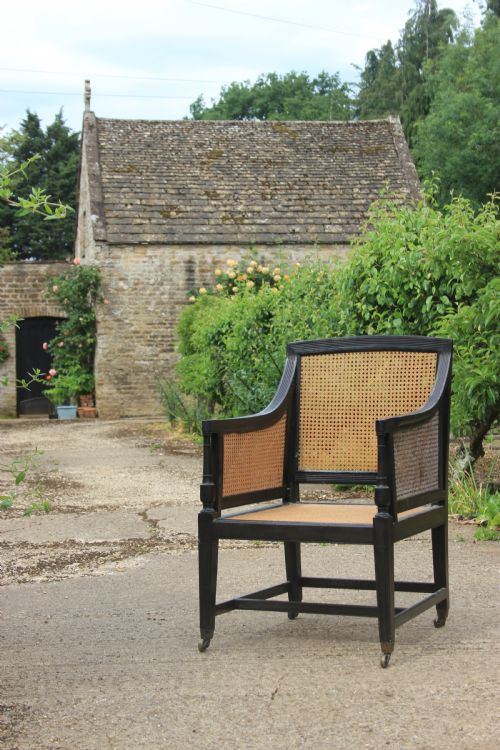
These colonial cane armchairs offer woven seating developed for tropical climates, combining British forms with hardwood frames and traditional split cane.
Colonial Cane Armchair
A colonial cane armchair brings together British furniture forms and tropical craftsmanship, spanning periods from the Regency era through the nineteenth century to the early twentieth century. Buyers seeking a colonial cane armchair will encounter regional variations including Ceylonese, Bombay, and broader Anglo-Indian styles.
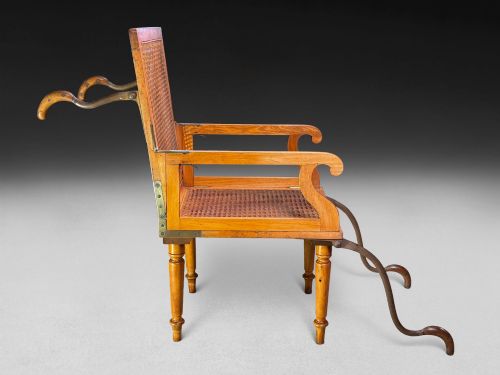
The inventory on this page ranges from solid ebony and padouk armchairs to teak plantation chairs and reclining forms. Dining chairs and elbow chairs also appear alongside larger lounging seats and pairs or sets.
Forms such as the campaign armchair and the reclining plantation chair reflect the functional needs of British officers and officials abroad. These seating pieces utilise woven rattan or cane panels to provide ventilation in warm climates.
Evaluating quality and construction
Quality rests in the density and choice of the hardwood frame, with solid ebony and well-figured padouk representing the upper tier of production. The crispness and depth of any carved detailing also distinguish finer workshop output from standard utility pieces.
The condition and tightness of the woven cane panels affect the structural integrity of the seat. Original brass hardware, campaign folding mechanisms, and retained reclining actions add to the desirability of period examples.
Colonial Cane Armchair Retail Price Guide 2026
Typical asking prices for colonial cane armchair among the pieces listed under this phrase on Sellingantiques today, from the lower quarter to the upper quarter. They describe what is for sale here now, not the wider market.
Materials recorded across these listings include solid ebony, teak, padouk, rosewood, brass, iron, and rattan.
The Colonial Cane Armchair Glossary
- Anglo-Indian
- Furniture made in India during the British period, often fusing British domestic forms with local carving traditions and native timbers. It frequently incorporates stylistic influences from Regency and Victorian design.
- Cane
- Woven material derived from the outer bark of the rattan palm, used to create flexible and breathable seats and backs. Split cane offers a smooth surface suited to tropical seating.
- Plantation chair
- A large lounging chair featuring extended arms designed for resting legs, created for comfort in colonial estates. These often include reclining backs and cane panels.
- Campaign armchair
- Portable seating designed to dismantle or fold for military transport by officers on the move. These pieces usually feature robust brass mounts and sturdy hardwood framing.
- Bergere
- An enclosed upholstered or cane-sided armchair with a wooden frame. In colonial contexts, these frames utilise dense exotic hardwoods.
Colonial Cane Armchair: Frequently Asked Questions
What is a plantation chair?
A plantation chair is a large seating form featuring extended wooden arms designed for resting the legs. These chairs often include reclining backs to provide comfort in warm climates.
They were utilised on colonial estates and verandahs by British residents seeking relief from tropical heat. The extended arms often double as footrests when rotated.
How do I care for cane seating?
Cane seating requires moderate humidity to prevent the woven rattan from becoming brittle and snapping. Avoid placing these armchairs near direct heat sources or in overly dry indoor environments.
Cleaning should be done gently with a damp cloth to remove dust from the weave without soaking the wood. Regular inspection of tension helps prevent localized sagging across the panel.
Are these chairs comfortable?
These armchairs are designed for lounging and relaxation, particularly in warm weather. The woven cane allows airflow around the body, reducing heat retention.
Many examples feature reclining backs or extended armrests that support various seating positions. Adding loose cushions can adjust the seat depth to personal preference.
How do I identify Regency influence?
Regency influence appears in the classical proportions, saber legs, and restrained carved details on the chair frames. This style reflects British design trends from the early nineteenth century adapted by overseas workshops.
Ebony and padouk frames from this period often display clean architectural lines combined with traditional Indian carving motifs. The juxtaposition creates a distinct Anglo-Indian aesthetic.