



Anglo Indian Carved Elephants
Anglo Indian carved elephants bring together the intricate woodworking traditions of the subcontinent and the domestic tastes of the Victorian period.
Anglo Indian Carved Elephants
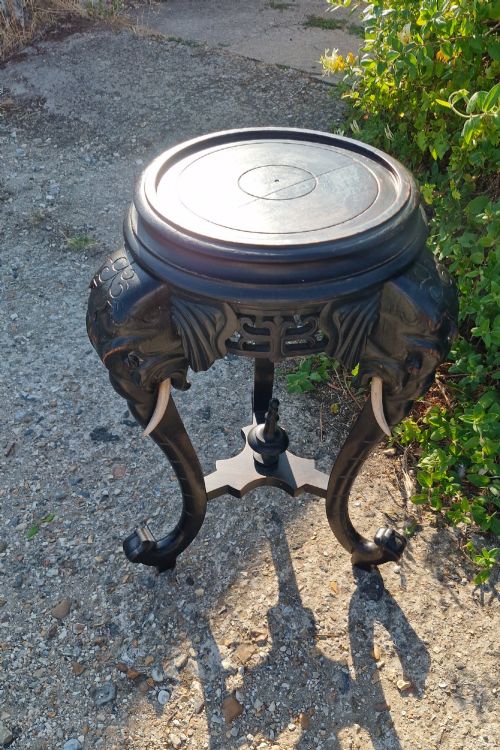
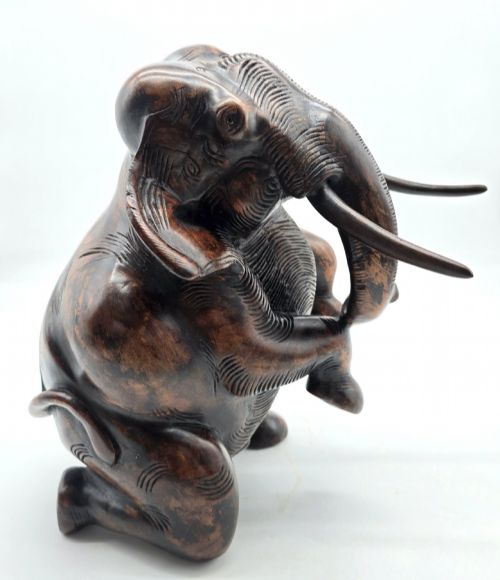
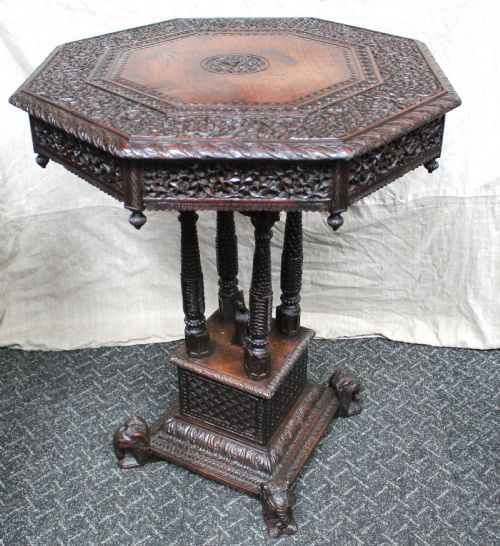
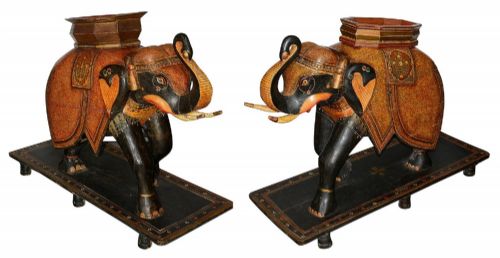
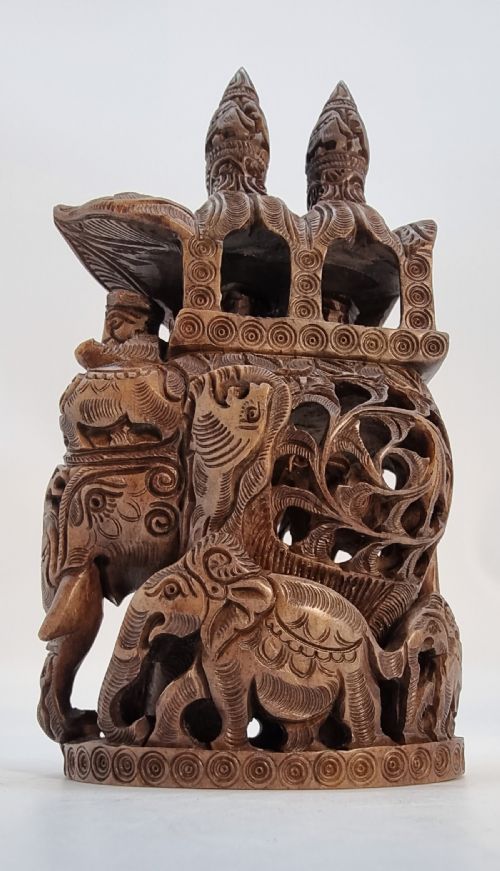
Anglo Indian carved elephants encompass sculptural figures, bookends, and occasional furniture produced during the nineteenth and early twentieth centuries. These objects range from small studies in ebony and soapstone to substantial side tables supported by carved figures.
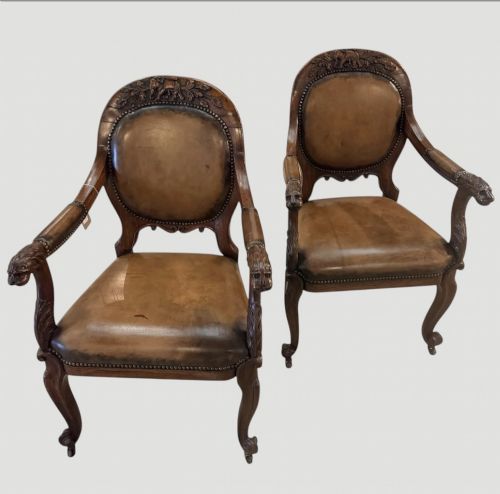
The pieces on this page frequently date from the late Victorian era through the early decades of the twentieth century. Tables, chairs, and sculptures dominate the current selection, reflecting both British colonial commission and indigenous craftsmanship.
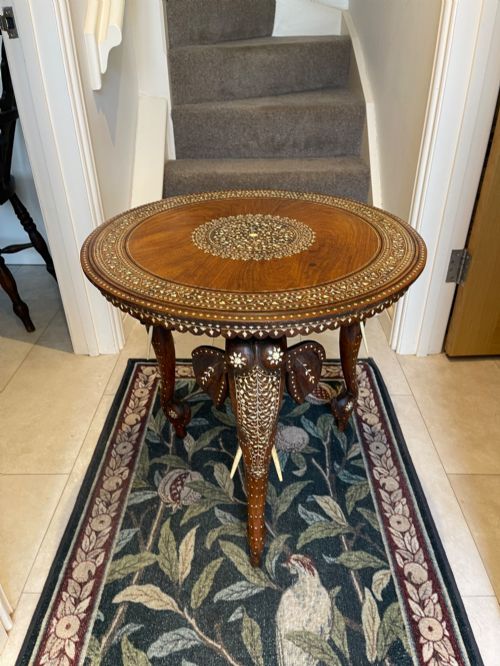
Forms span from octagonal Bombay Presidency tables to Kashmiri lacquered figures and teak armchairs. Buyers find both functional furniture incorporating elephant motifs and standalone sculptures depicting ceremonial subjects.
How they were made
Artisans utilised dense tropical timbers such as teak, rosewood, ebony, and assorted hardwoods suited to intricate carving. Workshops also incorporated bone inlay and brass detailing to accentuate the surface patterns.
Construction methods combined traditional hand carving with regional techniques like Hoshiarpur inlay and lacquer work. Figures and furniture elements were shaped from solid timber blocks or assembled from multiple joined sections.
What varies in quality
Quality rests upon the crispness of the carving and the depth of relief work across the timber. Superior examples exhibit fine anatomical detail in the animals and precise geometry in the surrounding furniture structures.
The choice of material heavily influences the piece, with dense ebony or well-figured rosewood commanding greater visual weight than softer secondary woods. The integration of decorative elements like bone inlay or painted tusks further distinguishes finer regional output.
Hunter and Palmer
The Anglo Indian Carved Elephants Glossary
- Hoshiarpur
- A region in Punjab known for intricate woodwork involving delicate bone or wire inlay set into dense timber. This technique appears on tables and occasional furniture.
- Bombay Presidency
- A historical administrative division of British India associated with distinctive octagonal and rectangular tables featuring carved elephant supports.
- Raj Period
- The period of direct British rule in the Indian subcontinent spanning from 1858 to 1947, which heavily influenced the production of colonial export goods.
- Soapstone
- A soft, talc-based metamorphic rock used by artisans to carve small-scale animal studies and figures with smooth surfaces.
- Coromandel
- A heavy, dark tropical hardwood valued for its rich grain and durability, frequently utilised for Victorian bookends and decorative objects.
Anglo Indian Carved Elephants: Frequently Asked Questions
What are Anglo Indian elephant tables?
These are small occasional or side tables where the legs or supports are carved to represent elephants, often associated with the late Victorian period and the Bombay Presidency.
They combine British furniture forms with regional Indian woodworking traditions, making them functional display pieces for the home.
How do I date these carvings?
Dating relies on stylistic markers, timber types, and documentation from the nineteenth and early twentieth centuries. Pieces frequently align with Victorian, Edwardian, or Art Deco periods.
Examining the construction methods and the wear on the hardwood helps establish the likely decade of manufacture.
Where were these pieces made?
Items were produced across various regions of the Indian subcontinent and Burma during the colonial era for both local use and export to Britain. Specific centres like Hoshiarpur developed distinct inlay styles.
Workshops utilised native timbers such as teak, rosewood, and ebony available in those territories.
How should I care for teak and rosewood?
Maintain these timbers by keeping them away from direct heat sources and sudden humidity changes to prevent splitting. Dust gently with a dry cloth rather than applying heavy liquid polishes.
Preserving the natural finish protects the intricate hand-carved details and bone inlay.