


Amethyst Pendant Necklace
An amethyst pendant necklace brings together rich purple quartz and period goldwork, offering a wearable piece of history from the Georgian era to the mid-twentieth century.
Amethyst Pendant Necklace
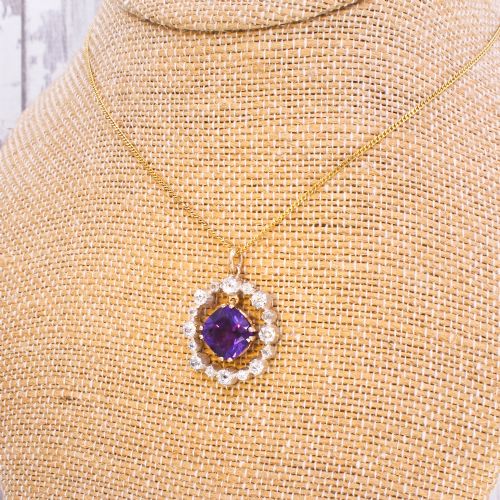
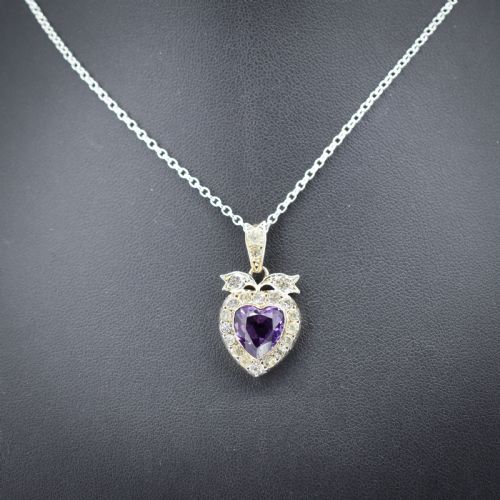
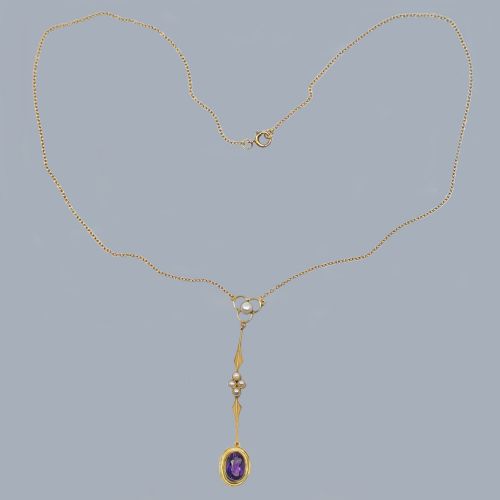
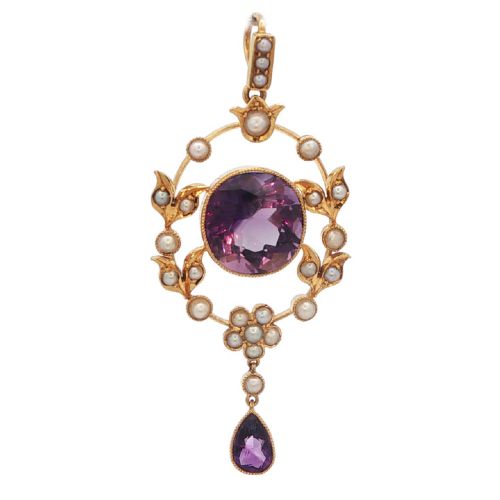
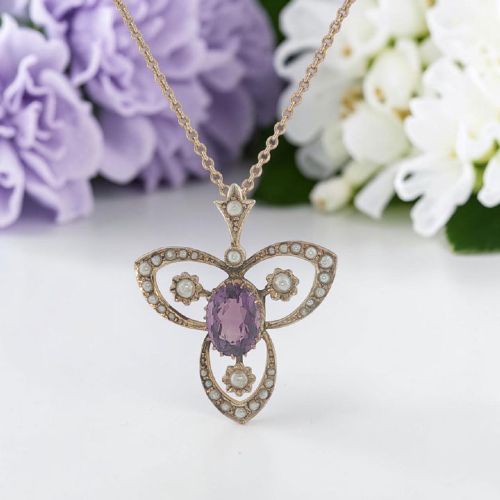
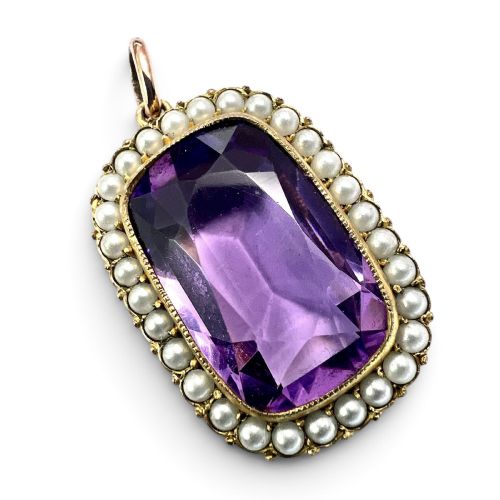
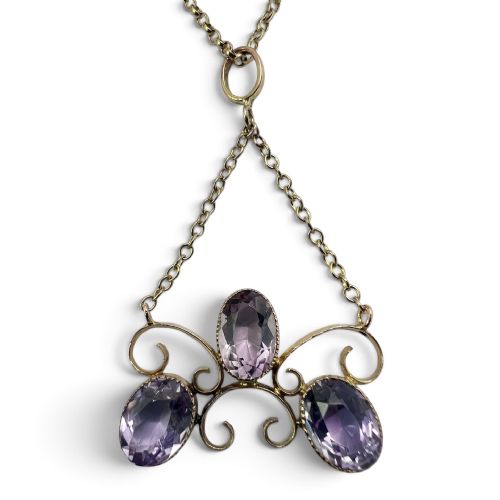
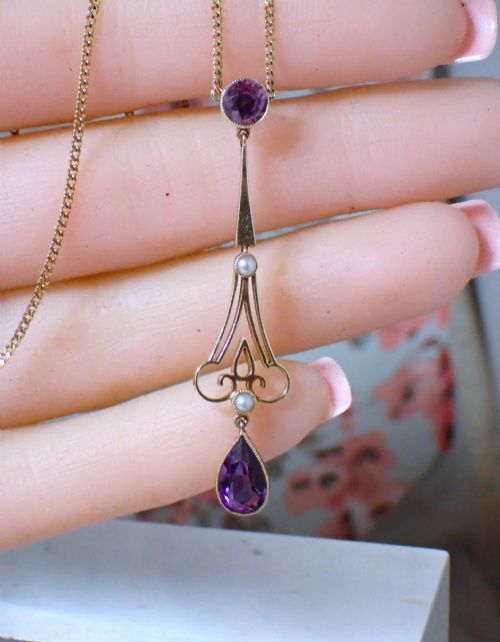
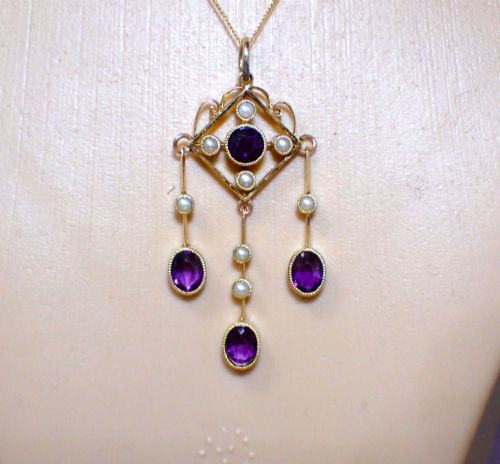
An amethyst pendant necklace is a jewellery piece featuring a purple quartz drop suspended from a chain, spanning periods from Georgian times through Victorian, Edwardian, and Art Nouveau designs up to the mid-twentieth century. The Edwardian examples often incorporate seed pearls and delicate gold framing, while Victorian and Georgian versions lean towards larger foiled stones and rich yellow gold mounts.
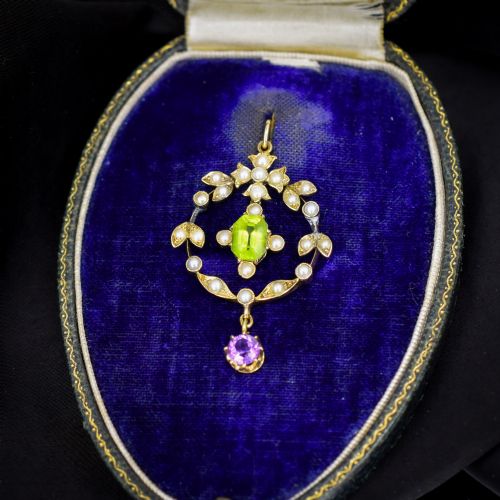
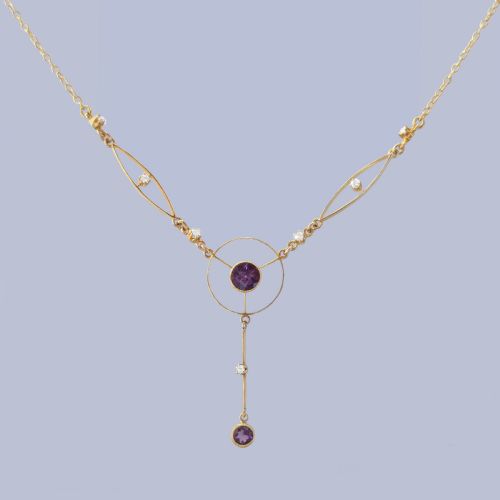
Buyers exploring this selection encounter everything from intricate lavaliere drops and Suffragette-inspired peridot combinations to simpler silver crosses and modern clusters. The prevalent forms rely heavily on Edwardian craftsmanship, where flowing Art Nouveau lines and symmetrical pendant arrangements dominate the available pieces.
Materials and Techniques
The construction of these pieces centres on high-carat yellow gold, most frequently nine-carat and fifteen-carat, alongside sterling silver and occasionally white gold. Master jewellers set faceted or cabochon amethysts into claw or closed-back collet mounts, frequently enhancing the central purple gemstone with accents of seed pearls, old-cut diamonds, or contrasting peridots.
Techniques range from delicate wirework and cannetille detailing in earlier Georgian iterations to the sweeping organic motifs characteristic of Art Nouveau work. Chain mountings often match the pendant metal, joining through integrated bails or articulated drops designed to catch the light from multiple angles.
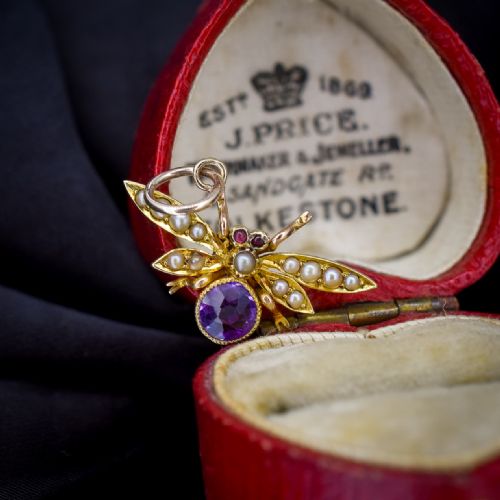
Several pieces on this page double as insects, capturing tiny gold flies and beetles frozen in eternal pursuit of purple quartz.
Factors That Determine Quality
Quality in an amethyst pendant necklace rests upon the depth and saturation of the central quartz, the precision of the stone cutting, and the integrity of the surrounding metalwork. Superior examples display clean gemstone facets with an even violet hue, avoiding pale or zoned colouration that diminishes the visual impact.
S. Blanckensee & Son·Hamilton & Co·Murrle Bennett·N E From
The Amethyst Pendant Necklace Glossary
- Lavaliere
- A pendant necklace featuring a central drop suspended below a smaller decorative element, popular during the Edwardian period. This design style allows for independent movement of the lower gemstone cluster.
- Seed Pearl
- A tiny, naturally small pearl used extensively in Victorian and Edwardian cluster and foliate jewellery. These pearls are typically half-drilled and secured onto tiny pegs.
- Foiled
- A historical technique where a thin sheet of coloured metallic foil is placed behind a gemstone or paste to enhance its brilliance and colour. This method is frequently observed in Georgian pieces.
- Collet
- A flat-bottomed metal band or collar that holds a gemstone in place by having its upper edge pushed over the girdle of the stone. It forms a secure, enclosed border around the mineral.
- Art Nouveau
- A design style spanning the late nineteenth and early twentieth centuries characterised by sinuous, organic lines and floral motifs. Jewellery from this movement often depicts asymmetrical whip-lash curves.
Amethyst Pendant Necklace: Frequently Asked Questions
How do I date an amethyst pendant necklace?
Dating relies on examining the metal purity marks, the cut of the gemstones, and the overarching stylistic motifs present in the mount. Edwardian and Art Nouveau pieces typically feature distinct floral curves and seed pearl accents, whereas Georgian and Victorian examples display heavier gold settings and closed-back foils.
Looking closely at the clasp mechanism and the attachment ring provides further clues regarding the decade of manufacture. Original boxes, where present, can also confirm the historical context of the item.
What is a lavaliere necklace?
A lavaliere is a pendant style defined by a primary drop suspended from a shorter secondary link or chain section. This configuration creates a cascading effect that swings freely when worn.
First popularized in the early twentieth century, these pieces frequently pair an amethyst centrepiece with delicate seed pearls and intricate Edwardian goldwork.
Are these amethysts natural stones?
The vast majority of antique pieces utilise natural mined quartz, though occasional historical examples incorporate high-grade paste or coloured glass. Natural amethysts often display subtle variations in internal graining and hue.
Reviewing the specific details of each listing clarifies whether a stone is natural quartz or a period paste alternative.
How should I care for antique gold jewellery?
Antique gold and amethyst pieces require gentle handling, avoiding harsh chemical dips or ultrasonic cleaners that can dislodge seed pearls or weaken older settings. Warm soapy water and a soft brush suffice for routine maintenance.
Storing each necklace individually in a lined box prevents scratching against other items in a collection.