

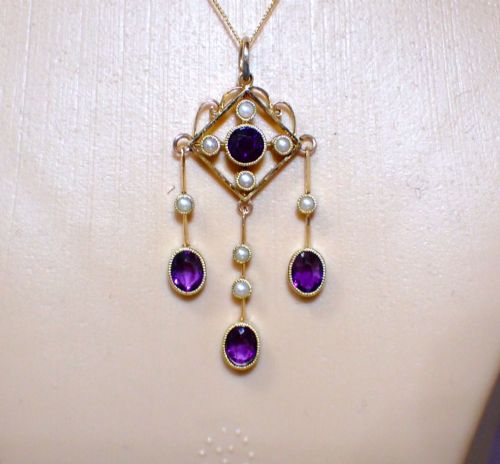


Amethyst Pearl Lavalier Necklace
An amethyst pearl lavalier necklace brings fluid Edwardian grace and organic Art Nouveau lines to the collarbone.
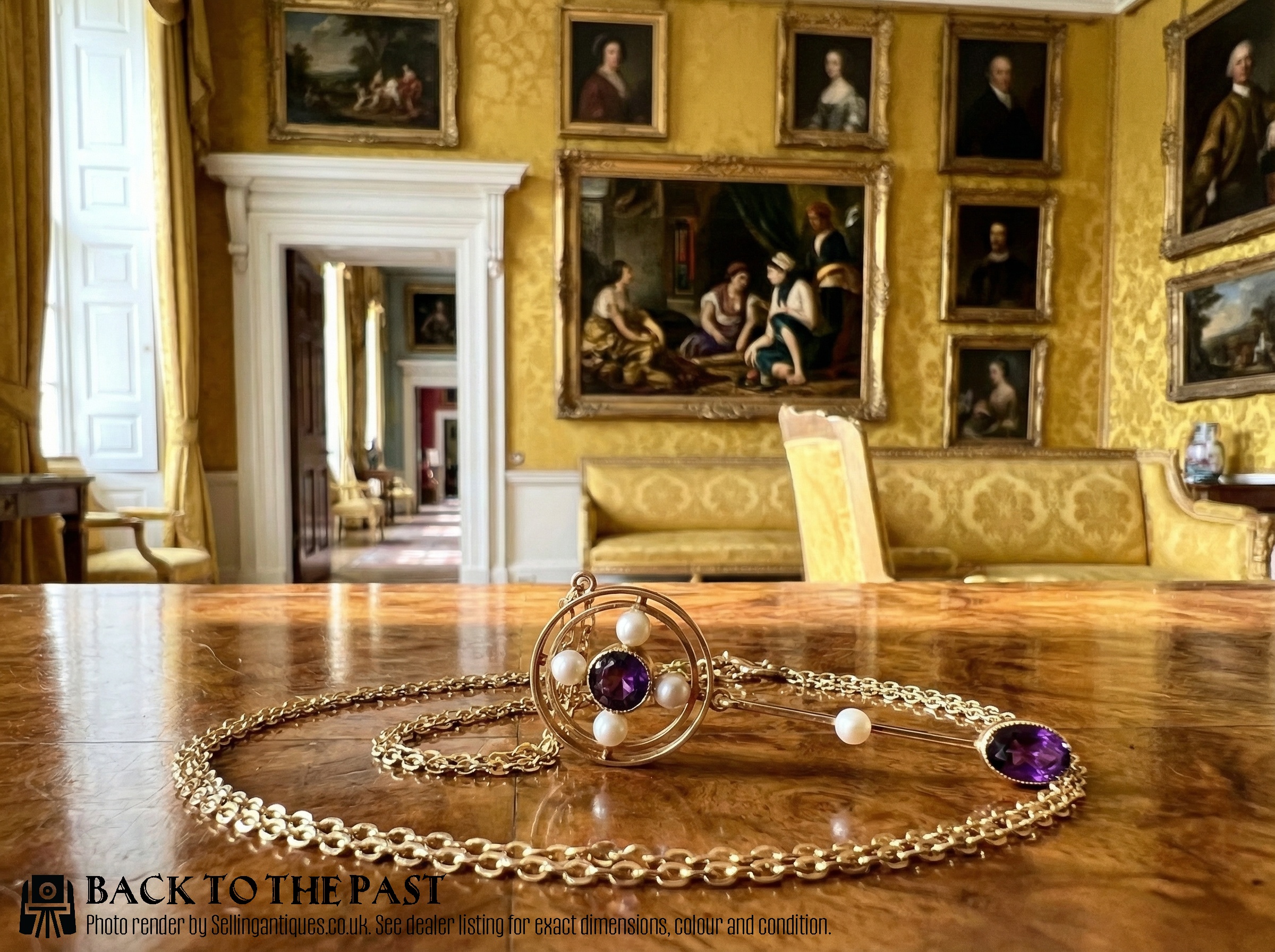
Amethyst Pearl Lavalier Necklace
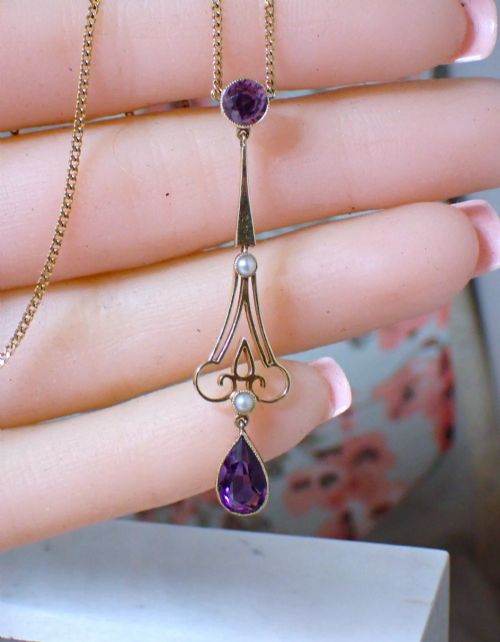
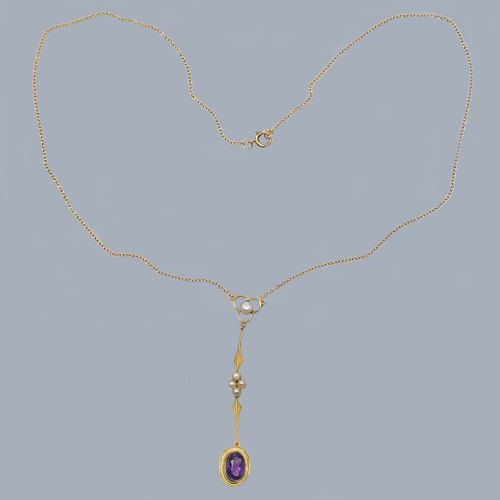
An amethyst pearl lavalier necklace is a pendant-dropped jewel that suspends swinging gemstone accents from delicate chains, designed predominantly during the Edwardian and Art Nouveau periods. These pieces showcase openwork foliate frames and organic droplet formations that hang centrally from the neckline.
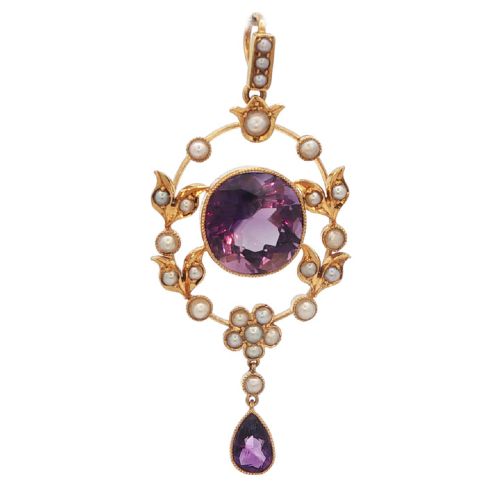
The version most commonly met on this page combines faceted purple amethysts with lustrous seed pearls, set into either 9ct or 15ct gold mounts. Such necklaces emerge frequently from the early twentieth century, reflecting the lighter aesthetic shifts away from heavy Victorian jewellery.
Materials and construction
Goldsmiths worked primarily in 9ct and 15ct gold, shaping warm yellow metal into fine wirework, collet settings and articulated hinges that allowed individual elements to dangle freely. Silver also appears in mounting configurations alongside gold.
Amethysts are faceted into pear, briolette, or cushion cuts to catch the light, while seed pearls are hand-drilled and secured onto tiny pins or threaded onto silk to accent the central purple stones.
Amethyst Pearl Lavalier Necklace Retail Price Guide 2026
Typical asking prices for amethyst pearl lavalier necklace among the pieces listed under this phrase on Sellingantiques today, from the lower quarter to the upper quarter. They describe what is for sale here now, not the wider market.
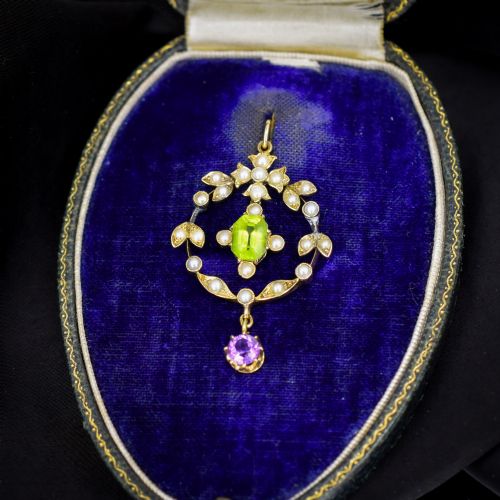
Some lucky buyers still discover these delicate drops resting safely inside their original velvet-lined merchant boxes from over a century ago.
Quality and craftsmanship
The upper tier of these necklaces displays higher purity 15ct gold mounts paired with natural briolette amethysts and matching natural pearls, demonstrating superior goldsmithing in articulated drops and complex wire scrollwork. Lesser examples utilise 9ct gold with simpler stamped settings and uniform seed pearls.
Design complexity and maker attribution elevate certain pieces, distinguishing standard commercial production from workshop creations that incorporate additional stones like peridots or diamonds within integrated foliate frames.
S. Blanckensee & Son·Hamilton & Co
The Amethyst Pearl Lavalier Necklace Glossary
- Lavalier
- A pendant necklace featuring a suspended central drop or secondary hanging stones that swing independently on the chain. This drop style became immensely popular during the Edwardian era.
- Seed pearl
- A very small, naturally or culturedly formed pearl, often half-drilled and glued or pegged onto gold settings. These tiny pearls line the edges of pendants to create a soft, luminous border.
- Briolette
- A drop-shaped gemstone cut with triangular facets entirely around its surface. This cut allows amethysts to sparkle from every angle as the pendant moves.
- Art Nouveau
- A design style spanning roughly from the late nineteenth century into the early twentieth century, characterised by sinuous, asymmetrical plant motifs and flowing lines. Pieces from this movement often intertwine gold stems with amethysts and pearls.
Amethyst Pearl Lavalier Necklace: Frequently Asked Questions
What is a lavalier necklace?
A lavalier is a pendant necklace characterised by a drop ornament that suspends one or more swinging stones below the main frame. This configuration creates movement against the chest.
Originating in the late nineteenth century and flourishing through the Edwardian period, these pieces use delicate chains to hold the dangling gemstone assembly.
Are these necklaces made of solid gold?
The listings feature pieces constructed from solid 9ct or 15ct yellow gold, alongside occasional silver mounts. Hallmarks typically stamp the metal purity directly onto the reverse of the pendant or the clasp.
Victorian and Edwardian gold alloys possess a distinctive warm hue compared to modern high-karat yellow gold.
How do I date an Edwardian lavalier?
Dating relies on stylistic markers such as light openwork garland motifs, millegrain-set edges, and the presence of seed pearls paired with amethysts or peridots. Hallmarks and original fitted boxes also help pinpoint the era.
Pieces crossing from the Victorian era into the Edwardian decade often combine heavy foliate elements with lighter, airier wirework settings.