


15ct Gold Drop Pendant
When you handle a 15ct gold drop pendant, you hold a piece of jewellery shaped by the tastes of the Victorian, Edwardian, and Art Nouveau eras.
15ct Gold Drop Pendant
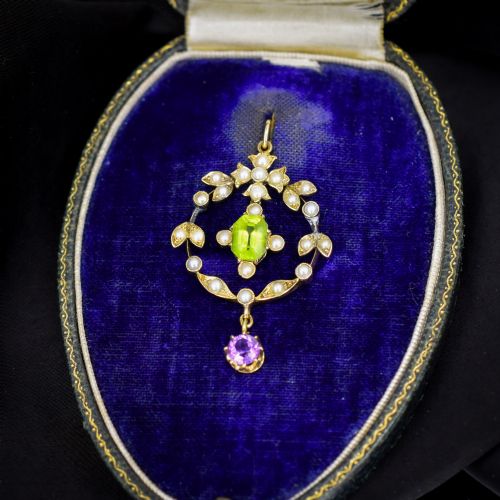
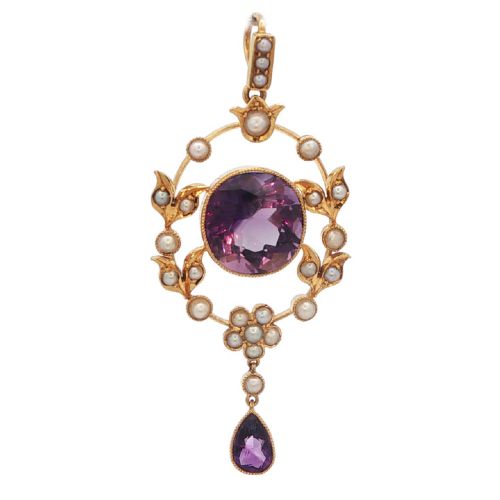
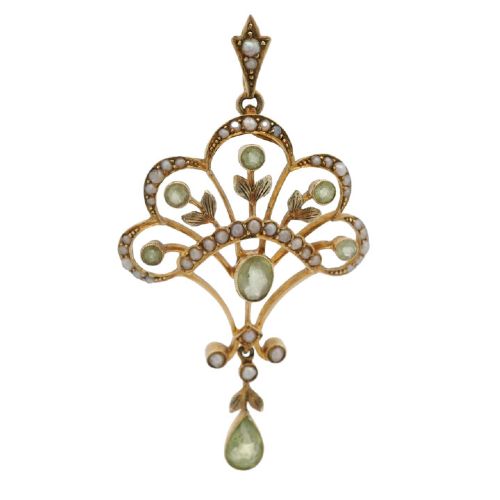
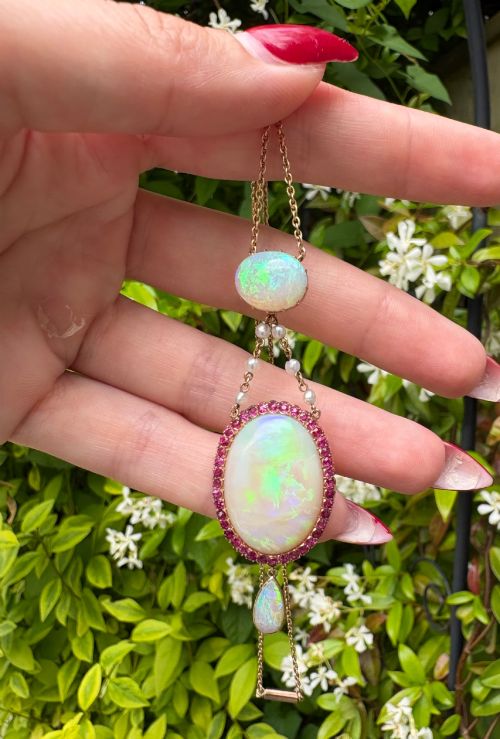
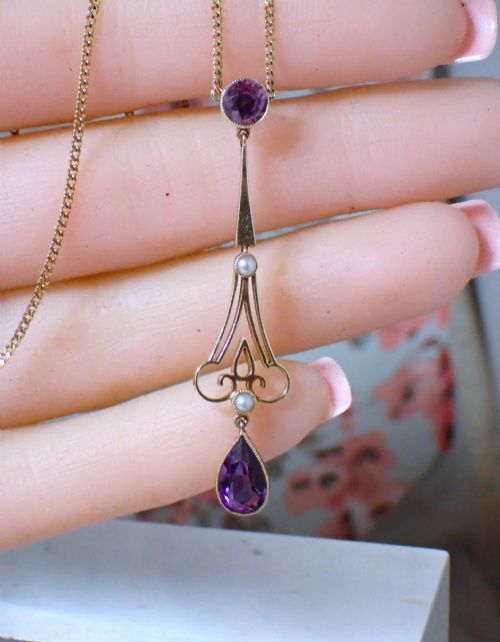
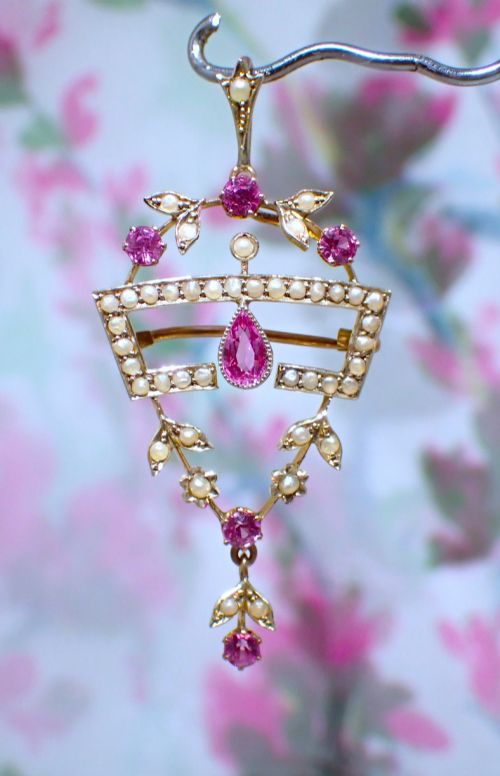
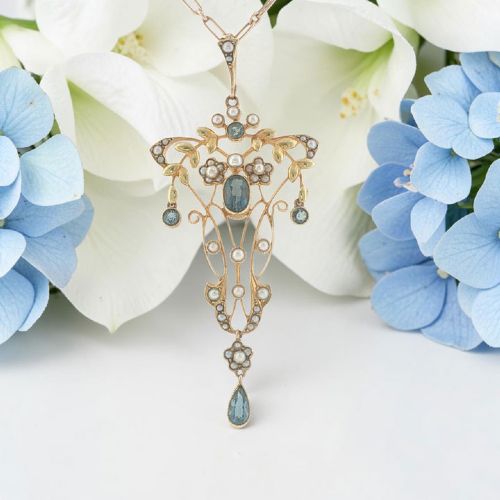
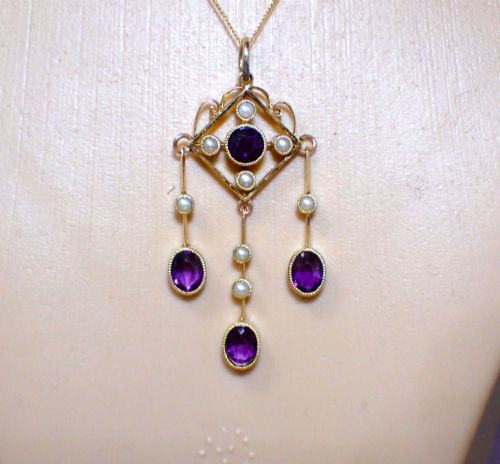
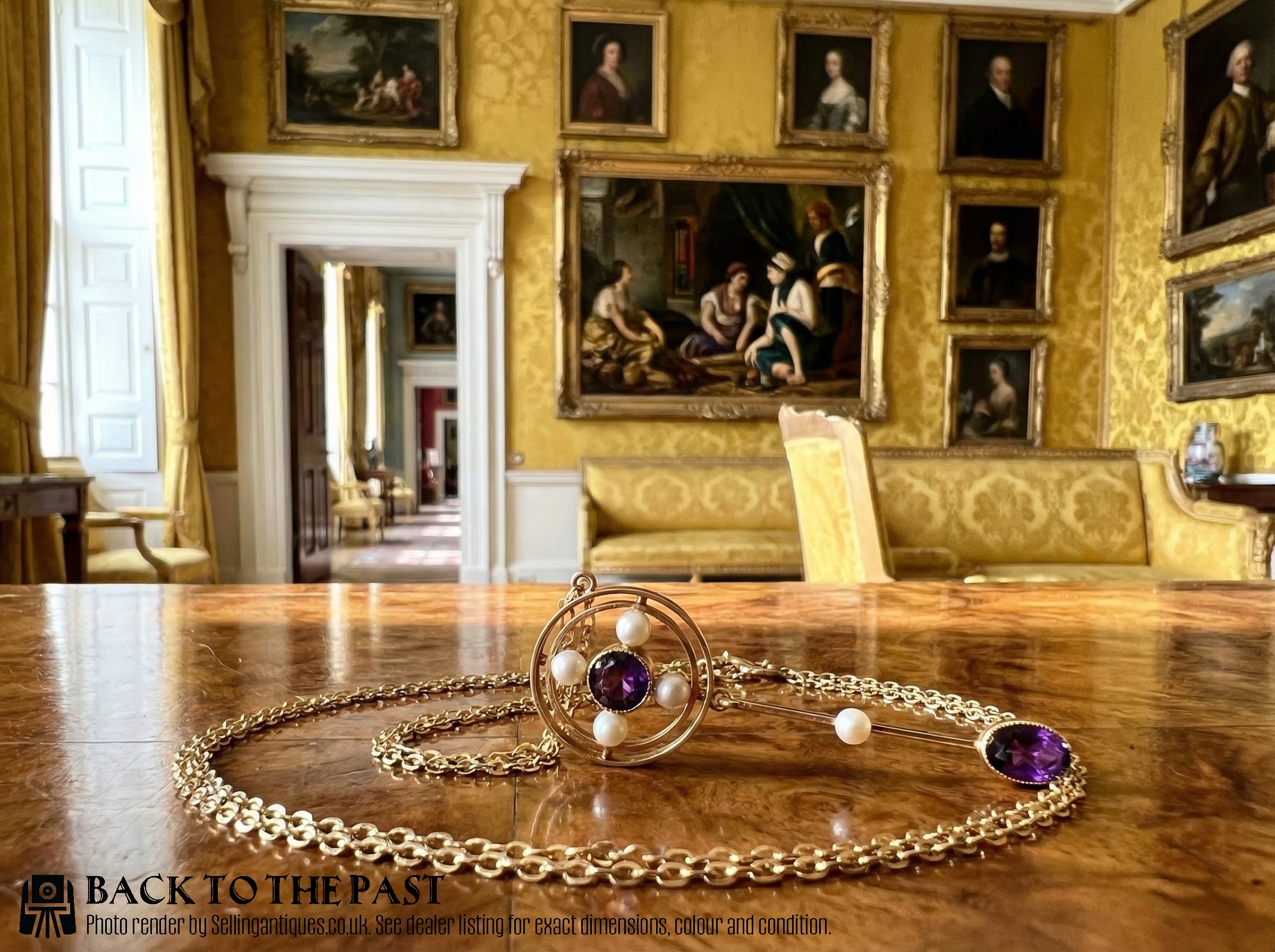
A 15ct gold drop pendant typically takes the form of a delicate lavaliere or a floral cluster suspended from a fine chain, reflecting the aesthetic preferences of the late nineteenth and early twentieth centuries. These pieces were designed to hang with movement against the wearer, often incorporating a central gemstone paired with seed pearls.
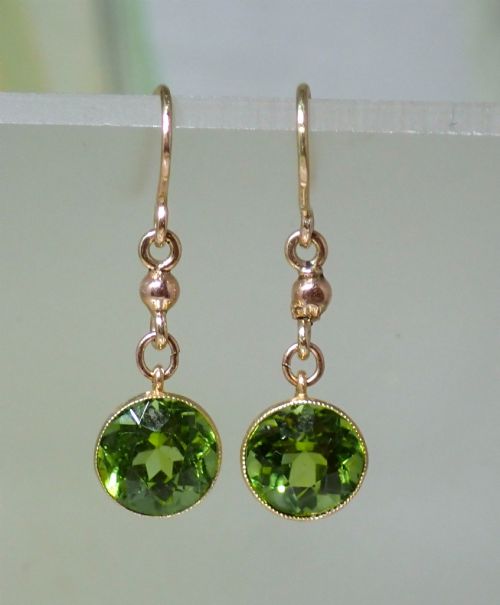
The most common versions on this page originate from the Edwardian and Victorian periods, alongside specific movements like Art Nouveau and Arts and Crafts. You will frequently encounter stones such as amethyst, peridot, and aquamarine set within distinctive yellow gold frameworks.
Makers and designers of these ornaments utilised the specific properties of 15ct gold - which was standard in Britain before the introduction of 9ct as the predominant alloy - to create secure settings that did not require heavy metal weight. The resulting pendants balance structural durability with visual lightness.
Materials and construction methods
The construction of a 15ct gold drop pendant relies on the manipulation of high-karat gold wire and sheet metal, often combined with hand-cut gemstones and delicately drilled seed pearls. Goldsmiths employed techniques such as collet setting for larger stones and wire-work for the intricate swags characteristic of the Edwardian era.
Natural gemstones including peridot, amethyst, and aquamarine are secured in open-back or closed-back settings depending on the period, allowing light to pass through the stones. Seed pearls are typically threaded on silk or fine wire, pinned securely into gold cups designed to hold them without obscuring their lustre.
Distinctions in craftsmanship and design
The quality of a 15ct gold drop pendant is determined by the precision of its metalwork and the integration of its components. Superior examples display seamless soldering, hand-beaten textures where appropriate, and symmetrical stone arrangements that show no asymmetry in the claw settings.
Artistic cohesion separates standard commercial pieces from exceptional works, particularly in Art Nouveau and Arts and Crafts examples where organic, flowing lines demand high manual dexterity from the jeweller. The matching of stones - such as uniform colour in clusters of seed pearls or evenly saturated peridots - signals deliberate selection by the maker.
Murrle Bennett·Hamilton & Co
The 15ct Gold Drop Pendant Glossary
- Lavaliere
- A pendant featuring a primary gemstone or drop suspended below a main necklace chain, popular during the Edwardian period. This form allows the lower stone to swing independently.
- Seed pearl
- A very small, naturally formed or cultured pearl used extensively in clusters and borders on Victorian and Edwardian jewellery. These pearls are typically half-drilled and secured on fine gold pins.
- Collet
- A band of metal that holds a gemstone in place by being pushed or hammered over the edge of the stone. It provides a clean, secure border around transparent gems.
- Etruscan Revival
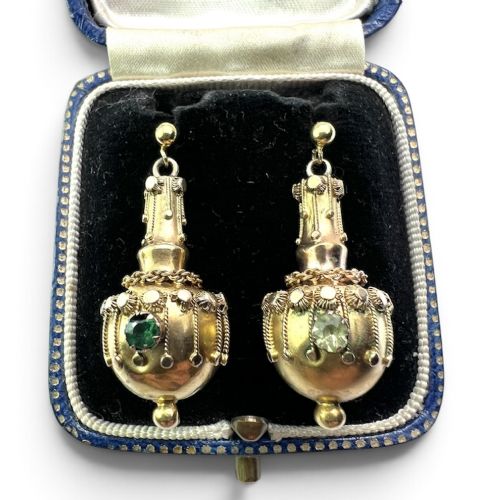
- A nineteenth-century design style inspired by ancient archaeological discoveries, characterised by granulation and applied wirework on gold surfaces. This aesthetic brings textured classical motifs to Victorian pendants.
- Suffragette
- A descriptor for jewellery incorporating peridot, white sapphire or diamond, and violet amethyst, reflecting the colours of the Women's Social and Political Union. These pieces date predominantly to the Edwardian era.
15ct Gold Drop Pendant: Frequently Asked Questions
What is a 15ct gold drop pendant?
A 15ct gold drop pendant is a piece of antique jewellery made from British fifteen-carat gold, featuring a gemstone or decorative element that hangs downward from a necklace or chain. These items were produced primarily during the Victorian and Edwardian eras.
The metal content means the alloy contains sixty-two point five percent pure gold, a standard that was widely used in Britain before the legal adoption of lower caratages in nineteen thirty-two. They frequently incorporate stones like amethyst, aquamarine, and seed pearls.
How do I wear an antique pendant safely?
Living with an antique 15ct gold drop pendant requires minor adjustments to daily habits, particularly concerning moisture and physical pressure. Because these pieces often use seed pearls or delicate wirework, you should put your necklace on after applying perfume and hairspray.
Store the pendant flat in a lined box or hang it securely to prevent the fine chains from kinking or tangling. Cleaning should be limited to soft polishing cloths, avoiding harsh chemical dips that can damage pearls or historical adhesives.
How do I tell Victorian from Edwardian pendants?
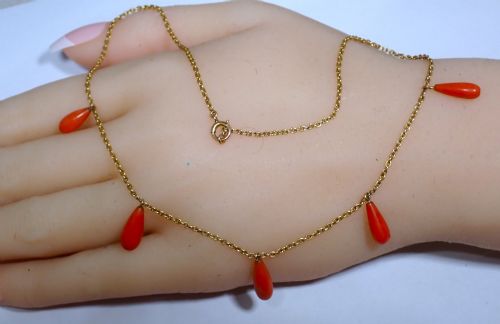
Victorian pendants generally display heavier, more substantial goldwork, often incorporating dark stones, coral, or intricate Etruscan revival motifs. The designs tend toward romantic symbolism, mourning elements, or dense floral clusters.
Edwardian pieces, by contrast, favour lighter, airier platinum-topped designs, garland styles, and bright pastel gemstones like peridot and aquamarine. The metalwork often mimics lace and ribbon motifs, reflecting the shift toward graceful lightness before the First World War.
What are Suffragette colours in jewellery?
Suffragette jewellery incorporates the distinctive colour combination of green peridot, white pearl or sapphire, and violet amethyst. These hues represent give-women-votes through the initial letters of purple, white, and green.
Pendants utilising this specific gemstone combination date from the early twentieth century when the movement was active. They appear frequently among Edwardian drop pendants and lavalieres.