

Amethyst and Pearl
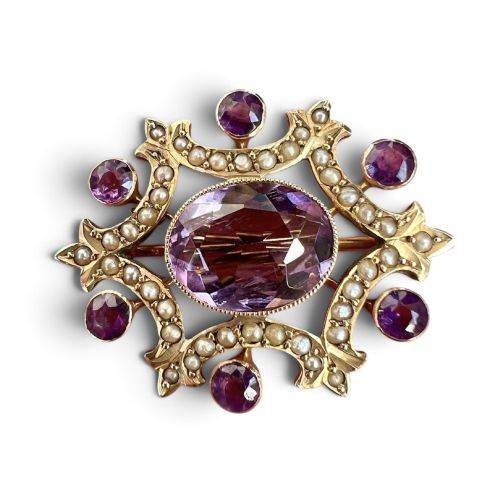
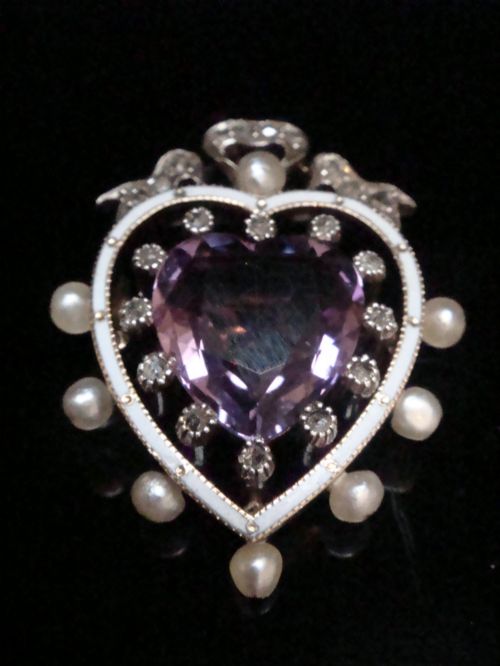
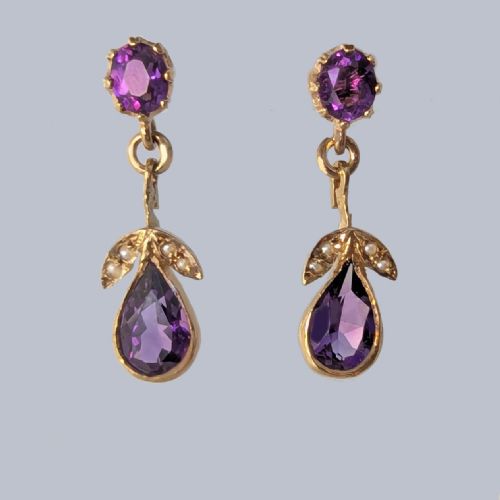
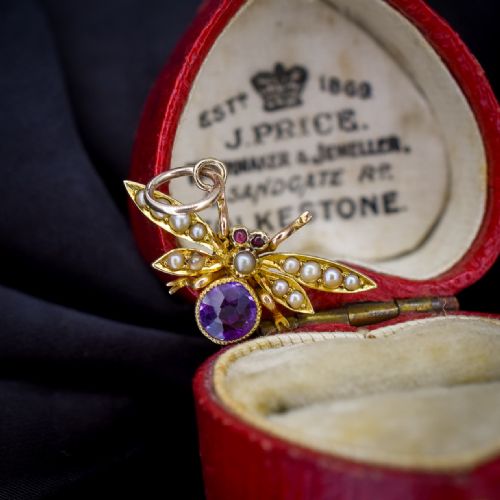
An amethyst and pearl piece brings together rich purple quartz and lustrous pearls in gold settings, offering a distinct colour contrast cherished through multiple periods.
Amethyst and Pearl
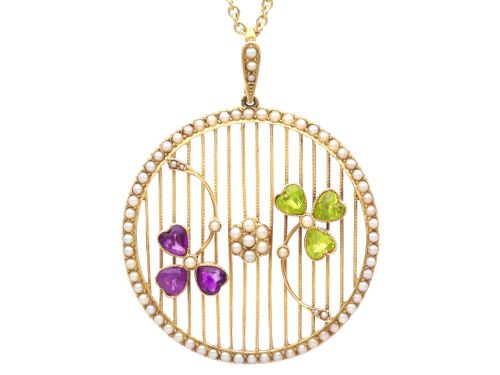
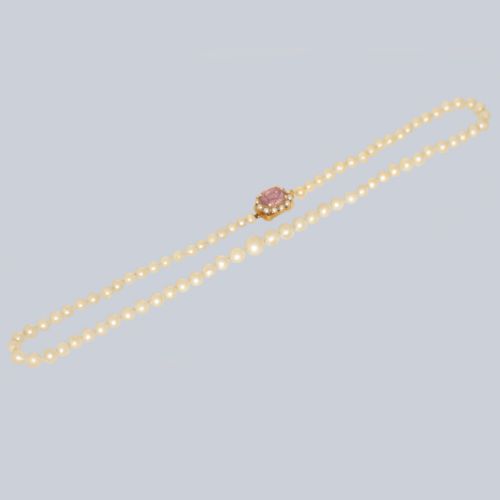
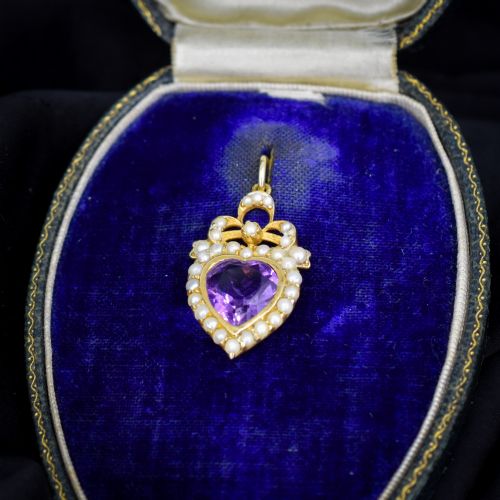
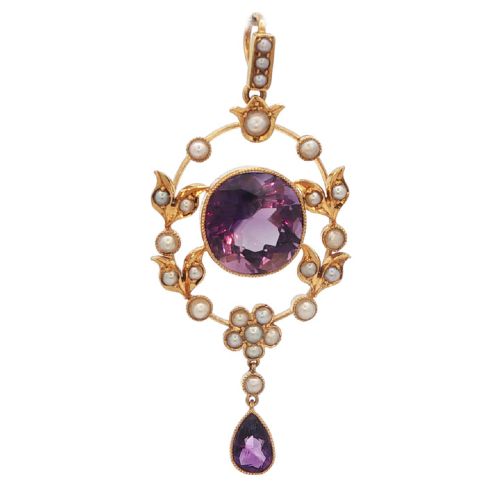
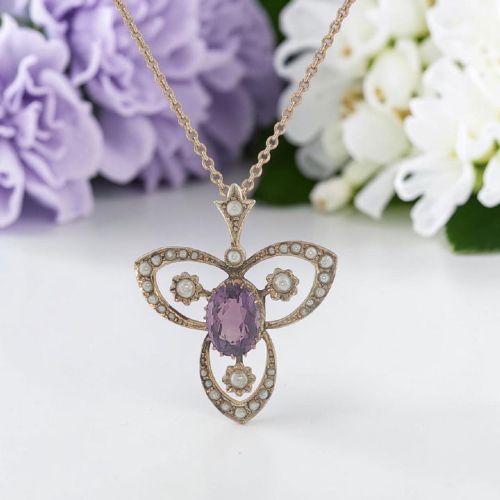
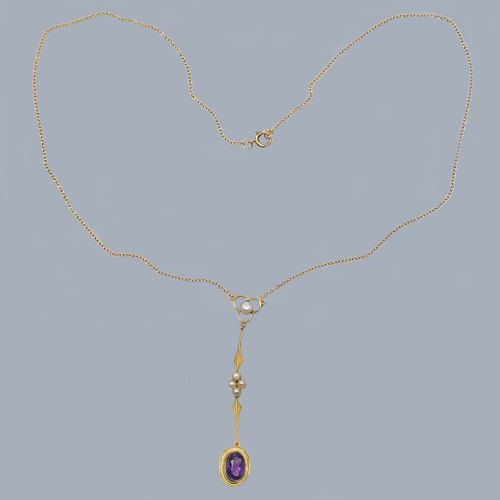
Amethyst and pearl items encompass pendants, necklaces, brooches, rings, and earrings that pair violet stones with seed pearls or larger pearls. These jewels emerge across Victorian, Edwardian, and Art Nouveau periods, alongside mid-century and later twentieth-century iterations.
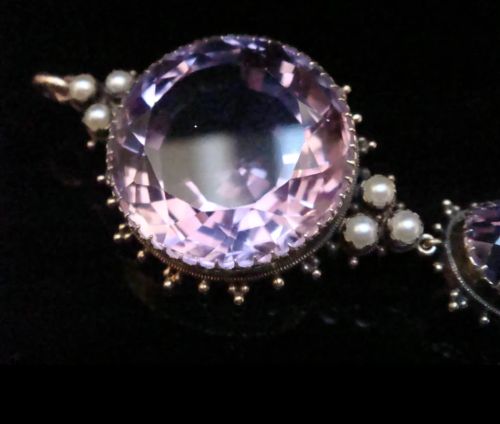
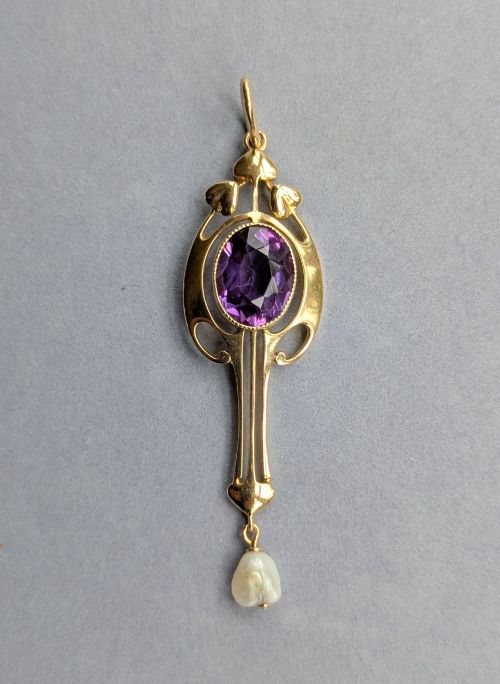
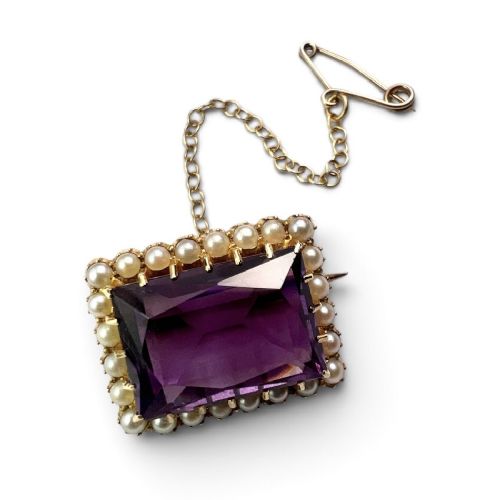
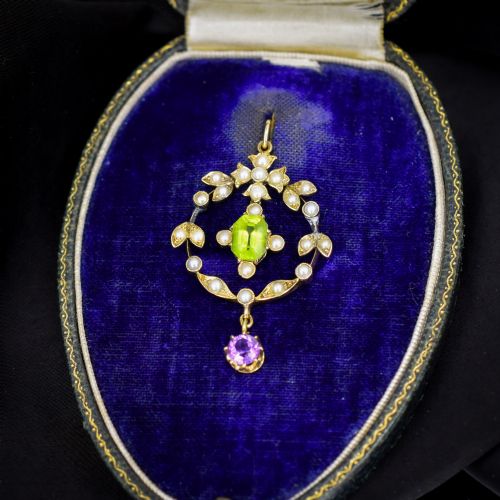
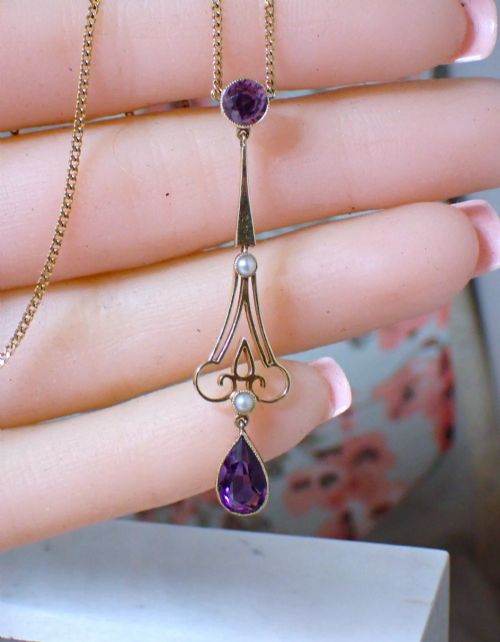
Edwardian lavalier pendants and Victorian halo brooches represent the forms most frequently encountered on this page. Designers of these eras often combined faceted amethysts with delicate seed pearls to create flowing drop necklaces and cluster rings.
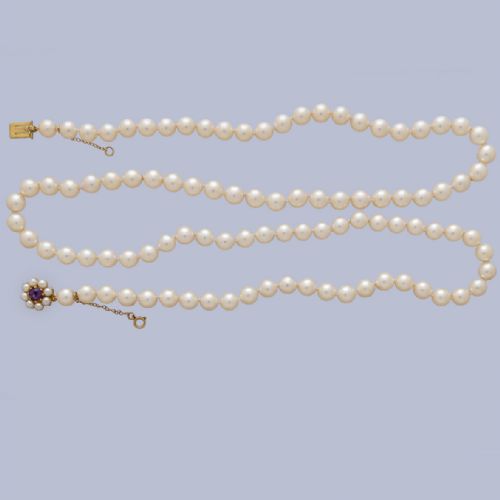
The assortment spans from Georgian cluster rings dating to the early nineteenth century up to 1960s vintage pieces featuring gold clasps and pearl strands. Yellow gold, rose gold, and silver provide the primary metal foundations for these combinations.
Materials and Construction
Craftsmen set amethysts alongside seed pearls and natural pearls within frameworks of 9ct, 12ct, 15ct, and 18ct gold or silver. Certain Edwardian pieces incorporate guilloche enamel alongside the stones and pearls.
Settings utilise yellow and rose gold to anchor emerald-cut amethysts, round stones, and teardrop drops. Delicate wirework defines the Art Nouveau and lavalier pendants, supporting swinging drops and fringe arrangements.
Amethyst and Pearl Retail Price Guide 2026
Typical asking prices for amethyst and pearl among the pieces listed under this phrase on Sellingantiques today, from the lower quarter to the upper quarter. They describe what is for sale here now, not the wider market.
Listings feature items from the Victorian, Edwardian, and Art Nouveau periods, alongside mid-century pieces set in gold and silver.
Distinctions in Quality
Quality rests upon the depth of the amethyst's colour saturation, the uniformity and lustre of the pearls, and the delicacy of the metalwork. Higher-tier examples display well-matched seed pearls secured firmly within intricate gold settings.
The presence of hallmarks, original boxes, and maker attribution elevates an item's standing. Refined Edwardian lavaliers and Victorian halo designs with intact, undamaged seed pearls demonstrate superior preservation.
S. Blanckensee & Son·Hamilton & Co
The Amethyst and Pearl Glossary
- Seed Pearl
- A very small, naturally formed pearl, often drung and used in clusters or borders around larger gemstones. These tiny pearls define the delicate aesthetic of Edwardian and Victorian jewellery.
- Lavalier
- A pendant necklace featuring a central stone with one or more dangling drops suspended below. This style gained immense popularity during the Edwardian and Art Nouveau periods.
- Halo
- A ring of small stones, typically pearls or diamonds, encircling a larger central gem like an amethyst. This setting enhances the visual impact of the primary stone.
- Guilloche Enamel
- A decorative technique where a precise pattern is engraved beneath a transparent layer of coloured enamel. It appears on select Edwardian pieces in this collection.
- Negligé Necklace
- A pendant style featuring two asymmetric drops hanging from a central connector or ribbon motif. They are characteristic of early twentieth-century design.
Amethyst and Pearl: Frequently Asked Questions
How do I care for amethyst and pearl jewellery?
Pearls are organic and softer than gemstones, requiring gentle cleaning with a soft cloth rather than harsh chemical dips. Amethysts can fade under prolonged direct sunlight.
Store these pieces separately in lined boxes to prevent the gold or amethyst from scratching the softer pearls.
What periods do these pieces typically come from?
The selection spans from the nineteenth century through the Edwardian era and Art Nouveau periods, extending into mid-century twentieth-century designs. Edwardian and Victorian examples feature prominently.
Georgian and 1960s iterations also appear, showing how the pairing of purple quartz and pearls endured across generations.
Are the pearls natural or cultured?
Many antique Victorian and Edwardian pieces utilise natural seed pearls set alongside amethysts in gold. Later twentieth-century items often incorporate cultured pearls.
Examining the piece for period characteristics and testing can help determine the origin of the pearls.
What metals are used in these settings?
Gold is the predominant metal, appearing in 9ct, 12ct, 15ct, and 18ct yellow and rose variations. Silver also forms the base for specific antique pendants and necklaces.
Some Edwardian designs combine gold with enamel to frame the amethyst and pearl combinations.