



Amber Frosted Glass
Amber frosted glass brings a warm, diffused glow to a room through pieces that merge artistic etching with rich colour.
Amber Frosted Glass
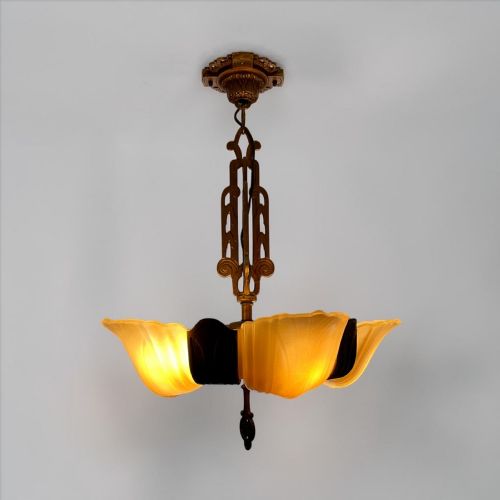
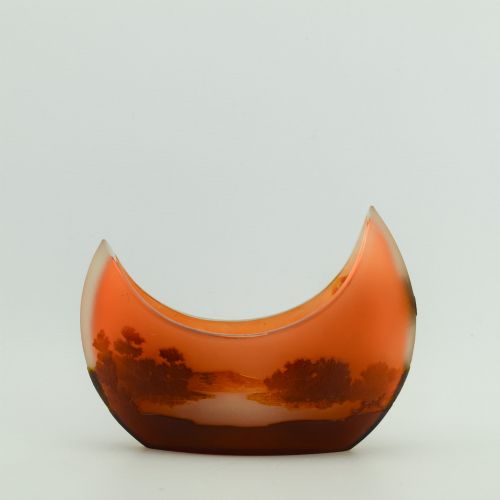
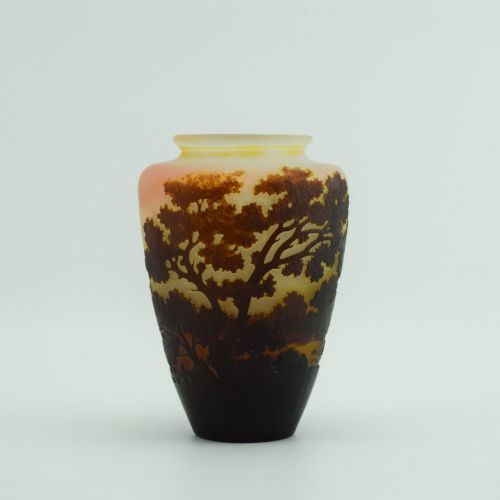
Amber frosted glass captures the distinct aesthetic movements of the late nineteenth and early twentieth centuries, spanning Victorian, Edwardian, Art Nouveau, and Art Deco designs. Pieces range from delicate cabinet vases featuring acid-etched landscapes to robust lighting fixtures designed for ceilings and walls.
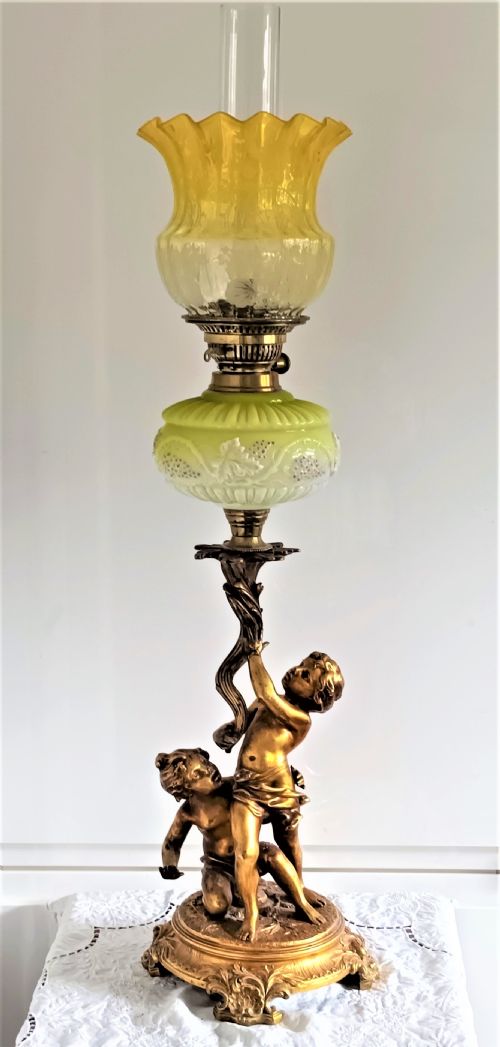
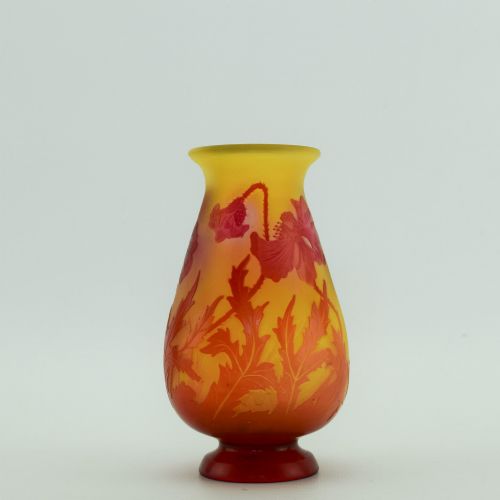
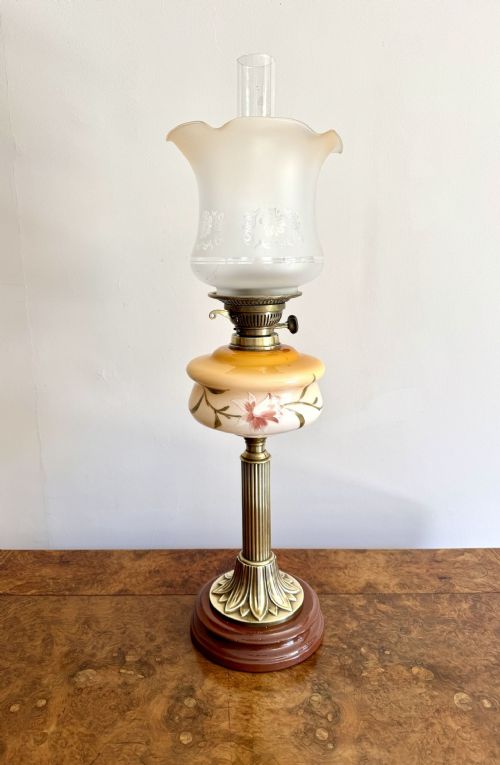
The most common forms encountered in this selection are decorative vases and functional light fittings. Vases often display naturalistic motifs such as floral scenes, poppies, or woodland landscapes, while lighting takes the form of wall sconces, chandeliers, and boudoir lamps.
Origins heavily lean towards French and English workshops, with prominent French glassmakers shaping the stylistic trajectory of the period. Collectors encounter both signed cabinet pieces and unmarked architectural lighting from the interwar decades.
Making amber frosted glass
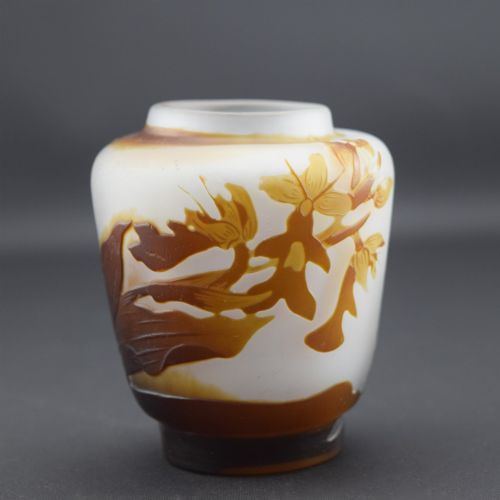
Glassmakers utilised acid-etching techniques to create the signature frosted texture across the surface of the amber material. Cameo glass pieces involved layering different coloured glass bodies before carving or etching down to reveal contrasting designs against the background.
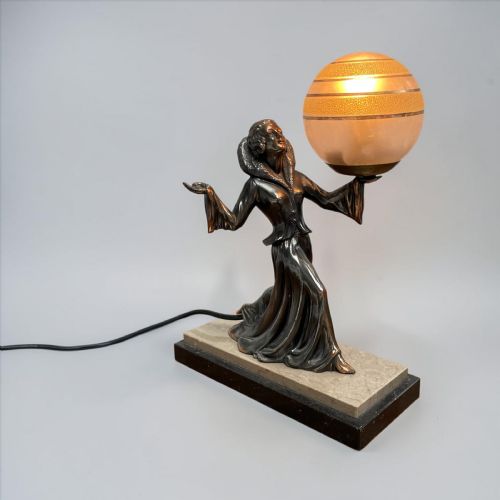
Metal mounts in brass, chrome, bronze, and cast metal frequently accompany the glass components, particularly in the production of table lamps, oil lamps, and wall lights. Enamel and gilding occasionally accent the glass surface to add further detail to floral or landscape scenes.
Amber Frosted Glass Retail Price Guide 2026
Typical asking prices for amber frosted glass among the pieces listed under this phrase on Sellingantiques today, from the lower quarter to the upper quarter. They describe what is for sale here now, not the wider market.
Listings feature amber frosted glass spanning the Victorian era, Edwardian period, Art Nouveau movement, and Art Deco styles.
Judging quality in amber frosted glass
Depth of execution separates standard production items from masterworks, particularly in cameo glass where the crispness of the acid-etching defines the relief of floral and landscape motifs. Skilled makers controlled the transition of tone across the amber layers to create atmospheric depth in winter scenes or botanical studies.
Integration between the glass shades and their original metal fittings dictates the integrity of lighting fixtures. Superior examples maintain balanced proportions between the cast metal brackets and the blown or moulded glass elements without mismatched components.
Gallé·Legras·Daum Frères·Verrerie Des Vosge·Paul Nicolas
The Amber Frosted Glass Glossary
- Cameo glass
- A method of glass vessel creation involving multiple layers of contrasting colours fused together and subsequently carved or acid-etched to produce a raised design. This technique requires considerable precision from the artisan.
- Acid-etched glass
- Glass treated with hydrofluoric acid to eat away the surface, resulting in a matte, frosted finish or a low-relief pattern. It replaced harsher mechanical frosting methods during the late nineteenth century.
- Art Nouveau
- A design style popular from the late nineteenth century until the First World War characterised by organic, asymmetrical lines inspired by plant forms and natural shapes. Glass from this movement frequently depicts floral or aquatic subjects.
- Art Deco
- A predominant style of the 1920s and 1930s defined by stylised geometric forms, symmetry, and streamlined shapes. Lighting fixtures from this era often pair frosted amber shades with chrome or bronze mounts.
- Oviform
- An egg-shaped vessel form commonly utilised for decorative vases of the early twentieth century. This profile allowed makers to display continuous landscape or floral scenes around the circumference.
Amber Frosted Glass: Frequently Asked Questions
How do I clean amber frosted glass?
Wash the glass gently in lukewarm water using a mild, non-abrasive detergent and a soft cloth. Avoid harsh chemical cleaners or abrasive pads that can damage the frosted surface or any enamel details.
Dry the pieces thoroughly with a lint-free towel to prevent water spots from forming on the textured areas.
Were these glass pieces meant for daily use?
Vases primarily served as decorative ornaments or receptacles for fresh stems in domestic interiors. Lighting fixtures provided functional illumination in hallways, boudoirs, and principal rooms.
Many surviving examples retain their original electrical fittings or oil-burning mechanisms from the Victorian and Edwardian eras.
How can I tell Art Nouveau from Art Deco pieces?
Art Nouveau items display flowing, organic lines inspired by nature, such as winding stems, floral blooms, and aquatic motifs. The glass tends to feature soft, undulating contours and naturalistic landscapes.
Art Deco works rely on geometric symmetry, clean lines, and stylised patterns, frequently paired with metallic mounts in chrome or bronze.
Are these glass items usually signed by the maker?
Many fine art glass pieces carry acid-etched or enamelled signatures on the body or base, particularly works originating from prominent French workshops. Signatures often indicate the specific studio or designer involved in the production.
Numerous lighting shades and commercial items from the period remain unmarked while sharing identical stylistic qualities.