



Allegorical Desk Clock
An allegorical desk clock carries classical figures and iconography that tell a visual story, bringing narrative depth and French craftsmanship to a mantelpiece.
Allegorical Desk Clock
An allegorical desk clock serves as both a timekeeper and a narrative piece, featuring sculptural figures and motifs that represent abstract concepts like love, fidelity, or literature. These pieces originate predominantly from nineteenth-century France, reflecting the enduring popularity of classical and romantic themes in interior decoration.
The objects listed here appear in forms such as single mantel clocks and larger clock garnitures, often accompanied by matching side pieces. Buyers most frequently encounter variations executed in the French Empire, Louis XVI, and Art Nouveau styles, which dictate the architectural framing of the dial and the posture of the cast figures.
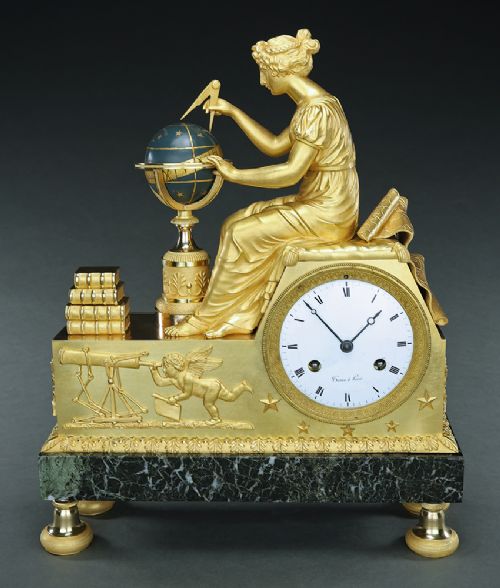
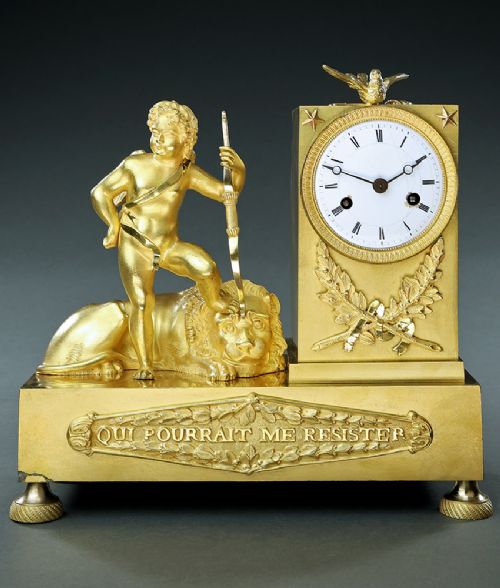
Makers and foundries of the period drew heavily on mythological and literary subjects, producing works that celebrate triumph, astronomy, or domestic virtue through bronze and marble sculpture. Each design balances mechanical precision with sculptural artistry, placing the time display within a wider decorative programme.
Materials and construction
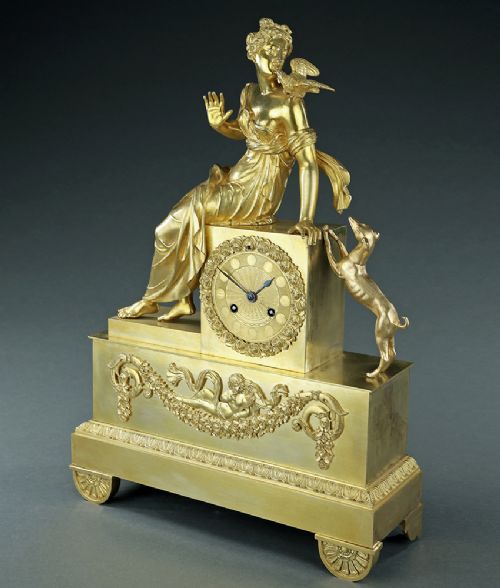
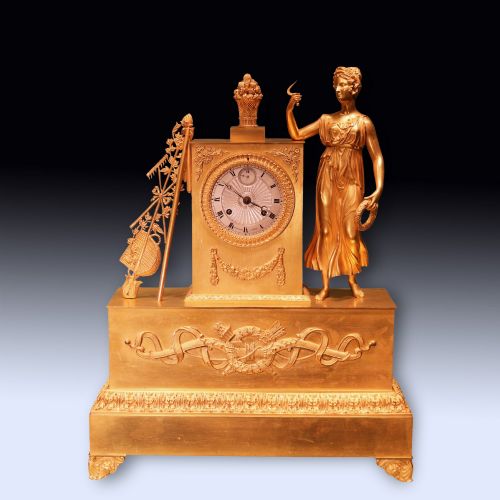
The primary structural body of these clocks relies on combinations of cast metals and stone, utilising ormolu, gilt bronze, spelter, and brass alongside contrasting white or dark marble. Foundries cast these components in sections before applying mercury gilding or patination to the metal surfaces to achieve a rich, multi-toned finish.
Enamel dials feature individually painted numerals, protected behind curved glassbezels set into the cast metal case. Skilled artisans chased and detailed the bronze and ormolu figures by hand after casting, ensuring sharp definition in drapery, hair, and symbolic attributes.
Allegorical Desk Clock Retail Price Guide 2026
Typical asking prices for allegorical desk clock among the pieces listed under this phrase on Sellingantiques today, from the lower quarter to the upper quarter. They describe what is for sale here now, not the wider market.
The listings show French nineteenth-century production exclusively, combining ormolu, bronze, and marble into sculptural forms.
Markers of quality
Quality in these pieces is dictated by the crispness of the bronze chasing and the depth of the gilding, where superior examples retain sharp facial expressions and clean drapery folds on the figures. Lesser pieces rely on softer cast spelter with painted finishes that wear down over time.
The integration between the sculptural subject and the clock movement marks the difference between standard production and fine atelier work. Finer clocks feature movements signed by established makers and heavier marble bases that anchor the substantial metalwork securely.
Canaillor of Paris·Frères Raingo·Reiche
The Allegorical Desk Clock Glossary
- Ormolu
- Gilded bronze produced by applying a mercury and gold amalgam to a cast bronze base, then firing to drive off the mercury. This technique creates a durable, warm metallic golden surface characteristic of fine French decorative arts.
- Clock garniture
- A set comprising a central clock flanked by matching ornamental side pieces such as vases or candelabra. These matched groupings were designed to create a balanced decorative arrangement on a mantelpiece.
- Spelter
- A zinc alloy commonly utilised as a less expensive alternative to bronze for sculptural figures. It takes patination and paint well but lacks the weight and tensile strength of true bronze.
- Garniture
- A matching set of ornamental vessels or figures designed to be displayed together on furniture. In clock sets, they echo the motifs and materials of the central timekeeper.
- Chasing
- The manual finishing of a cast metal object using small punches and hammers to refine details and textures. Fine chasing distinguishes high-end foundry work from mass production.
Allegorical Desk Clock: Frequently Asked Questions
What is an allegorical desk clock?
An allegorical desk clock is a nineteenth-century timepiece featuring sculptural figures that symbolise abstract ideas, literature, or classical stories. These pieces use iconography to convey moral or romantic narratives.
They function simultaneously as functional horology and sculptural works of art designed for prominent display.
How do I identify French Empire style?
French Empire pieces display strict symmetry, military motifs, and classical references drawn from ancient Greece and Rome. They often incorporate dark patinated bronze paired with bright ormolu mounts.
The overall aesthetic emphasises authority, order, and classical antiquity.
What is a clock garniture?
A clock garniture consists of a central clock accompanied by matching side objects like urns or candelabra. These sets create a cohesive visual arrangement on a mantel or sideboard.
Every component in the set shares the same materials, style, and decorative theme.
How should I care for ormolu surfaces?
Ormolu surfaces require gentle dusting with a soft, dry brush to prevent the accumulation of dirt in the chased recesses. Moisture and chemical cleaners can damage the historic gold surface.
Stable indoor humidity helps preserve both the metalwork and the underlying marble or wood components.